The Madrid derby has once again become a battleground—not just on the pitch, but in the boardrooms and press conferences that follow. After Real Madrid’s 2-1 defeat to Atletico Madrid in what should have been a dominant display, manager Jose Mourinho did not shy away from the spotlight. At his post-match press conference, he produced two printed screenshots of tackles by Atletico players, insisting they warranted red cards. The images, shown with deliberate emphasis, were meant to underscore a broader claim: that referees in LaLiga are systematically targeting the 15-time European champions.
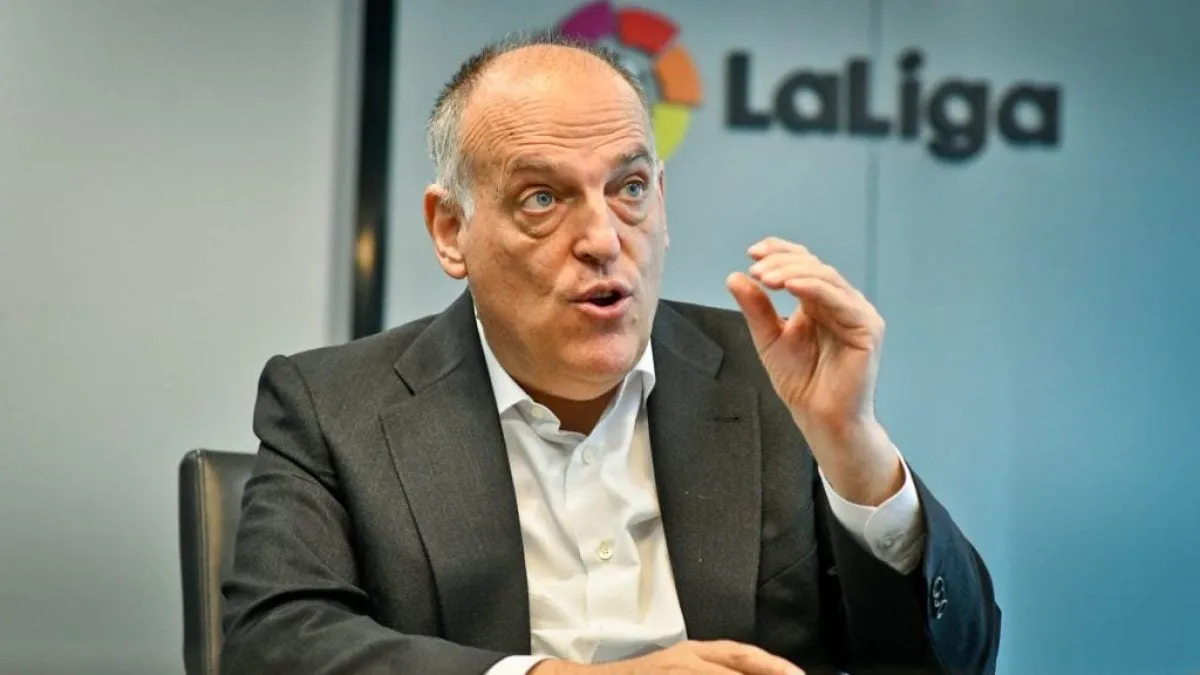
Yet Javier Tebas, president of LaLiga, has not been cowed by such assertions. In a direct response to a pro-Real Madrid article circulating on social media, Tebas dismantled the narrative with uncharacteristic bluntness. ‘Here they go again, the mouthpieces and the regime’s television, building the same old narrative—the permanent conspiracy,’ he wrote, framing the accusations as a tired, self-serving excuse. His rebuttal went further, questioning the very logic of Madrid’s claims. ‘What exactly is it asking for? Refereeing based on revenue, viewership, or the badge?’ Tebas’s words carried weight, not just as a defense of officiating but as a challenge to the club’s selective memory. Real Madrid’s own statements have repeatedly framed LaLiga as a competition that thrives *because* of its dominance, yet now they claim the league is ‘worth nothing’ without them—a contradiction that Tebas did not hesitate to highlight.
The tension between Madrid’s managerial rhetoric and Tebas’s institutional stance reveals a deeper fracture. Mourinho’s reliance on printed screenshots—an unusual tactic in modern football press conferences—suggested a deliberate attempt to weaponize visual evidence, yet the images themselves did not alter the outcome. Atletico’s victory was not decided by two marginal moments but by a collective performance that exposed Real Madrid’s early-season fragility. Tebas’s response was clear: questioning individual refereeing decisions is legitimate, but framing them as proof of a systemic conspiracy risks undermining the credibility of Spanish football. ‘That narrative serves as an excuse to cover up other shortcomings that are plain to see in these first matches of the season,’ he stated. The implication was direct: if Real Madrid’s issues were purely about officiating, why did they fail to translate dominance into results against weaker opponents?
What remains unspoken in this exchange is the broader implication for LaLiga’s reputation. The league has long balanced the power of its biggest clubs with a commitment to competitive fairness, yet Madrid’s repeated accusations—now amplified by Mourinho’s public stance—risk eroding trust. Tebas’s defense of the officiating system is not just about the Madrid derby; it is about preserving the integrity of a league that has spent years navigating the tensions between tradition and commercial pressure. His refusal to engage with the ‘conspiracy’ framing as anything other than a distraction is a calculated move, one that positions LaLiga as the neutral arbiter in a debate that has become increasingly partisan. For fans and pundits alike, the real question now is whether Madrid will continue to deflect blame—or whether this season will force a reckoning with the club’s on-field realities.
One thing is certain: the Madrid derby’s fallout has already shifted the narrative beyond the pitch. What began as a post-match grievance has evolved into a broader debate about accountability, media influence, and the very fabric of LaLiga’s identity. Tebas’s response was not just a rebuttal; it was a statement of principle. And in football, where every word carries weight, his words may prove more consequential than any red card ever could.