

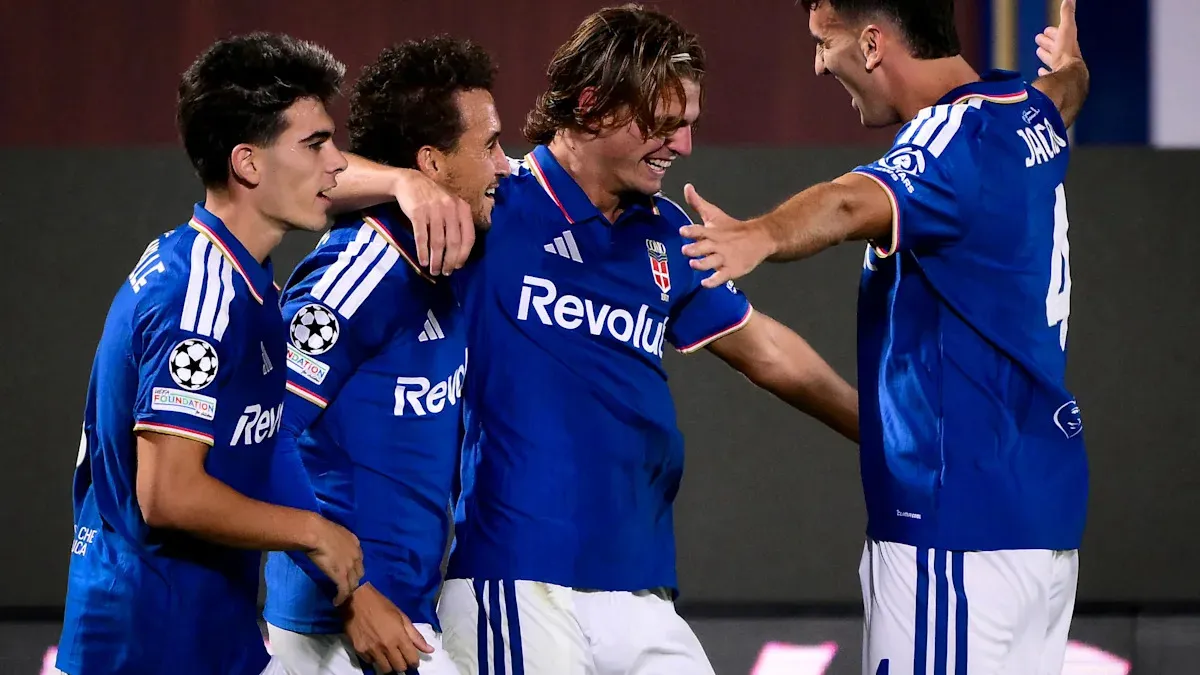
The transformation has been nothing short of seismic. Just seven days ago, Italian football was in freefall—four consecutive defeats in the Champions League, each one a bruising reminder of a system under siege. Now, the same clubs have delivered four victories, a reversal so abrupt it feels like a reset button was pressed. The question isn’t whether the results matter, but whether they signal a genuine turning point or a temporary reprieve in a crisis that has festered for years.
The turnaround began with AC Milan’s 2-1 victory in Bergamo, a win that not only secured three points but also sent a message: the *rossoneri* are no longer the hapless underdogs of European football. The crowd’s boos for Leonardo Bonucci and Raphael Leão were drowned out by the roar of a team finally playing with purpose. But the real catalyst came in the form of a tactical overhaul. Milan’s manager, Stefano Pioli, has been accused of playing it safe for too long, yet his decision to trust young talent like Theo Hernández and Nicolò Barella—players who had been sidelined in the previous system—proved decisive. The shift wasn’t just about results; it was about reclaiming confidence. ‘We risk wasting one season, but the change of system has nothing to do with it,’ one insider admitted, acknowledging that the overhaul was about more than just fixing a losing streak.
Inter Milan’s 3-0 demolition of Atalanta in Milan was the next domino to fall. The *nerazzurri*’s fourth-place push hinged on a single moment: a goal by Victor Osimhen, a player whose impact has been underrated in a league that often undervalues its foreign stars. But the real story was the defense, led by Nicolò Barella and Stefan de Vrij, who stifled Atalanta’s attacking firepower with a discipline that had been missing in recent seasons. ‘Inter and Chivu in Pio’s hands’—a reference to the club’s new president—highlighted how the transfer window’s investments are finally bearing fruit. Meanwhile, AS Roma’s 2-1 win over Bayern Munich in the Champions League, though narrow, was a statement: the *giallorossi* are no longer the also-rans of European football. Lorenzo Pellegrini’s goal and a dominant defensive display proved that Roma’s identity—built on possession and pressing—can still cut through even against the best.
Yet for all the optimism, the deeper issue remains: Italian football’s identity crisis. The rapid turnaround is undeniable, but the underlying problems—financial instability, a lack of long-term vision, and a culture that still clings to outdated structures—have not been resolved. The recent elimination against Sweden, North Macedonia, and Bosnia in qualifying for UEFA Euro 2024 exposed the same vulnerabilities that have plagued the national team for decades. ‘Italian football must change,’ a recent editorial argued, ‘but no miraculous cure-all will save it.’ The reforms promised for 16 years have yet to materialize, and the current surge in club performances does little to address the systemic rot.
For now, the focus is on the immediate: three points in the Champions League, a fourth-place finish for Inter, and Roma’s unexpected resilience. But the real question is whether this is a temporary blip or the start of a new era. The results speak for themselves—but the structural changes that will determine whether this is more than a flash in the pan are yet to come.



