

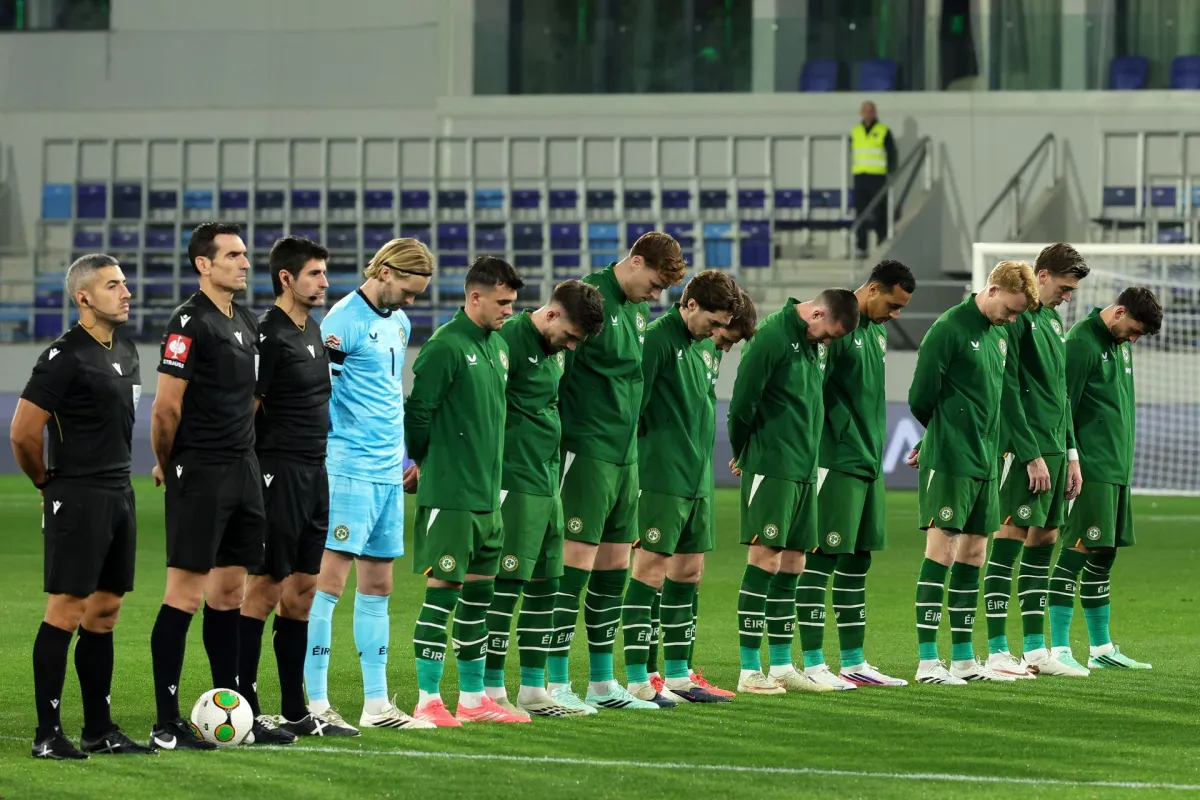
The Republic of Ireland and Israel have completed their two UEFA Nations League Group B3 meetings following a 1–1 draw in Bačka Topola, Serbia. Played behind closed doors at the TSC Arena on 4 October, the fixture followed Ireland’s 3–0 victory in Debrecen, Hungary, on 27 September. The matches took place amid sustained political opposition in Ireland to playing Israel because of the war in Gaza.
On the pitch, Troy Parrott gave Ireland the lead with a penalty in the 39th minute before Dor Peretz equalised two minutes after the interval. The draw left Heimir Hallgrímsson’s side third in Group B3, level on points with second-placed Kosovo. It concluded Ireland’s scheduled meetings with Israel in the league phase, rather than their entire Nations League campaign.
Off-field concerns intensified after the first encounter in Hungary. The Football Association of Ireland began investigating allegations that Adam Idah, who scored Ireland’s second goal in the 3–0 victory, had been subjected to racist abuse. Midfielder Jayson Molumby raised concerns with the match officials during play, asking them to listen for what he believed was abusive chanting from some Israel supporters.
According to reporting following that match, the officials said they had not heard racist chanting. UEFA’s match delegate also informed the FAI that the normal racism protocols had not been activated because no clear allegation of racism had been reported during the game. The FAI consequently began gathering footage and pitchside audio to assess the allegations, with the possibility of submitting a formal complaint to UEFA if evidence supported them. The alleged abuse had not been established as fact.
The location of the return fixture was another significant aspect of the controversy. Ireland’s designated home match was moved from Dublin to Serbia, with the FAI citing “operational challenges that could impact on the delivery of the game on home soil” in its June announcement. That explanation should be distinguished from a claim that the association selected neutral venues for both matches solely because of political opposition.
The first meeting had also been uncertain in the run-up to kick-off, amid protests from supporters and politicians and discussions among Ireland’s players about whether to fulfil the fixture. It ultimately went ahead in Debrecen, where approximately 300 Israel supporters attended. No tickets were sold to Irish fans, although a small number gained entry.
The scrutiny is unlikely to end simply because the two matches have been played. The FAI has asked UEFA to keep Ireland and Israel apart in future draws, making any potential reunion a matter of both tournament procedure and continuing political debate. That request does not itself establish that UEFA will separate the teams.
Looking ahead, qualification for Euro 2028 provides another possible setting for a competitive meeting, subject to the draw and any decisions UEFA makes about team pairings. The qualifying draw is scheduled for Sunday, 6 December 2026, in Belfast. Teams will be allocated to 12 groups of four or five, with home-and-away fixtures beginning in March 2027 and concluding in November.
For Ireland, attention now returns to the remainder of their Nations League campaign and preparations for the next qualifying competition. The victory in Hungary and draw in Serbia delivered four points from the two meetings, but the results sit alongside unresolved concerns about the fixtures and the alleged abuse of Idah. Any future encounter will depend on the competition draws and UEFA’s response to the FAI’s request—not on the assumption that these matches have closed the issue.



