

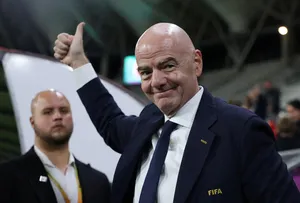
Gianni Infantino’s presidency of FIFA has never been without controversy, but the Swiss leader’s ability to weather storms has always hinged on one unshakable truth: his control over the voting blocs that matter most. Now, as he prepares for what should be his final term, the 56-year-old faces a rare moment of vulnerability—one that could test the very foundations of his political dominance. The withdrawal of his ill-fated plan to allow private investment in the World Cup has alienated key associations, yet his core support in Africa and South America remains unbroken, a bulwark against any serious challenge.
The backlash against Infantino’s proposal was swift and decisive. By abandoning the idea after just weeks, he conceded that even within FIFA’s own ranks, the notion of commercializing the sport’s most sacred tournament was too divisive to survive. Yet the damage was done: associations that once tolerated his leadership now question whether his vision aligns with the principles of the game. The absence of a unified opposition—no heavyweight candidate has emerged to rally discontented federations—has left Infantino in a precarious position. Without a clear alternative, the criticism risks becoming little more than noise, a fleeting moment of discontent that fades as soon as the voting begins.
Infantino’s political acumen has always been his greatest weapon. He understands that FIFA’s power structure is not built on ideology but on alliances, and his strongest alliances lie in regions where football is not just a sport but a cultural and economic lifeline. Africa and South America, where his influence is absolute, have consistently delivered the votes that keep him in power. These blocs are not swayed by ideological debates or temporary scandals; they are bound by loyalty to a leader who has delivered infrastructure, funding, and visibility to their nations. For now, that loyalty remains intact, and without a candidate capable of appealing to those same priorities, Infantino’s re-election appears all but assured.
The question now is whether the growing discontent among European and Asian federations—those most vocal in opposing his privatization plan—will translate into a coordinated effort to unseat him. So far, the opposition has failed to present a viable alternative, leaving Infantino’s opponents scattered and without a clear narrative. His ability to navigate this crisis without a major challenge underscores a simple truth: in FIFA, power is not won through popularity but through control of the levers that distribute the sport’s resources. As long as he retains the trust of the regions that hold the keys to his future, Infantino’s final term may yet be secured without a single vote being lost to dissent.
For football’s governing body, the stakes could not be higher. A fractured opposition and a president who has mastered the art of political survival suggest that change may remain elusive, at least for now. The real test will come when the next election cycle arrives—if it ever does. Until then, Infantino’s legacy as a pragmatist, not a reformer, may be the only legacy he needs to ensure his place in FIFA’s history.



