

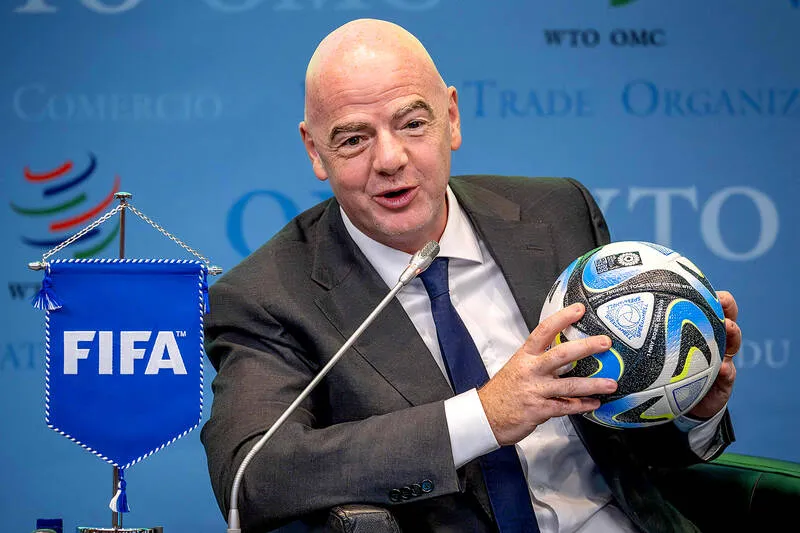
Gianni Infantino’s latest attempt to salvage his legacy at FIFA has been met with skepticism, not relief. In a closed-door meeting of the FIFA Council in Zurich, the president offered an apology for the ‘mistakes’ in communication surrounding the FIFA Forward Enterprise (FFE) proposal—a plan to sell stakes in the World Cup to private investors—but provided no substantive answers to the critical questions raised by member associations. The failure to deliver transparency has deepened the rift between Infantino and Europe’s football leadership, with key figures like Debbie Hewitt (FA chair and FIFA vice-president) and Bernd Neuendorf (DFB president) declaring the president ‘not fit to remain in office’ unless he releases all related documents and clarifies the project’s intent.
The FFE proposal, announced in July without prior Council approval, was immediately met with outrage. European associations, the backbone of FIFA’s governance, have since withdrawn their support for Infantino’s re-election in March 2027. Their frustration stems not just from the lack of consultation but from the absence of answers to fundamental queries—most notably, why the proposal was never presented to the Council before its public unveiling. Neuendorf, speaking after the Zurich meeting, emphasized that ‘we didn’t get answers to anything we had specifically requested,’ including access to the FFE papers themselves. The German FA president’s blunt assessment—that Infantino’s apology was insufficient—reflects a broader sentiment: transparency has been replaced by deflection.
Infantino’s defense hinges on framing FFE as a ‘proposal,’ not a finalized plan, and insists it was intended to ‘enable FIFA to invest more in member associations.’ Yet the damage has been done. The proposal’s abrupt introduction, combined with its controversial structure—potentially allowing private entities to profit from the World Cup—has eroded trust in FIFA’s leadership. The absence of a credible challenger to Infantino’s candidacy only heightens the stakes. With no heavyweight candidate yet emerged to oppose him, the March election risks becoming a formality, despite the growing chorus demanding his resignation.
The FFE controversy is far from the only cloud hanging over Infantino’s tenure. His relationship with former US President Donald Trump—who has publicly endorsed his re-election—has further alienated European football leaders, who view such political entanglements as incompatible with FIFA’s neutral governance. The Council’s refusal to engage with Infantino’s explanations underscores a fundamental shift: European associations are no longer willing to tolerate ambiguity or half-measures. For the first time in years, the future of FIFA’s leadership may hinge on whether Infantino can deliver answers—or if the Council will finally demand accountability.



