

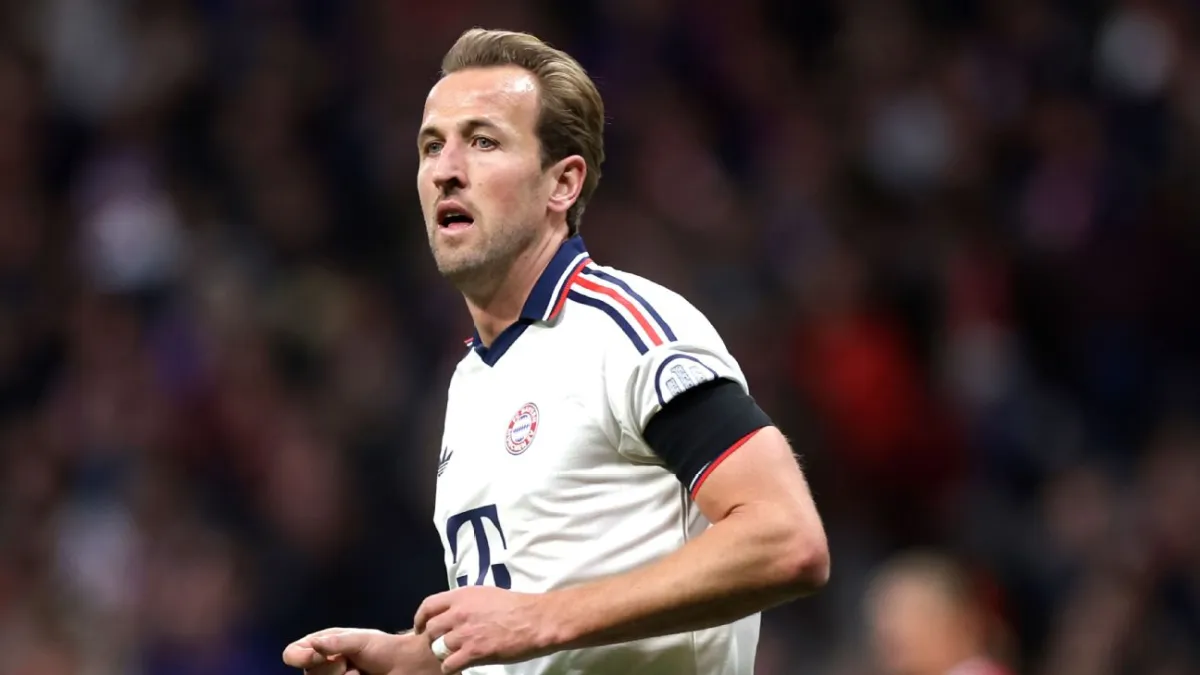
Harry Kane’s Champions League campaign has been defined by relentless consistency, but his 10-game scoring streak—already a feat unmatched since Cristiano Ronaldo’s legendary 2017–18 run—has now reached its limit. The England striker’s failure to find the net in Bayern Munich’s 2-0 win over Atlético Madrid on Tuesday erased his final hope of tying Ronaldo’s record of 11 consecutive Champions League goals. That leaves Kane’s name etched alongside Ruud van Nistelrooy and Robert Lewandowski as the only players to have scored in nine or more straight UCL matches, a distinction that now feels tantalizingly within reach but permanently out of grasp.
The significance of this moment cannot be overstated. Ronaldo’s 11-game streak, achieved during his 2017–18 season with Real Madrid, remains the gold standard—a benchmark that has stood for nearly a decade. Kane, however, had been on the cusp of surpassing it, having already equaled Lewandowski’s 2019–20 and 2020–21 streaks of nine. His penalty against Arsenal on Matchday 3 had extended his run to 10, a milestone that would have cemented his legacy as the modern era’s most prolific UCL scorer. Instead, Atlético’s defense—led by Jan Oblak—denied him the final goal, leaving Kane’s assist to Konrad Laimer as the only tangible contribution in a game where Bayern’s dominance was built on defense and midfield control.
What makes this failure even more poignant is the context of Kane’s season. The 32-year-old, who claimed the Ballon d’Or earlier this year, has been Bayern’s most consistent performer in Europe’s elite competition. His ability to deliver in high-pressure moments—whether through clinical finishing or intelligent movement—has been a cornerstone of Munich’s resurgence under Thomas Tuchel. Yet, the Champions League, where precision and composure are paramount, has proven to be the ultimate test. Kane’s inability to extend his streak does not diminish his impact; it simply underscores the unpredictable nature of the tournament, where a single defensive error or a goalkeeper’s reflex can alter the course of history.
For Bayern Munich, the result against Atlético was a reminder of their depth. While Kane’s absence from the scoresheet was notable, the team’s victory was underpinned by Lennart Thau’s early strike and Laimer’s clinical finish—a testament to the squad’s collective quality. The defeat of a side that had beaten Barcelona and Real Madrid earlier in the season also signals Atlético’s continued resilience, a factor that will test Bayern’s patience in the knockout stages. Kane’s pursuit of the record, though unfulfilled, has already left an indelible mark on the competition’s history. His failure to match Ronaldo’s feat may be seen as a minor setback, but it is the nature of greatness that one’s legacy is built on what they achieve, not what they fall just short of.
The Champions League has always been a tournament where individual brilliance is tested against the cold, unyielding laws of probability. Kane’s streak was a masterclass in consistency, but even the most dominant performers are eventually brought back to earth. Ronaldo’s record remains untouchable—for now. Yet, the fact that Kane came so close is a testament to his skill, his work ethic, and the era-defining nature of his career. For fans and pundits alike, the question now shifts from whether he could have matched the record to how he will adapt in the knockout stages, where the pressure to deliver will only intensify. One thing is certain: Harry Kane’s place in Champions League history is already secure, even if the final chapter of his scoring streak has been written.



