

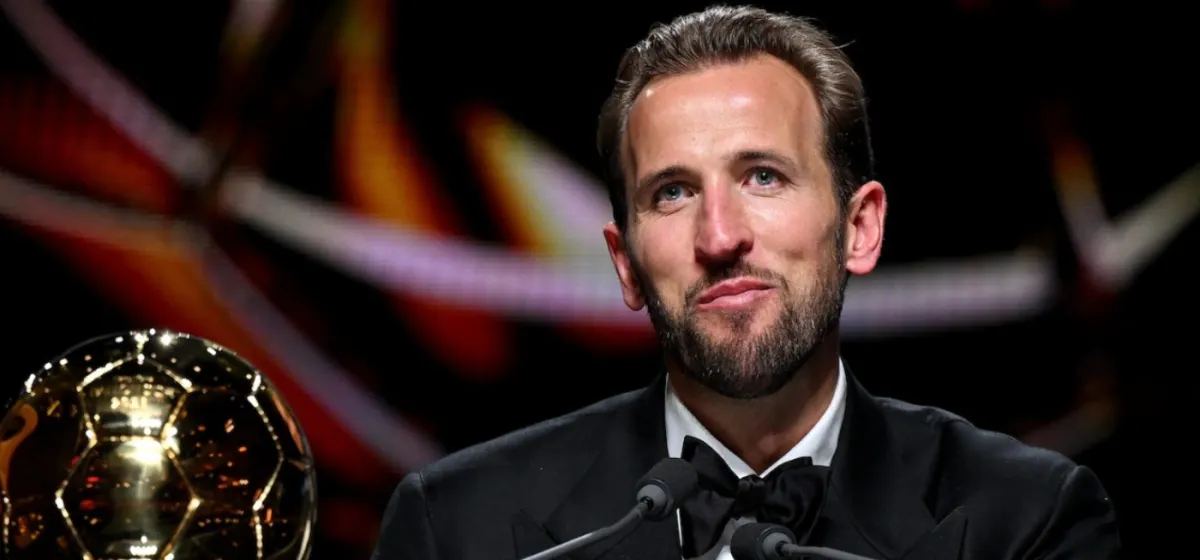
Harry Kane’s Ballon d’Or victory in 2026 wasn’t just a personal triumph—it was the ultimate vindication of a career built on defying expectations. The English striker, once written off by Arsenal’s academy at just eight years old for lacking the ‘athleticism’ expected of a future professional, now stands as the first player from the Bundesliga to win the award since 1996. His path to glory was never linear. Rejected by Arsenal after a single season under Liam Brady’s watch—who later admitted Kane was ‘a bit chubby’—he was plucked from obscurity by Tottenham Hotspur, a club that would become his crucible. The journey from Chingford to White Hart Lane was far from smooth. After trials at Watford failed to secure a deal, Spurs took a gamble, and the rest is history.
Kane’s early years were defined by movement. Loan spells at Leyton Orient, Millwall, Norwich, and Leicester City between 2011 and 2013 were not just developmental stints—they were survival tactics. At Norwich, he scored 11 goals in 34 games, proving his goal-scoring instincts could thrive even in the Premier League. But it was at Tottenham where he became untouchable. Between 2009 and 2023, he netted 213 times in 317 appearances, etching his name into club history as their all-time leading scorer. His ability to combine clinical finishing with intelligent movement—qualities that had been evident even as an 11-year-old at Ridgeway Rovers—evolved into a lethal weapon. Yet, despite his individual brilliance, the one narrative that haunted him was the absence of silverware. England’s 2018 World Cup semifinal run, followed by a 2021 Euro final heartbreak, left fans and pundits questioning whether his talent was being wasted in a system that couldn’t deliver trophies.
That changed at Bayern Munich. At 30, the club spent €95 million to bring him to the Bundesliga, and the investment paid dividends immediately. His first trophy came in 2023, silencing critics who had long argued he needed a winning environment to reach his full potential. In 101 games for Bayern, Kane has racked up 102 goals, a testament to his ability to adapt to a new league’s physicality while maintaining his precision. His 527 career goals—including 91 for England—place him on the cusp of becoming only the fourth man in history to reach 100 international goals. But the Ballon d’Or wasn’t just about numbers; it was about recognition of a career defined by perseverance. From the PE teacher who described him as a ‘real team player’ at 11 to the Bayern Munich striker who dominated Europe, Kane’s evolution was never about talent alone—it was about outworking every doubt thrown his way.
The irony of Kane’s story is that his greatest strength—his refusal to be limited by early judgments—became his superpower. Arsenal’s scouts missed the mark; Tottenham’s loan system honed him; and Bayern’s structure finally gave him the platform to win. His 2025-26 season, which secured the Ballon d’Or, was the culmination of two decades of grinding through setbacks. That he achieved this at 33, in a league where he was once deemed unsuited for the game, is the ultimate statement on his character. The boy who was told he wasn’t athletic enough now stands as proof that greatness isn’t measured by youth or physicality—it’s measured by the ability to turn rejection into redemption. And with England’s World Cup semifinal run in 2026 still fresh in the memory, the question isn’t whether Kane will leave a legacy; it’s how many more chapters he’ll write before he hangs up his boots.



