

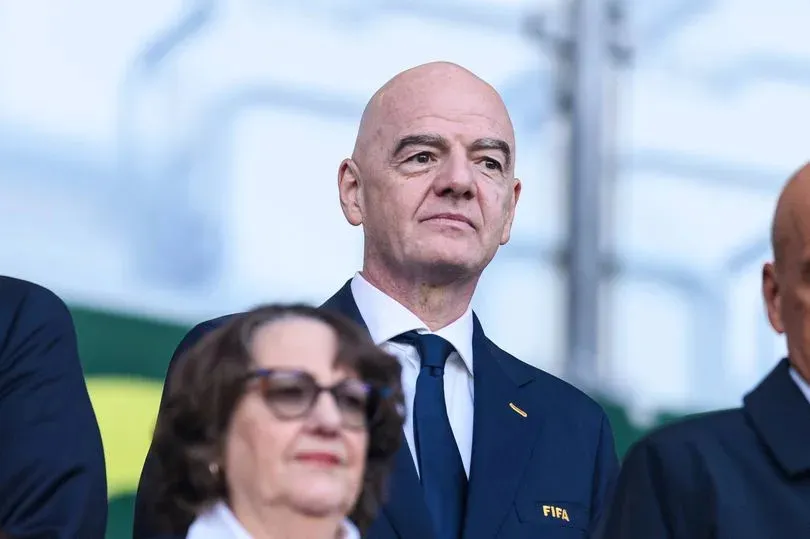
The FIFA presidency of Gianni Infantino is once again under intense scrutiny, this time over allegations that DR Congo fielded an ineligible player during their 2026 World Cup qualifying campaign—a violation that threatens the integrity of the competition and raises broader concerns about FIFA’s enforcement of its own rules. The revelation has prompted Nigeria and Jamaica, both directly affected by the irregularity, to press for transparency and potential compensation, while a parallel disciplinary case involving USMNT striker Folarin Balogun further exposes inconsistencies in how FIFA handles player suspensions.
The core issue centers on DR Congo’s eligibility requirements for their squad. According to internal investigations, the governing body permitted a player to compete in qualifying matches despite not meeting the standard criteria for national team representation. This is not an isolated oversight but part of a pattern that has drawn criticism from national federations and legal bodies alike. The Nigerian Football Federation (NFF), in particular, has escalated the matter to FIFA’s Ethics Committee, demanding a full accounting of how such decisions are made—especially when they appear to intersect with political or financial interests. The timing of these revelations, coinciding with ongoing U.S. congressional inquiries into FIFA’s governance, only amplifies the pressure on Infantino to address the allegations head-on.
The disciplinary case involving Folarin Balogun further complicates FIFA’s credibility. During the 2026 World Cup qualifying match against Bosnia and Herzegovina, Balogun received a red card—a decision that should have triggered an automatic one-match suspension under FIFA’s disciplinary code. Yet, the ban was mysteriously lifted, allowing the USMNT forward to feature in the subsequent match against Belgium. The inconsistency in enforcement raises serious questions about whether FIFA’s disciplinary arm operates with due process or if decisions are subject to external influence. Such irregularities undermine the very foundation of fair play that FIFA claims to uphold, particularly in high-stakes competitions where consistency is paramount.
The fallout extends beyond disciplinary matters. Nigeria and Jamaica, both rivals of DR Congo in the qualifying campaign, have signaled their intent to seek compensation for the perceived unfair advantage granted to their opponents. The NFF’s decision to involve the Ethics Committee suggests a deliberate effort to force FIFA to confront these issues publicly, rather than burying them behind bureaucratic loopholes. The broader implication is that FIFA’s leadership may be failing to distinguish between administrative oversight and deliberate manipulation of the system—something that could have lasting repercussions for the sport’s global standing.
For Infantino, the challenge is no longer just about damage control but about restoring faith in FIFA’s impartiality. The simultaneous scrutiny from national federations, legal bodies, and political inquiries creates a perfect storm of accountability. Whether the governing body can address these allegations transparently—or if they will continue to operate in the shadows—will define the next phase of its relationship with the football world. One thing is clear: the window for evasion has closed.



