

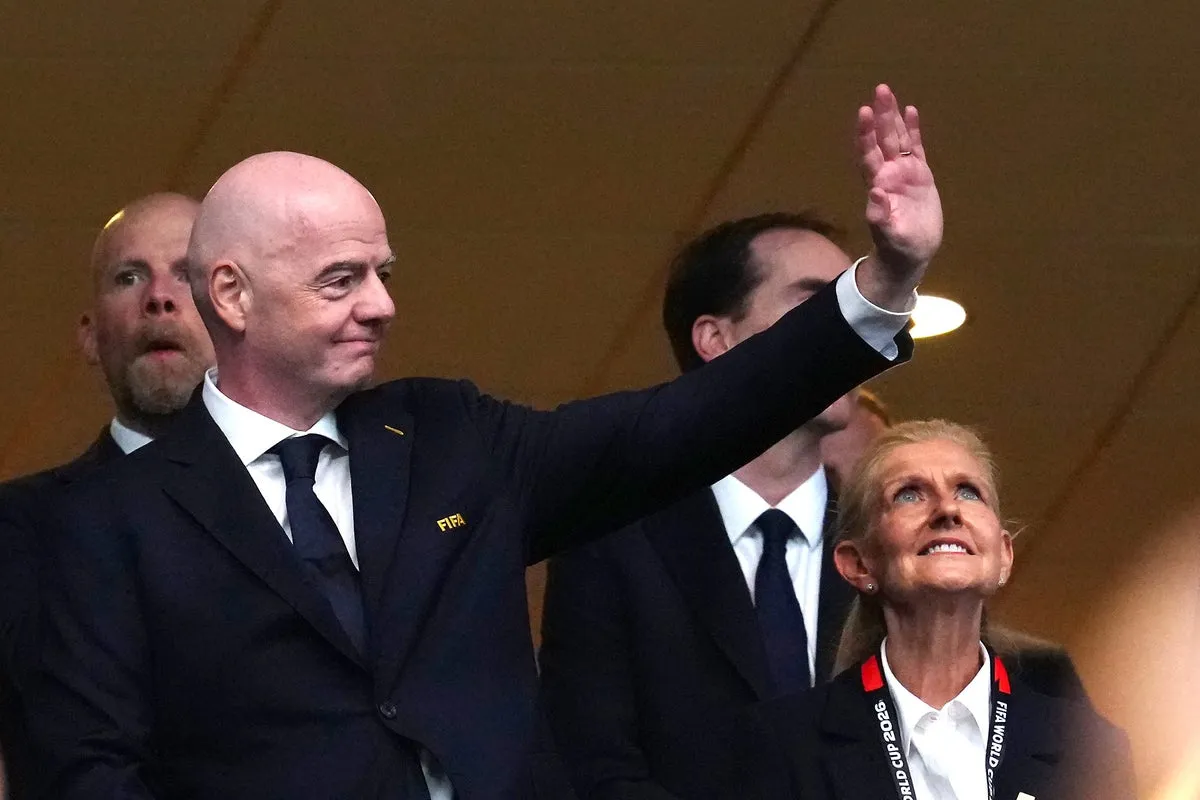
The FIFA Council’s latest showdown with Gianni Infantino has left the Swiss president’s leadership under unprecedented scrutiny, with his apology for the abandoned World Cup commercial rights plan failing to secure the trust of his most vocal critics.
During a tense three-and-a-half-hour meeting in Zurich, Infantino—who has led FIFA since 2016—offered a formal apology for his proposal to sell a 20% stake in the organisation’s commercial rights, a move that sparked outrage among member associations. Yet, the damage to his credibility was not repaired. Debbie Hewitt, chair of the Football Association, made it clear that the meeting yielded no new information to alter her stance: Infantino had still not addressed the fundamental questions raised by his critics. Her blunt assessment—that he remains ‘not fit to be FIFA president’—echoed the frustration of a Council increasingly divided over his leadership.
The commercial rights plan, which would have seen FIFA monetise its global football assets in a manner akin to the Premier League’s commercial model, was abandoned under pressure. Yet the fallout persists. Infantino’s attempts to reassure the Council were met with scepticism, particularly from Hewitt, who has been a leading voice in demanding accountability. The meeting underscored a broader crisis of confidence: while Infantino’s apology was acknowledged, it was not enough to silence the growing chorus calling for his resignation or a fundamental restructuring of FIFA’s governance.
The implications stretch beyond Zurich. The Council’s refusal to accept Infantino’s apology signals a potential turning point in FIFA’s history. For years, his leadership has been defined by ambitious reforms—from the return of the World Cup to Qatar to the expansion of the Champions League—but the commercial rights fiasco has exposed a chasm between his vision and the realities of member associations. With Hewitt’s unyielding position and the Council’s hardened stance, Infantino’s future at the helm now hangs in the balance. The next steps will determine whether FIFA can reconcile its commercial ambitions with the trust of its governing bodies—or if this is the beginning of the end for one of football’s most polarising figures.



