

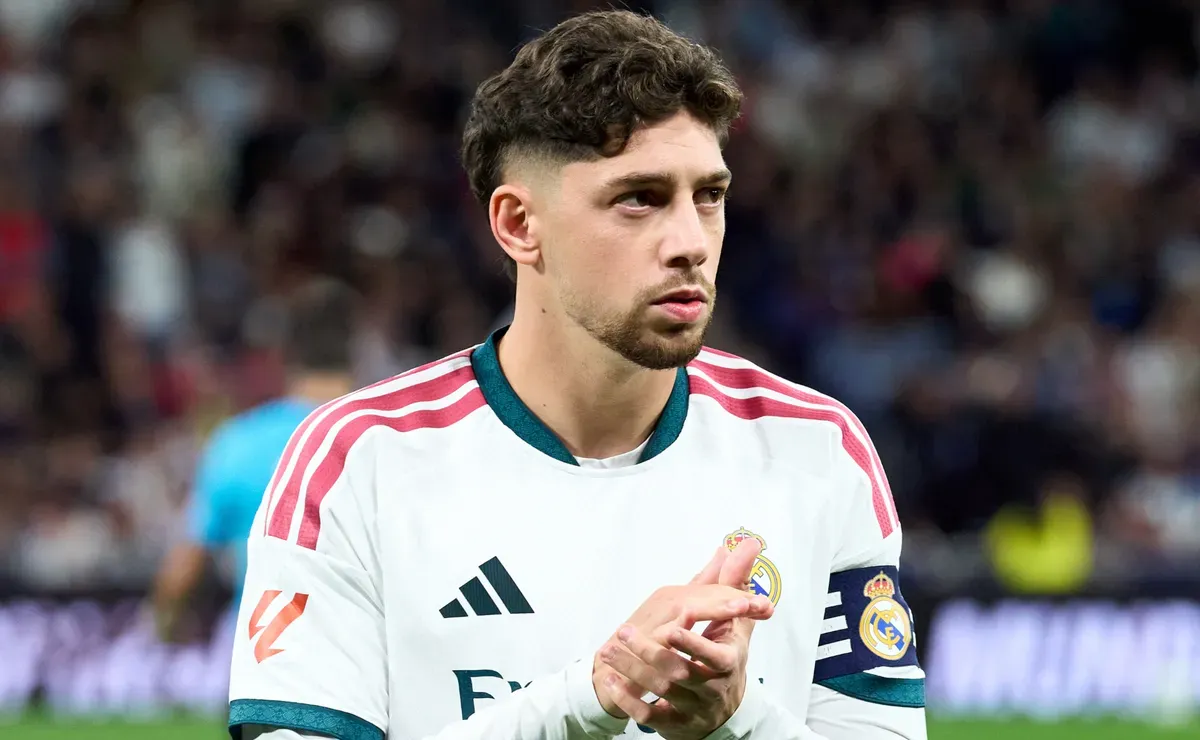
José Mourinho’s decision to bench Federico Valverde for Real Madrid’s Champions League encounter with AEK Athens is a tactical and physical call that speaks volumes about the current state of the squad. The Uruguayan captain, who has been a linchpin in Madrid’s midfield and defensive structure, is absent from the starting XI despite being named in the squad. His exclusion is not a reflection of confidence—Mourinho has repeatedly emphasized Valverde’s importance—but rather a calculated risk management strategy. The manager’s words before the match were clear: Valverde is ‘extremely important,’ yet his role must adapt to the team’s needs, even if that means starting on the bench.
The injury timeline is telling. Valverde’s discomfort during the first half of Real Madrid’s 2-1 victory over Barcelona in El Clásico was enough to prompt his substitution, with initial assessments ruling out a serious issue. However, his inability to train normally in the subsequent weeks—missing the 3-0 win over Racing Santander—forced Mourinho to err on the side of caution. The manager’s decision to rest Valverde in a Champions League fixture, where rotation is already a necessity, signals that the club is treating his fitness as a priority. Denzel Dumfries, who will start at right-back, is the beneficiary of this decision, though the move also reflects the depth Mourinho is deploying in a squad where even the most reliable players must be managed with precision.
The absence of Valverde is not an isolated incident. Rodrygo remains sidelined with a knee injury, while Raúl Asencio is out with a leg issue, leaving Madrid with a core of Kylian Mbappé, Jude Bellingham, Eduardo Camavinga, and Thibaut Courtois to carry the load. The squad’s composition for this match—with Aurélien Tchouaméni and Arda Güler also resting—highlights the manager’s preference for controlled rotations in a competition where fatigue can be the difference between progression and elimination. Valverde’s return to full training on Monday suggests his fitness is improving, but Mourinho’s reluctance to risk him in a non-decider underscores the high stakes of this Champions League phase.
What this decision reveals is the delicate balance Mourinho must strike between maintaining momentum and preserving his players. Valverde’s leadership is invaluable, but his physicality—demonstrated by his recent struggles—demands careful handling. The captain’s role as a captain is not just about presence on the pitch but about how he influences the team’s rhythm, even from the bench. With Madrid’s next fixtures including a return to domestic competition, the manager’s approach will be scrutinized further. For now, the focus remains on Athens, where Valverde’s absence may alter the tactical dynamics, but his influence on the squad’s mentality will remain undiminished.



