

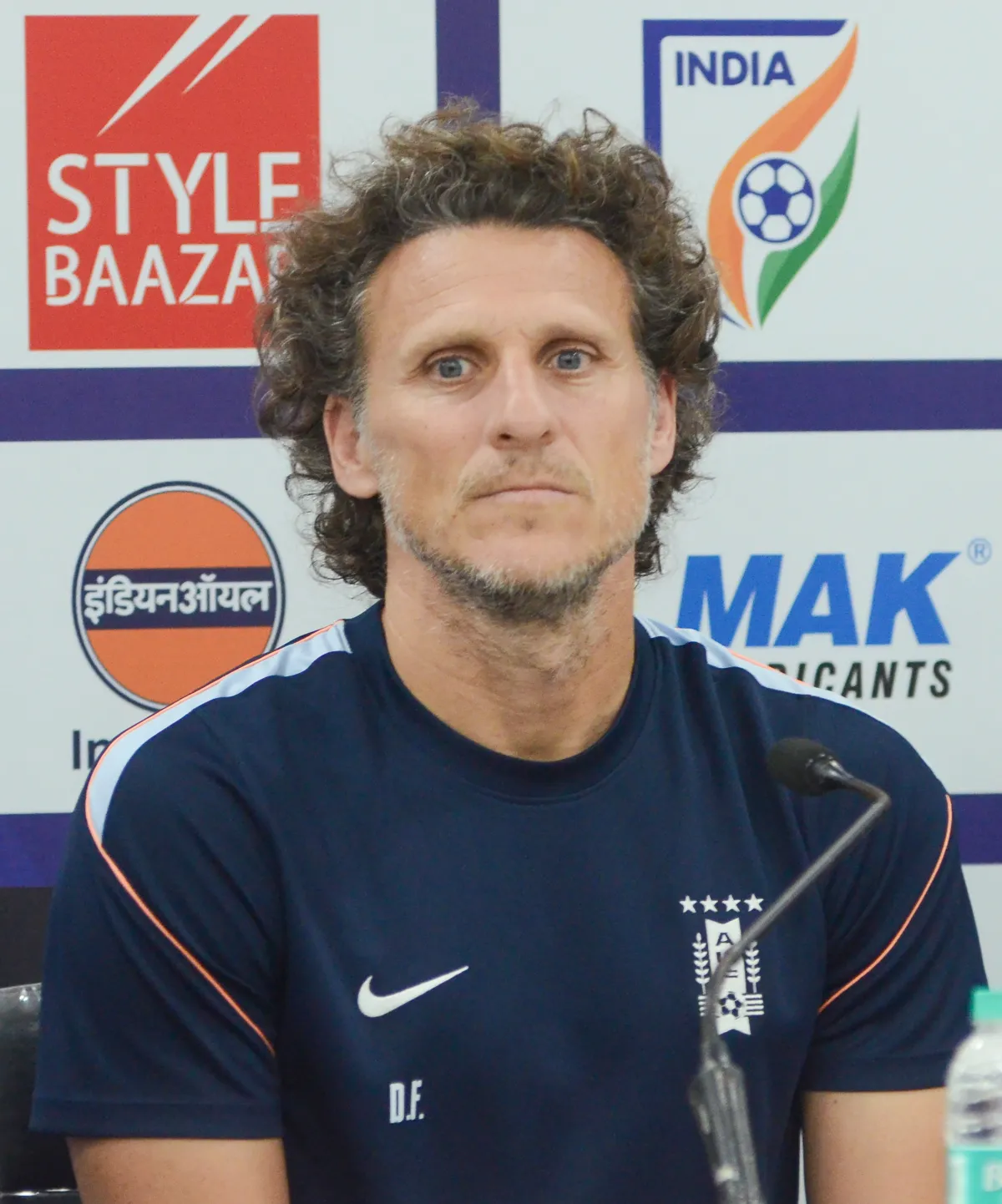
Diego Forlán’s first foray into management has arrived with a cautious optimism that belies the pressure of Uruguay’s World Cup exit. The 47-year-old, who stepped into the national team hotseat in August after Marcelo Bielsa’s departure, has already steered the Celeste through a three-match Asian tour, and his assessment of the squad’s performance is one of measured encouragement. While a 3-1 defeat to Japan in Miyagi on September 24 exposed vulnerabilities, the subsequent 4-1 victory over South Korea and a 6-1 thrashing of India in Kolkata on October 6 have offered a glimpse of the potential Forlán is nurturing.
Forlán’s confidence stems from more than just results—it’s rooted in the collective mindset of a team eager to rebuild. ‘The feeling was great,’ he told reporters after the tour, emphasizing the ‘quality’ displayed across the board. ‘We were able to give debuts to several players and the established ones performed at a very high level.’ His words carry weight, given his own illustrious career as a striker for Manchester United, Villarreal, Atlético Madrid, and Inter Milan, where he won the 2010 World Cup Golden Ball for Uruguay. Yet it’s his tactical acumen as a coach—proven at clubs like Peñarol and Atenas—that now shapes the Celeste’s identity. The 4-1 win over South Korea, in particular, stood out for Forlán. ‘Honestly, I believe it had been a long time since I’d seen Uruguay’s national team play the way they did against an opponent of a high standard,’ he reflected. ‘We scored some high-quality goals and controlled the tempo from the start.’ The margin of victory against India was even more telling, a 6-1 rout that underscored the squad’s physical and technical dominance when conditions aligned.
Forlán’s approach extends beyond X-factor performances; it’s about fostering a culture of trust and ambition. ‘What gave me the most peace of mind was their backing, their desire to come [to the national team],’ he noted, highlighting the pre-tour discussions that united the squad. This isn’t merely about individual brilliance—it’s about the collective will to compete at the highest level, a trait Forlán recognizes as critical for Uruguay’s 2028 World Cup ambitions. The road ahead won’t be easy. The Celeste’s early exit in Qatar last year was a humbling experience, and the road to redemption demands more than tactical adjustments—it requires consistency, depth, and the ability to perform under pressure. Forlán’s early signs of progress are promising, but the real test will come when the stakes are highest.
Yet Forlán’s dual role as manager of both the senior and under-20 teams adds another layer of complexity. Balancing the demands of youth development with the immediate pressures of the national squad is no small feat, but it’s a challenge he’s embraced. His ability to integrate young talent—players who may have been overlooked in Bielsa’s era—could be the key to Uruguay’s future. The Celeste’s Asian tour was a stepping stone, a chance to refine systems and rebuild confidence. Forlán’s words suggest he’s already found a rhythm, but the ultimate measure of his success will be how Uruguay fares in the coming years. For now, the early indicators are positive—a squad that plays with purpose, a manager who speaks with conviction, and a nation eager to believe in its footballing future once more.



