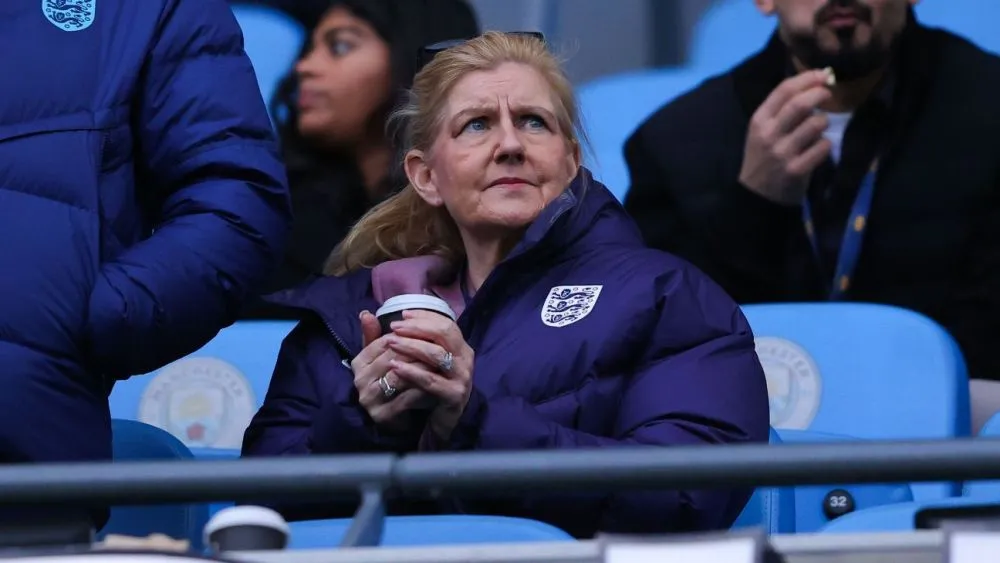
Football Association chair and FIFA vice-president Debbie Hewitt has delivered a direct challenge to FIFA president Gianni Infantino, demanding full disclosure of all internal documents surrounding the abandoned attempt to sell a stake in future World Cups. The controversial proposal involved creating FIFA Forward Enterprise, a commercial entity designed to bundle FIFA’s tournament management and commercial rights for private investors. Widespread opposition across the sport forced Infantino to withdraw the plan, but senior governance leaders aren’t letting the matter rest. Hewitt has formally requested that complete background files be distributed to all FIFA Council members ahead of their scheduled meeting on October 15 to establish absolute transparency.
The fallout from the private equity scheme has severely fractured relations across global football’s leadership. Arsene Wenger, FIFA’s chief of global football development, publicly distanced himself from the venture, declaring that abandoning the project was necessary beyond question. Meanwhile, UEFA declared it has lost confidence in Infantino’s administration, triggering a broader wave of political resistance. Key member associations—including England and Wales—withdrew their support for Infantino’s upcoming re-election bid, with the Scottish Football Association aligning with UEFA’s position. Council members are actively working to build a 19-vote majority to call an extraordinary meeting holding Infantino to account. Beyond governance transparency, UEFA and Concacaf issued a joint demand for FIFA to release at least $10m (£7.5m) from its cash reserves to each of the 211 member associations during the 2027–30 cycle. With FIFA on track to close the 2023–26 cycle holding approximately $6bn (£4.5bn) in reserves—an amount far exceeding operational needs through the 2030 World Cup—confederation leaders insist those funds must directly support regional infrastructure and football development.
Compounding the crisis is intense scrutiny over FIFA’s disciplinary process during the World Cup. Hewitt’s letter demands a full written explanation and complete record of correspondence regarding the decision to suspend United States forward Folarin Balogun’s mandatory one-match ban. The 25-year-old striker was issued a straight red card during a 2-0 Round of 16 victory against Bosnia and Herzegovina. Under standard regulations, he should have served an automatic suspension in the quarter-final against Belgium. Instead, FIFA’s disciplinary committee unexpectedly suspended the penalty, allowing Balogun to start the match—a 4-1 loss in which he played until stoppage time. The FA had initially backed Infantino’s re-election campaign but voiced deep concerns over potential political intervention after US President Donald Trump stated he personally asked FIFA to review the disciplinary ruling.
Resistance is mounting across international federations as Infantino prepares to stand for re-election following his mid-September candidacy announcement. Norwegian Football Federation president Lise Klaveness confirmed she is asking her board to submit a formal ethics complaint over the Balogun ruling, asserting that external pressure clearly influenced the decision and urging Infantino to admit it was an error. With the October 15 FIFA Council meeting approaching, Infantino faces an unprecedented wave of internal resistance spanning commercial policy, governance ethics, and financial distribution.