

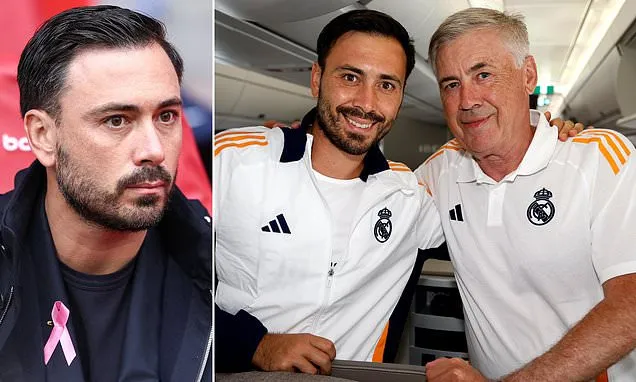
Davide Ancelotti’s appointment as Lille’s new head coach marks a return to European football for a man whose career has been defined by both promise and early setbacks. The 36-year-old, who spent five months at Botafogo before being sacked in December, now inherits a Ligue 1 side that secured Champions League qualification for the first time in a decade. His arrival follows Bruno Génésio’s departure after two seasons, during which Lille’s third-place finish in 2024–25 was overshadowed by a Europa League exit at the hands of Aston Villa. Ancelotti’s contract, running until June 2028, signals Lille’s confidence in a coach whose tactical acumen was honed under his father’s guidance at Bayern Munich, Napoli, Everton, and Real Madrid—yet whose own managerial track record remains unproven beyond a brief, underwhelming stint in Brazil.
What sets Davide apart from his father’s illustrious career is not just the absence of trophies, but the stark contrast in experience. Carlo Ancelotti’s managerial résumé reads like a who’s who of European football: six Champions League titles, two Serie A crowns, and a World Cup victory with Italy. Davide, by contrast, has spent his career as an assistant—until now. His first full-time role at Botafogo ended in failure: the club finished sixth in the Brazilian Série A, 16 points adrift of champions Flamengo, and was eliminated in the Copa Libertadores round of 16 by Ecuador’s LDU Quito. The dismissal came after just five months, a swift and public rejection of his leadership. Yet his tactical mind is undeniable. Reports suggest he draws inspiration from Greek mythology in his coaching philosophy, a detail that hints at a deeper, almost philosophical approach to the game—one that contrasts with the pragmatic, results-driven methods of his father.
The Lille project is not just about tactical innovation; it’s a test of Davide’s ability to adapt. His father’s influence looms large, but Carlo’s system—built on possession, positional play, and defensive solidity—may not translate seamlessly to a Ligue 1 side that, under Génésio, often struggled with defensive fragility. Lille’s 2024–25 campaign saw them concede 48 goals in the league, a figure that would be unthinkable for a Carlo Ancelotti side. Yet Lille’s attacking firepower, led by players like Jonathan David and Jonathan Clauss, could be a weapon in Davide’s arsenal. His time as an assistant to his father at the Brazilian national team—including during World Cup qualifying—may offer clues to how he intends to balance creativity with structure. The question now is whether he can replicate the success of his father’s assistants, like Pep Guardiola or Jürgen Klopp, or if he will carve out his own identity.
The immediate challenge is Arsenal. Lille’s Champions League campaign begins with a home match against the Premier League champions, a fixture that will test Davide’s ability to manage pressure. Arsenal, under Mikel Arteta, have dominated English football, but Lille’s depth and tactical flexibility could make them a formidable opponent. Davide’s past controversies—including a reported clash with Neymar during his time at Botafogo—add layers of intrigue. Whether these are mere anecdotes or signs of a more volatile personality remains unclear, but they underscore the complexities of his leadership. One thing is certain: if he succeeds, Davide Ancelotti will have done more than just follow in his father’s footsteps. He will have proven that a manager can be shaped by the game’s greatest minds without needing their trophies to validate his own.



