

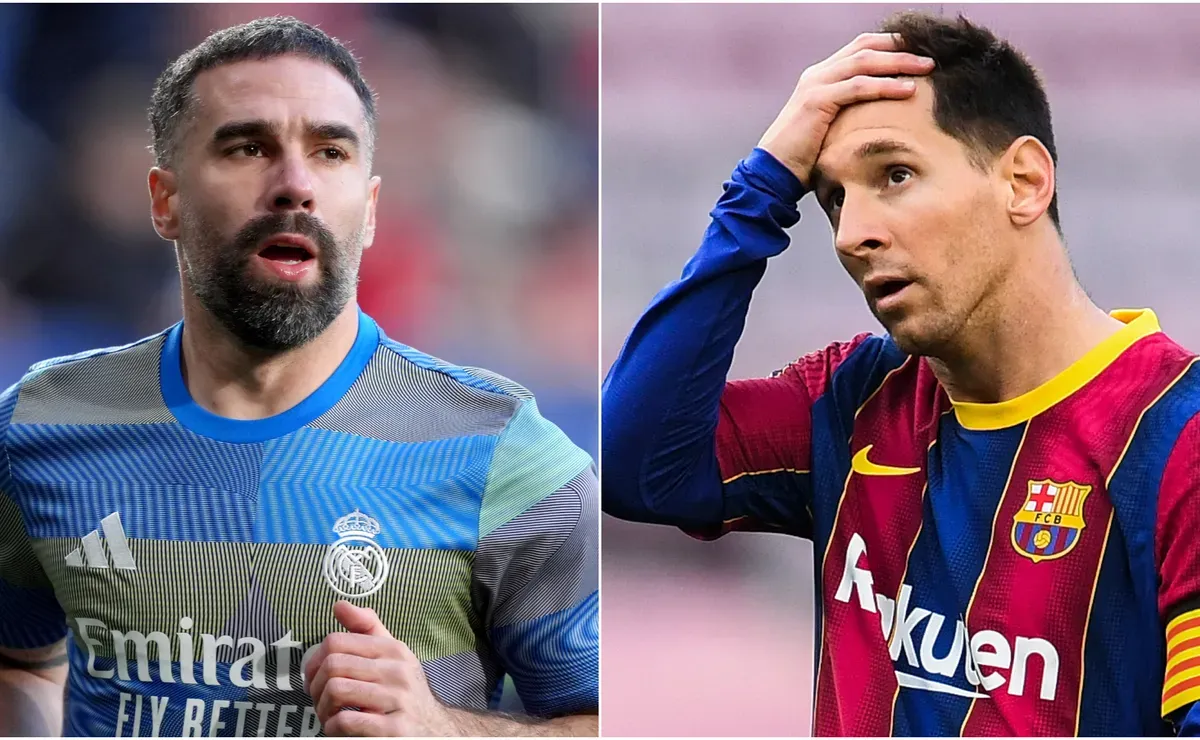
The specter of Lionel Messi’s 2021 Barcelona exit has loomed over Dani Carvajal’s potential move to Getafe, as the veteran defender’s proposed transfer has encountered the same financial restrictions that once shattered the Argentine’s 21-year dream at Camp Nou. Carvajal, now a free agent after his contract with Real Madrid expired, had been positioned as a logical successor to the aging defenders in La Liga—his experience and leadership a rare commodity in a league increasingly reliant on youth. But the path forward has been blocked by the same regulatory barriers that prevented Barcelona from registering Messi’s contract in August 2021, a moment that became one of the most painful in the history of the club and the game itself.
The parallels are striking. In both cases, the issue stems from La Liga’s financial fair play regulations, which impose strict limits on clubs’ ability to sign players under certain conditions. For Messi, the Blaugrana’s financial position at the time meant they could not legally register his new contract without violating the league’s rules, forcing the club to release him despite his unwavering loyalty. Now, Getafe—despite its ambition—faces a similar constraint, one that could scuttle Carvajal’s return to the competition he dominated for a decade. The veteran, who has reportedly been open to a significant pay cut to continue playing in Spain, had seemed the perfect fit for a club looking to bolster its defense without breaking the bank. Yet the financial architecture of La Liga, designed to prevent clubs from overspending, has once again become the obstacle rather than the solution.
The situation underscores a broader tension in Spanish football: the league’s financial regulations, while intended to ensure sustainability, often create unintended consequences for players and clubs alike. For Carvajal, a defender whose career has been defined by consistency and professionalism, the setback is a bitter reminder of how quickly even the most carefully negotiated deals can unravel. His departure from Real Madrid was framed as a fresh start, a chance to extend his playing career on his own terms. Instead, he finds himself trapped in the same regulatory labyrinth that once left Messi stranded, his legacy at Barcelona still fresh in the minds of fans and pundits alike.
What remains unclear is whether Getafe will find a way around the obstacle—or if Carvajal will ultimately pivot to another destination, perhaps one less constrained by La Liga’s rules. The case also raises questions about the long-term viability of the league’s financial framework, which has increasingly been criticized for its rigidity. For now, the story of Dani Carvajal’s stalled move serves as a grim echo of Messi’s 2021 nightmare, a cautionary tale about the unseen forces that shape even the most personal of football journeys.



