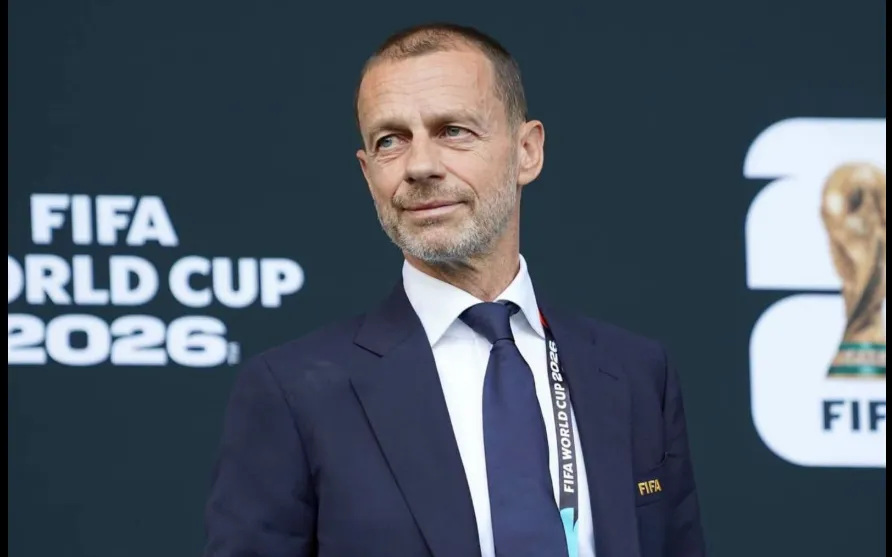
Aleksander Čeferin’s words carry the weight of a man who has spent years as UEFA’s most vocal critic of FIFA’s unchecked ambition. In his first public comments since FIFA President Gianni Infantino’s July review of the governing body’s decision-making, Čeferin did not mince words: the trust broken by the abandoned 20% stake sale in FIFA’s commercial rights—including the World Cup—remains irreparable. “The project that shattered the unity of world football may be abolished,” he stated, “but the trust it broke has not returned.” These are not idle observations. They are a direct reckoning with the consequences of a plan that, despite its cancellation, has left a legacy of division among confederations.
The investment proposal, which would have handed private investors a controlling stake in FIFA’s most lucrative assets, was met with unanimous opposition from UEFA, the Asian Football Confederation and CONCACAF. Yet its collapse has not healed the rift. Čeferin’s remarks, delivered at the Portugal Football Summit, framed the crisis through three critical pillars: unity, transparency, and governance that serves the game—not the interests of a few. “Yet not everyone places the game above their own ambitions,” he said, a pointed critique that, while never naming names, leaves little doubt about the target. The implication is clear: FIFA’s leadership has failed to demonstrate that its reforms are more than cosmetic, that its governance is more than performative.
What makes Čeferin’s intervention particularly significant is its timing. Infantino, who has pledged to seek another term in March 2027, has framed his review as an opportunity for renewal. But Čeferin’s scepticism suggests that mere process changes will not suffice. “The game will remain safe if those who govern it remember whom they serve,” he warned—a reminder that football’s institutions exist to uphold the sport, not to serve the whims of its leaders. The question now is whether FIFA will heed this call or continue to treat its members as obstacles rather than partners.
The stakes could not be higher. The collapse of the investment plan was not just a tactical failure; it was a strategic one. It exposed the deepening rift between FIFA and its confederations, where trust is the most fragile currency. Čeferin’s comments signal that UEFA will not back down from its demand for accountability. The path forward requires more than words—it demands action. Without it, the fractures in global football’s leadership will only widen, leaving the sport’s future in the hands of those who have repeatedly proven they do not prioritise its well-being above all else.