

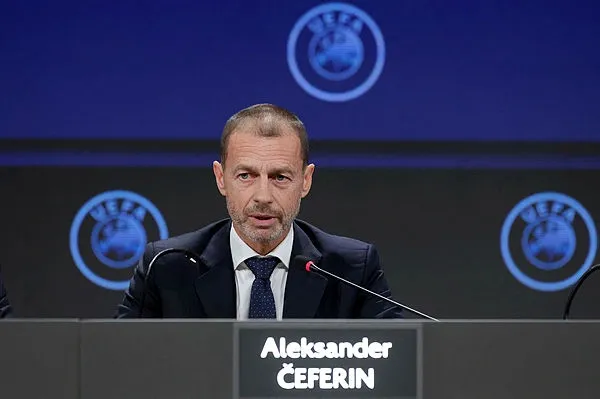
Aleksander Ceferin’s decision to pursue a fourth term as UEFA president is a calculated move that reshapes the future of European football’s governance. The 58-year-old Slovenian, who has led the confederation since 2016, announced Thursday that he would stand for reelection at the 51st UEFA Ordinary Congress in Astana, Kazakhstan, on April 22, 2027. The reversal comes after all 55 national associations—unanimously—urged him to reconsider his earlier decision not to run, a rare display of collective will within UEFA’s often fractured leadership structure.
Ceferin’s about-face underscores the weight of the challenges facing European football. His statement thanked the member associations for their ‘trust,’ framing the decision as a commitment to ‘keep European football united’ and ‘make our game stronger.’ The timing is deliberate: with FIFA’s own presidential election looming in March 2027, Ceferin has chosen to consolidate his position rather than engage in direct competition with Gianni Infantino. His repeated declarations that he would not challenge Infantino—despite UEFA’s recent rule changes allowing a fourth term—now appear as a strategic retreat from global football politics. By focusing inward, Ceferin ensures UEFA’s stability during a period when FIFA’s dominance is increasingly being questioned.
The decision also reflects the evolving dynamics between UEFA and FIFA. While Ceferin has historically positioned himself as a counterbalance to Infantino’s leadership, his refusal to run for FIFA president in 2027 (and now his consolidation at UEFA) suggests a pragmatic shift. The confederations’ relationship has grown more contentious in recent years, with UEFA pushing for greater autonomy in governance and financial structures. Ceferin’s extended tenure could either deepen UEFA’s independence or, if mismanaged, risk stagnation—particularly as younger leaders in European football begin to demand a voice in the next generation of leadership.
For now, the focus remains on the immediate task: securing another four-year mandate. If reelected, Ceferin would remain in office until 2031, overseeing UEFA’s next phase of expansion, including the 2028 European Championship and the ongoing debate over financial reforms. His leadership has been defined by both controversy—such as the 2022 World Cup bidding process—and progress, including the introduction of the UEFA Nations League and increased investment in grassroots development. Whether his extended tenure will deliver on these ambitions, or whether it will become a liability as fatigue sets in, will be the defining question for European football’s next decade.



