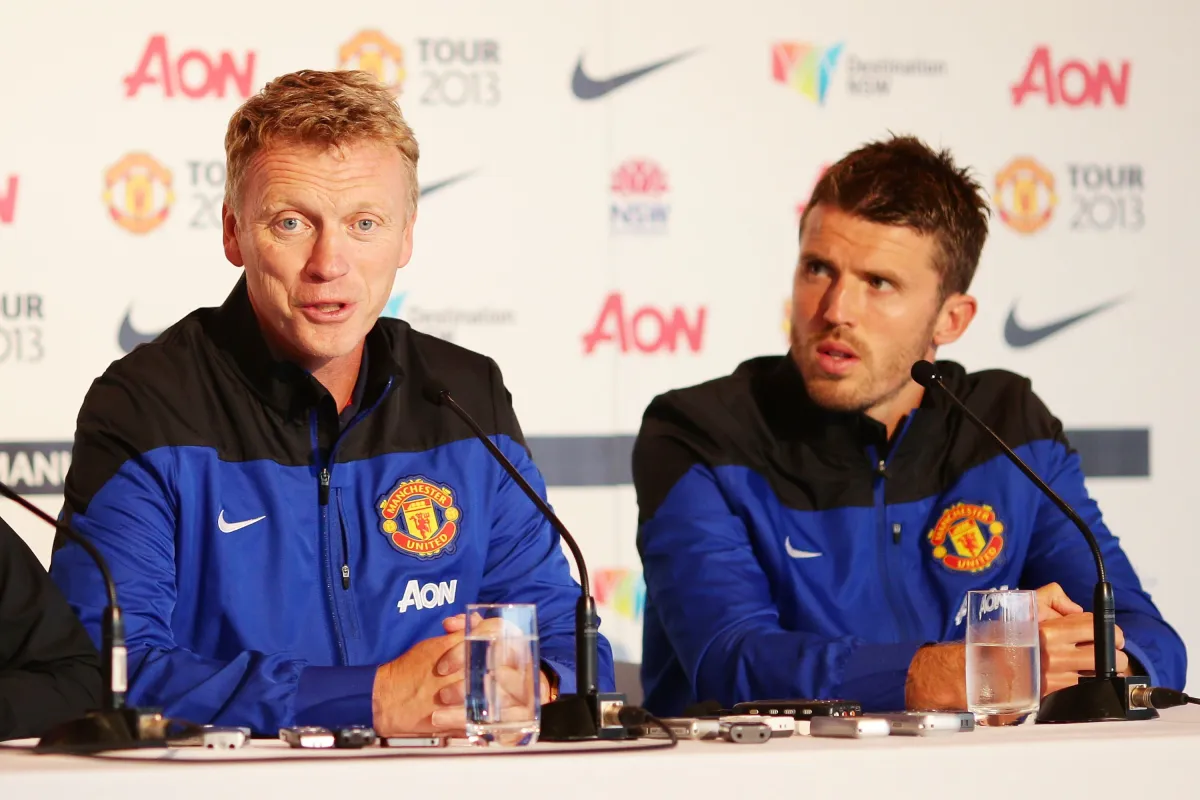
Michael Carrick’s Manchester United stood at a crossroads on Sunday afternoon at Craven Cottage. Sir Alex Ferguson watched from the stands as his former midfielder presided over another anaemic performance, one that exposed the chasms between this United side and genuine title contenders. The visiting team’s running data told a devastating story: twentieth in distance covered at high intensity, twenty-first in time spent sprinting, and twenty-first in pure sprint count. Fitness, the great telltale sign of a manager approaching the end of his tenure at Old Trafford, had become United’s weakest link. It was a stark reversal from the side that had dominated the Premier League table since Carrick’s arrival in January.
Carrick’s journey to this point has been extraordinary. Appointed caretaker manager on January 14th, he immediately stamped his authority with a commanding 2-0 victory over Manchester City, igniting a five-month spell that convinced the board to hand him the permanent reins. Across seventeen matches, United accumulated thirty-nine points, sitting atop the pile. The statistics painted a picture of a team in transition: Bruno Fernandes flourished under Carrick’s system, producing thirteen of his league-record twenty-one assists during that period. Yet beneath the surface, warning signs flickered. The team scored thirty-three goals from shots worth just twenty-six point seven expected goals, an unsustainable finishing rate that mathematics suggested would eventually correct itself.
That correction has arrived with brutal force. Since Carrick’s formal appointment on July 1st, the team’s underlying metrics have deteriorated markedly. Where United previously ranked third in expected goal differential under the previous regime, they have slid to fifth under Carrick, despite climbing to first in actual points per game. The contrast between the team’s earlier efficiency and current output is jarring. Key summer signings including defensive midfielder Andrey Santos from Chelsea for fifty-six point three million euros and midfielder Youri Tielemans from Aston Villa for forty-one million euros have yet to fully integrate, while the departures of striker Rasmus Højlund to Napoli for forty-four million euros and Casemiro’s free transfer to Inter Miami have left gaps that the current squad cannot consistently fill. The Fulham performance was merely the latest symptom of a deeper malaise.
The historical parallels are uncomfortable for Carrick. In his autobiography, written five years after his playing days, Carrick reflected candidly on his former manager David Moyes, noting that Moyes had been “looking for a chink” in United’s armor during his own ill-fated tenure. Those words now echo with bitter irony. Louis van Gaal, another United manager whose time ended amid fitness concerns, had previously dubbed defender Luke Shaw “not fit” for the demands of the position. Carrick, who once criticized Moyes’s methods as outdated, now finds himself attempting to implement similar high-intensity pressing systems that require a level of physical output his current squad simply cannot maintain. The methods that succeeded under Sir Alex Ferguson in 2012-13 are not translating in the modern Premier League, and Carrick is discovering that what worked in theory has failed in practice.
With the international break approaching, Carrick stands at a critical juncture. If United continues to drop points and fails to show tangible improvement, the pressure will intensify rapidly. History suggests that United managers are granted patience, but only up to a point. The contract running until June 2029 offers stability, yet the board’s willingness to tolerate underperformance remains untested. Carrick’s task is clear: rediscover the formula that produced twelve wins in seventeen games, address the fitness deficiencies that have haunted recent performances, and integrate his new signings effectively. The Premier League title has not been United’s since 2013, and while Carrick’s earlier form suggested a genuine challenge, the current trajectory points toward a familiar fall from grace. Whether he can arrest this decline or becomes another cautionary tale in United’s managerial history remains the defining question of this season.