

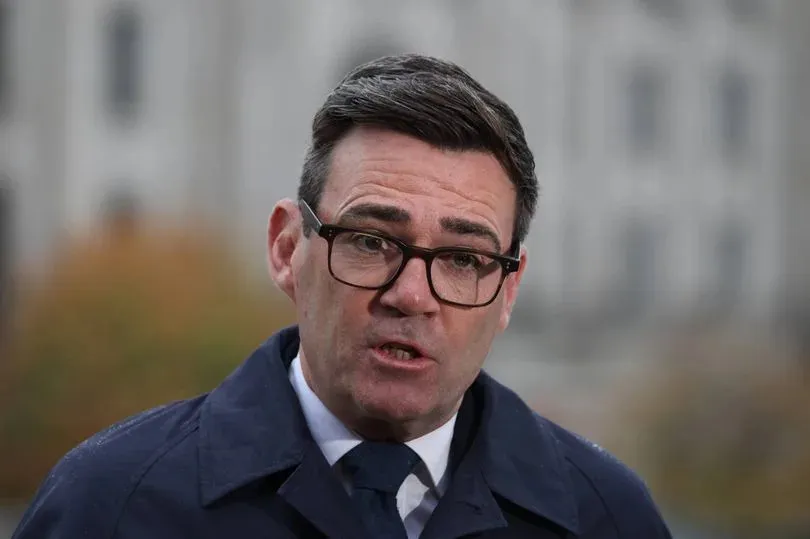
The political fallout over Manchester City’s historic financial violations has intensified following comments by UK Prime Minister Andy Burnham, who has come under fire for framing the club’s guilty verdict as less severe than the evidence suggests. The Premier League’s independent regulator confirmed City’s culpability in 114 breaches spanning nine seasons, exposing a systematic use of ‘sham’ commercial arrangements to inflate revenue by over £830 million while disguising secret funding. The findings also revealed repeated misstatements in accounts and deliberate violations of Premier League and UEFA financial regulations, with the club’s failure to cooperate with the investigation further compounding the case.
Burnham’s initial remarks—delivered during an interview following a meeting with German Chancellor Olaf Scholz—sparked immediate backlash. While he acknowledged the ‘seriousness’ of the judgement, his phrasing suggested a reluctance to fully endorse the regulator’s conclusions, noting concerns about the club’s role in Manchester’s economic development. Downing Street later clarified that the Prime Minister had ‘made clear’ the case was serious and that no entity was ‘above the rules,’ but the timing of his comments—amidst the regulator’s findings—has drawn scrutiny. Critics, including shadow sports minister Louie French, have accused the government of politicising football, warning that the case must proceed independently without interference.
The stakes could not be higher. The Independent Football Regulator has already signalled its willingness to explore stripping Manchester City of its licence, a move that would send shockwaves through English football. The club’s ownership structure—linked to the City Football Group—has also become a focal point, with reports suggesting Emirati officials have privately warned the UK government that the severity of the case could deter future major investments. Burnham’s own history as Greater Manchester mayor adds another layer of complexity; his past involvement in the club’s development has led to accusations of hypocrisy, particularly as he now faces accusations of understating the gravity of the violations.
Burnham attempted to preempt criticism by invoking the Everton case, where he argued that ‘rushing to judgement’ had been misplaced. Yet the parallels are tenuous at best. Unlike Everton’s 2011 financial irregularities—which were later deemed less severe—the scale of City’s breaches is unparalleled, involving deliberate deception over a decade. The regulator’s findings explicitly describe a ‘systematic’ approach to rule-breaking, with evidence of coordinated efforts to manipulate financial records. Burnham’s caution may reflect a broader unease about the potential fallout for Manchester’s economic landscape, but it has only deepened suspicions that political considerations are clouding the response to what remains one of the most damning verdicts in Premier League history.
As the case proceeds to an appeal board and sanctions hearing, the political dimension risks overshadowing the regulatory process. The Premier League’s own statement underscored the need for an ‘independent process,’ yet Burnham’s comments have already framed the debate in terms of loss rather than accountability. For a club that has dominated English football for a generation, the implications extend beyond penalties or points deductions—they threaten the very foundation of its ownership model. Whether the regulator’s next steps will include licence revocation remains uncertain, but one thing is clear: the fallout from this verdict will redefine the relationship between politics, power, and the game’s most sacred rules.



