

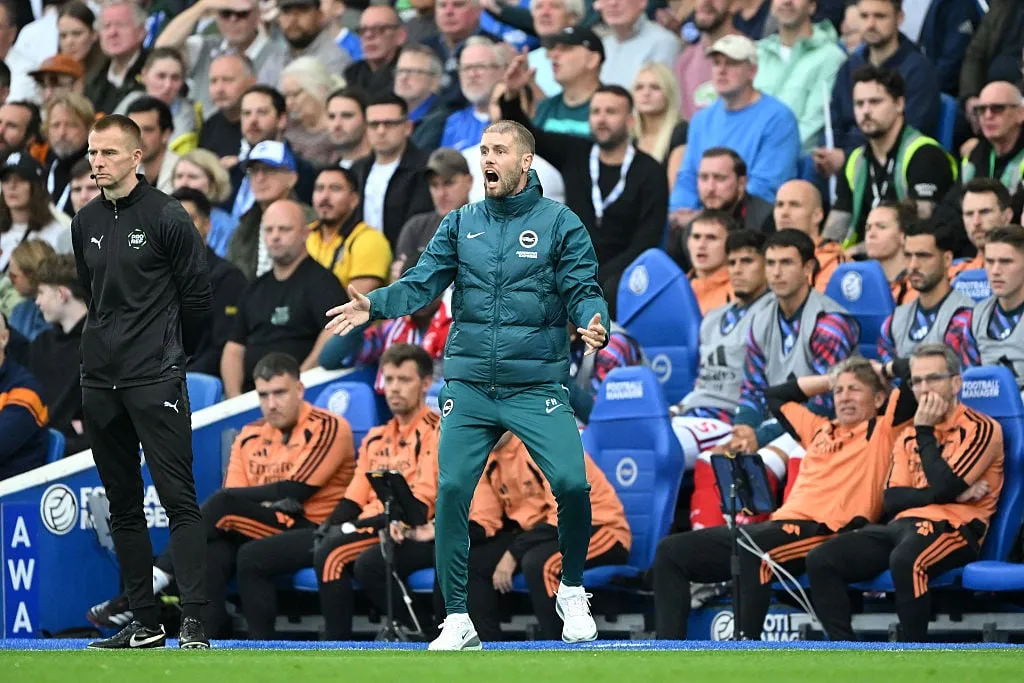
Fabian Hurzeler’s message to Brighton & Hove Albion is clear: forget the headlines. The 3-0 demolition of Arsenal at the Emirates was a moment of brilliance, but it was not a statement of intent. It was a game. And now, the Seagulls must return to the Stadium of Light on Saturday with their minds focused on the task at hand—one that demands a tactical reset against Sunderland.
‘It’s a completely new game, new opponents and a different environment,’ Hurzeler stated, framing the fixture as a return to basics. The words carry weight after a summer in which Brighton’s identity has been questioned, their defensive structure scrutinised, and their ability to sustain momentum doubted. The Arsenal win, while stunning, was not a rehearsal. It was a performance that required precision, timing, and a collective belief that could not be guaranteed against any opponent. Now, with Sunderland’s physicality and tactical flexibility in mind, Hurzeler insists the Seagulls must ‘start from point zero.’ The challenge is to replicate the defensive solidity that stifled Arsenal’s attack—where the Gunners, under Mikel Arteta’s admission, were ‘very far from their best’—while maintaining the offensive dynamism that delivered three goals.
The squad’s availability adds another layer of complexity. Lewis Dunk and Jack Hinshelwood, both key defenders, have returned from their respective setbacks, their fitness now confirmed. Their presence stabilises a backline that has been a focal point of Brighton’s defensive evolution under Hurzeler. Yet, the status of full-back Azeez remains uncertain. ‘It’s not an injury but there are some minor issues,’ the manager acknowledged, hinting at a player whose sensitivity to physical demands requires careful management. Azeez’s absence—or even a limited role—would force Brighton to adjust their shape, potentially shifting the defensive burden onto Dunk and the centre-back partnership of Verbruggen and another. The tactical flexibility of Sunderland, a team that has adapted well to Premier League pressures, will test Brighton’s ability to adapt on the fly.
Beyond the immediate squad dynamics, the broader narrative of Brighton’s season hangs in the balance. The Seagulls’ 3-0 win over Arsenal was not just a statement against one club; it was a challenge to the established order of the Premier League. Yet, as Jim White has noted, Hurzeler’s approach to the media was never about the result itself. It was about the process—the relentless pursuit of improvement, the refusal to take any victory for granted, and the understanding that football’s unpredictability demands constant evolution. Sunderland, a team that has shown resilience in recent seasons, will not make this easy. The fixture is not a test of arrogance; it is a test of consistency. Can Brighton’s midfield dictate tempo? Can their defence hold firm against Sunderland’s counterattacks? Can they replicate the composure that saw them neutralise Arsenal’s firepower?
The answer will come at the Stadium of Light. For now, Hurzeler’s words serve as a reminder: this is not a story about one game. It is about the next. And in football, the next is always the most important.



