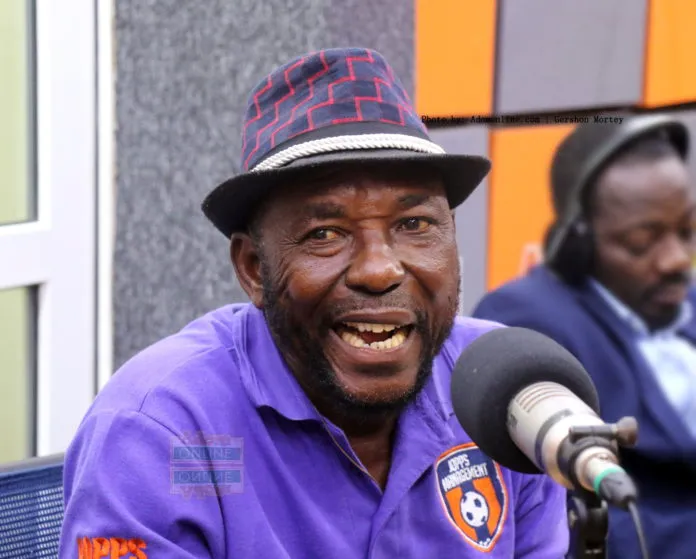
The Black Stars’ approach to selecting players for the 2027 Africa Cup of Nations qualifiers has sparked a storm of criticism from within Ghana’s footballing ranks, with veteran coach Joseph Emmanuel Sarpong accusing the national team of systematically overlooking domestic talent. In a blunt assessment of the current selection policy, Sarpong questioned why Ghana Premier League players—who form the backbone of the league—are so rarely given opportunities to represent the Black Stars, despite their proven ability once abroad.
The issue came to a head with the announcement of Ghana’s 24-man squad for the opening qualifiers against Ivory Coast and The Gambia. Among the 24 names, only Hearts of Oak goalkeeper Benjamin Asare emerged from the Ghana Premier League, a stark contrast to the international experience of the rest of the squad. Sarpong’s frustration is rooted in a pattern he describes as ‘inconsistent and unfair’: players who struggle to earn regular selection while playing locally suddenly find themselves in the Black Stars fold after moving to Europe or Asia. ‘We don’t know whether the local league is good or not because of the absence of the local boys,’ he stated. ‘They say the local boys are not good enough, but it’s the same boys who travel and, after one or two years, suddenly get invited to the national team.’ His words carry weight given the recent exodus of established players from the squad, further exposing the fragility of Ghana’s current setup.
The implications of this selection strategy extend beyond individual players. Former Sports Minister Edwin Nii Lante Vanderpuye has gone further, dismissing the technical quality of Ghana Premier League football as ‘colt-level,’ a claim that echoes broader concerns about the league’s development. With only Asare consistently included in recent squads, the message to domestic players is clear: the Ghana Premier League is not a proving ground for international football. This perception risks discouraging young talent from investing in the domestic game, knowing their path to the Black Stars likely requires a move abroad—a reality that contradicts the national team’s stated commitment to nurturing homegrown talent.
Carlos Queiroz’s Black Stars now face their first qualifying match against Ivory Coast in Bouaké, a test that comes amid internal divisions and a squad depleted by withdrawals. The team’s ability to compete will hinge not just on tactical adjustments but also on whether the selection process can regain trust. Sarpong’s criticism underscores a deeper tension: how to balance the demands of international football with the need to sustain and elevate the domestic game. Without meaningful representation from the Ghana Premier League, the Black Stars risk reinforcing the very cycle they claim to challenge—one where success abroad becomes a prerequisite for national team recognition rather than a reward for consistent domestic performance.
The stakes could not be higher. Ghana’s return to the 2027 Africa Cup of Nations hinges on more than just tactical preparation; it depends on whether the Black Stars can bridge the gap between their domestic league and international ambitions. Sarpong’s challenge is not just a critique of individual call-ups but a call to rethink the entire system. Until then, the question remains: how long can Ghana’s footballing hierarchy justify a policy that leaves its own league players on the sidelines?