
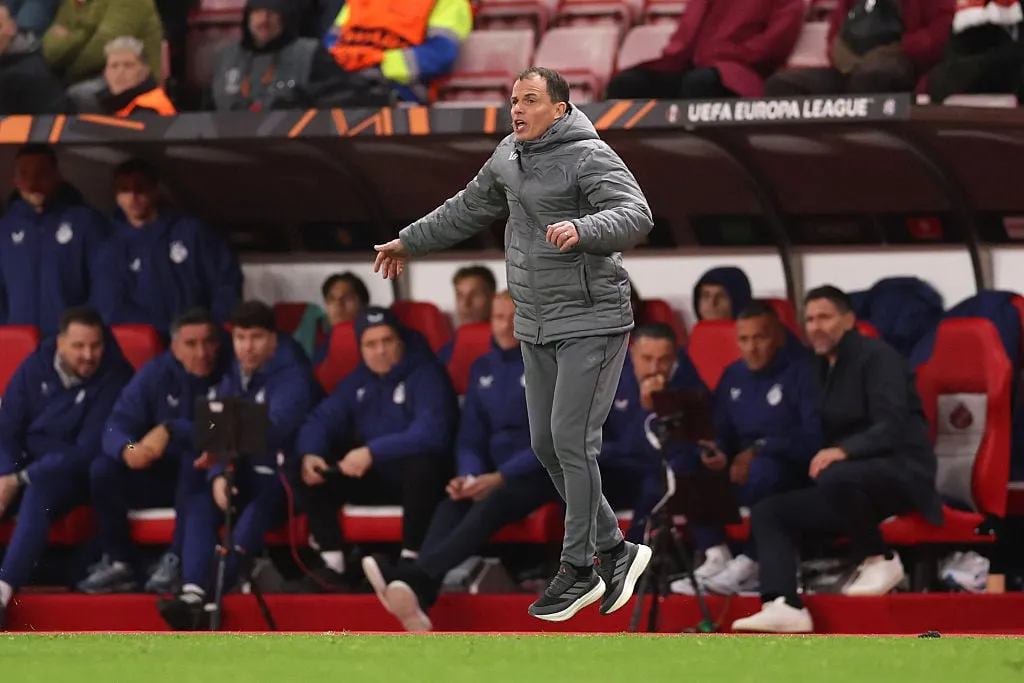
Sunderland’s defensive frailties have reached a critical juncture, and Régis Le Bris has finally laid bare the structural issues plaguing the club’s backline—starting with the most glaring weakness of all: set pieces. The 2-0 defeat to Dinamo Zagreb on Thursday night exposed yet another defensive collapse, mirroring the same pattern that cost Sunderland an equalizer against Lech Poznan just two weeks prior. In both instances, the Black Cats left opposition attackers unmarked in dangerous positions, overloading the six-yard box while failing to cover the edges of the area—a tactical misstep that has become a recurring nightmare.
Le Bris has not shied away from the conversation, though his language suggests a manager under pressure to deliver immediate solutions. ‘We had this conversation with a few players in the dressing room on Friday morning,’ he admitted, framing the discussion as a collective effort rather than a personal failing. Yet the repetition of these errors—despite Sunderland’s otherwise disciplined defensive shape—raises questions about whether the adjustments are being implemented with the urgency required. The club’s Premier League defense ranks among the worst in the division, and the Europa League setback only amplifies the sense of urgency. Le Bris insists the team is not being set up defensively in this manner, but the evidence suggests otherwise.
The manager’s confidence in the club’s hierarchy remains steadfast, though the tactical inconsistencies demand closer scrutiny. ‘I still have no doubt that the club’s hierarchy is fully behind me,’ Le Bris stated, a remark that cuts through the noise of recent criticism. Yet the backroom discussions he references hint at a deeper issue: if the problems persist despite internal dialogue, the solutions may require more than just verbal reassurance. The overloading of the box and the neglect of the edges—where goals are often decided—are not mere oversights; they are tactical failures that, if unaddressed, could prove fatal in both domestic and European competitions.
Noah Sadiki’s public backing of Le Bris adds another layer to this narrative. The midfielder’s endorsement, while not unexpected given his loyalty to the manager, underscores the internal solidarity Sunderland is attempting to project. Yet loyalty alone cannot fix structural weaknesses. The set-piece vulnerabilities are not isolated incidents; they are part of a broader defensive malaise that has plagued the club for months. If Le Bris is to turn this around, the changes must be swift, systematic, and—most importantly—visible on the pitch.
For now, the focus remains on damage control. The Europa League defeat was a stark reminder of Sunderland’s defensive fragility, but the Premier League’s relentless schedule offers little room for error. Le Bris’s words carry weight, but the proof will lie in the next few games—specifically, whether the set-piece adjustments take hold before the next opposition striker finds an unmarked man in the box.