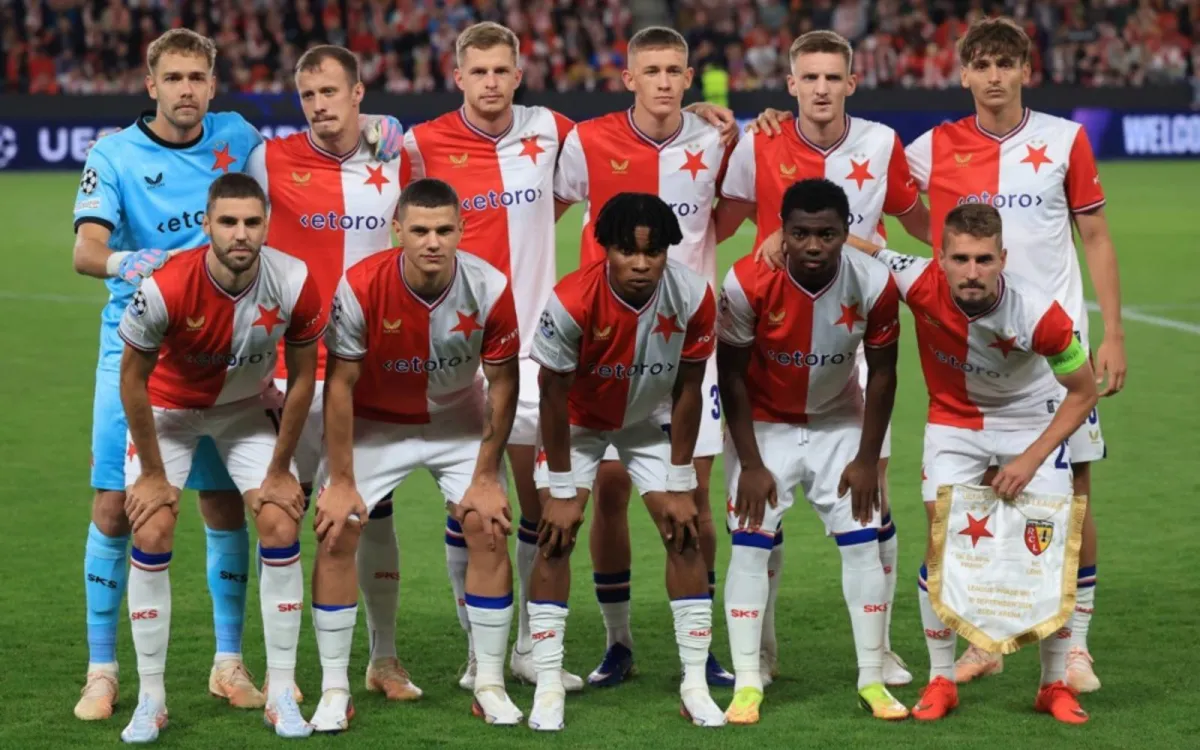
The Champions League has never been kind to Slavia Prague. The Czech champions, who have won just one of their 23 appearances in Europe’s elite competition, now stand on the precipice of a defining moment. Hosting Arsenal in a match that could either end their drawn-out winless run or extend it further, Slavia’s manager Jindřich Trpišovský has framed the challenge with brutal honesty: ‘Of course, we know how tough European games are and how hard you must work to win.’ The words carry weight, given Slavia’s history—including a 7–0 defeat to Arsenal in London in 2007—and the looming specter of history’s longest winless streaks, where AEK Athens (24 games) and Steaua Bucharest (23) once reigned supreme.
This fixture arrives after Arsenal’s 1–0 victory over Liverpool at Anfield, a result that would daunt most sides. Yet Slavia’s next fixtures—home to Villarreal and away to Bayern Munich—add layers of complexity to their quest. Their single Champions League triumph came in their debut campaign, a 1–0 win over Steaua Bucharest in September 2007, a result that now feels like a distant memory. The Czech side’s approach to the game is pragmatic, as Trpišovský acknowledged: ‘In some games we were on the front foot and we got beaten. This is the beauty of football.’ The statement underscores a reality: Slavia’s struggles are not just about tactics or preparation, but the sheer weight of expectation in a competition where even the most storied clubs falter.
Arsenal, meanwhile, enter the match as a side that has recently demonstrated resilience, their recent win over Liverpool a reminder of their ability to exploit defensive vulnerabilities. For Slavia, the psychological toll of the winless streak is palpable. The 22-game drought—already a record in itself—has eroded confidence, and the pressure to break it against Arsenal, a club with a history of dominance in European football, is immense. The Czech side’s limited resources, both on and off the pitch, are evident in their modest operational footprint: just 58 employees, with no growth in headcount over the past year, and a website with near-zero engagement metrics. Yet in football, where history is often rewritten in 90 minutes, even the most underdog narratives can ignite.
The implications of this match extend beyond Slavia’s immediate future. A loss would extend their winless streak to 23 games, a milestone that would place them alongside Steaua Bucharest’s 2006–13 drought. A draw would keep the record intact, while a victory—however unlikely—would shatter the narrative of their European futility. Trpišovský’s side has faced Arsenal three times in the Champions League, recording one draw and two losses, but the conditions are never the same. This time, the stakes are higher than ever. For Slavia, the question is not whether they can compete, but whether they can defy the odds in a competition where even the most storied clubs have stumbled.