
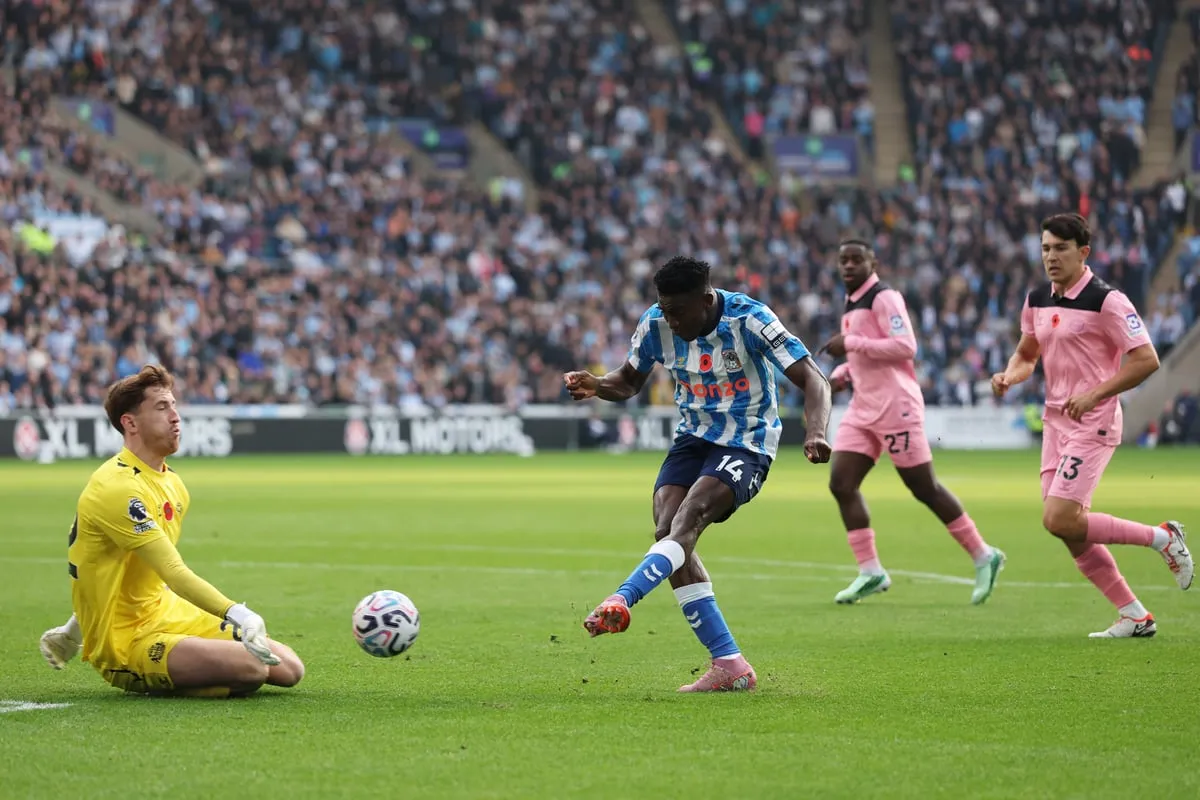
The Premier League’s relegation battle has never been more starkly defined by statistics. According to Opta’s latest supercomputer simulations—run across 10,000 scenarios—every team except Arsenal (0.2%) and Manchester City (0.8%) faced relegation in at least 2% of projections. For Sunderland, the numbers are particularly damning: their underlying performance last season ranked them among the worst defensively and offensively in the division, with just Burnley (30.9 xG) and Wolves (31.6 xG) performing worse in open play. They conceded the third-most shots (537) and the fourth-most shots on target (166), a defensive record that now casts a long shadow over their 2026-27 campaign.
The data doesn’t lie. Sunderland’s transfer activity this summer—limited after the frenetic spending of 2025-26—has left their squad structurally vulnerable. Their 22.4% relegation probability, while lower than Hull City’s (81.6%) or Ipswich Town’s (47.5%), still places them in the firing line. The Tigers’ schedule isn’t helping: their opening five games rank among the toughest in the league, a gauntlet that could expose their fragility before the season even begins. Meanwhile, Coventry City—despite their recent 8/13 odds—have the joint-hardest start, a fact that could see them battle for survival with every point counting.
Hull City’s case is the most extreme. Promoted via the play-offs after a sixth-place Championship finish, they now face an 81.6% chance of immediate relegation, a probability more than double that of their nearest rival, Ipswich Town (47.5%). Their inability to win since late August has only deepened the pessimism, with the supercomputer’s simulations treating their survival as a long shot. Nottingham Forest, meanwhile, share Coventry’s 43.1% relegation risk, a stark reminder that even mid-table teams from last season are not immune to the drop.
The contrast with Coventry’s potential survival challenge is striking. Despite their recent defeat to Fulham, the Sky Blues’ expected points total sits just fractions behind Nottingham Forest’s, suggesting their defensive solidity and Lampard’s tactical acumen could yet keep them up. But for Sunderland, the path forward is far steeper. Their next three home games—against Sunderland, Crystal Palace, and Ipswich—will be decisive. The question isn’t whether they can survive, but how quickly they can turn the tide before the window closes entirely.
This isn’t just about odds; it’s about reality. The Premier League’s unpredictability is well-documented, but the data offers a cold, mathematical truth: Sunderland’s defensive vulnerabilities, Hull’s lack of form, and Coventry’s schedule are all red flags. For fans of these clubs, the coming season will test whether statistics can be defied—or if the numbers are the final word.