
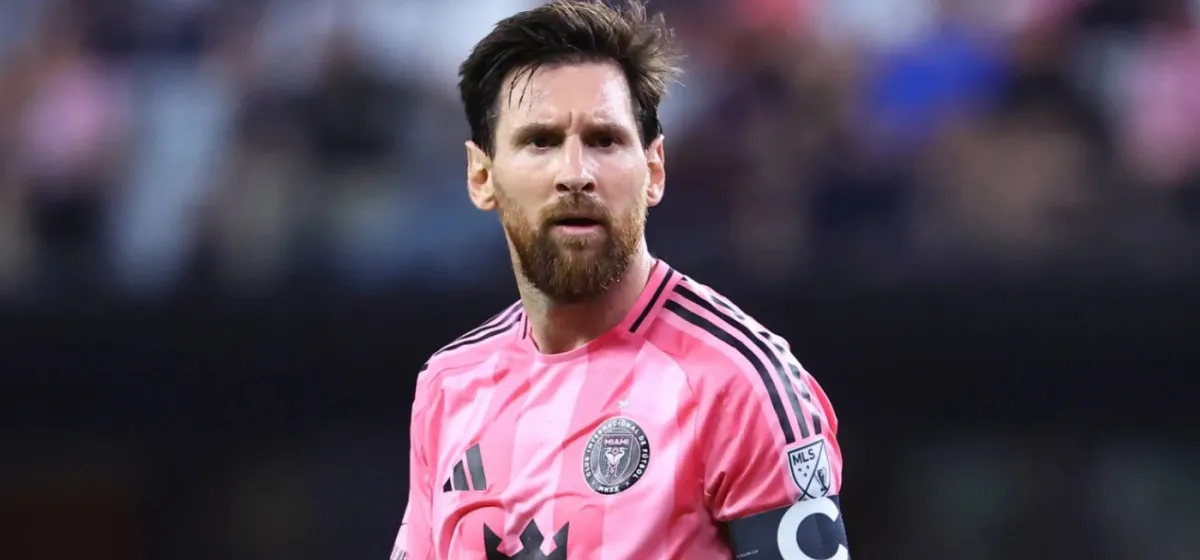
The Ballon d’Or 2026 delivered a result that, for some, feels like a reckoning. Lionel Messi, the eight-time winner and undisputed icon of the game, finished fifth—a position that has sparked debate among those who believe his dominance should not be diminished, even in his final year of international football. Among them is Mehdi Benatia, the former Morocco captain and Bayern Munich defender, who has publicly questioned the ranking, arguing that Messi’s season, spent largely in Miami, did not justify such a placement.
Benatia’s criticism cuts to the heart of the debate: ‘You spend the whole year in Miami and then finish the season in fifth place? Have European football fans watched Messi more than Olise?’ The comparison to Michael Olise, a rising Premier League talent, underscores the shift in perception. Messi’s absence from European club football for much of the campaign—after joining Inter Miami in 2023—has left some questioning whether his impact was as universally felt as it once was. Yet Benatia acknowledges Messi’s brilliance at the FIFA World Cup 2026, where he led Argentina to the final with eight goals in eight games. ‘He was outstanding,’ Benatia concedes, ‘and the whole team plays for him.’ But the former defender’s frustration remains: how can Messi, at 39, be ranked behind players who have been more consistently visible in Europe’s top leagues?
The timing of this critique is significant. Messi’s international career ended in October 2025, with his final appearance a friendly against Benin. His legacy as Argentina’s all-time top scorer (126 goals in 208 games) is secure, but the Ballon d’Or’s ranking has forced a reckoning with his post-World Cup relevance. Meanwhile, Harry Kane’s historic win—his first Ballon d’Or and the first for an England player since Michael Owen in 2001—has further complicated the narrative. Kane’s achievement, built on a season that saw him lead Bayern Munich to the Bundesliga title and England to the World Cup semis, has cemented his status as the game’s current standard-bearer. That he is also the first Bundesliga winner of the award since 1996 adds another layer to the conversation: the Ballon d’Or is not just about individual brilliance, but also about visibility and influence in Europe’s most competitive leagues.
What Benatia’s comments reveal is a broader tension in modern football: the tension between legacy and immediacy. Messi’s eight trophies and unparalleled skill set remain unchallenged, but the game has moved on. The Ballon d’Or, as an award that reflects the present, has increasingly favored players whose impact is felt in the here and now—players like Kane, whose consistency and leadership in Europe’s top leagues have made him the clear choice. For Messi’s critics, the fifth-place finish is not a reflection of his talent, but of a changing landscape where even the greatest must adapt to new expectations. The debate, then, is less about whether Messi deserves respect and more about how the game’s narrative is being rewritten—one Ballon d’Or at a time.