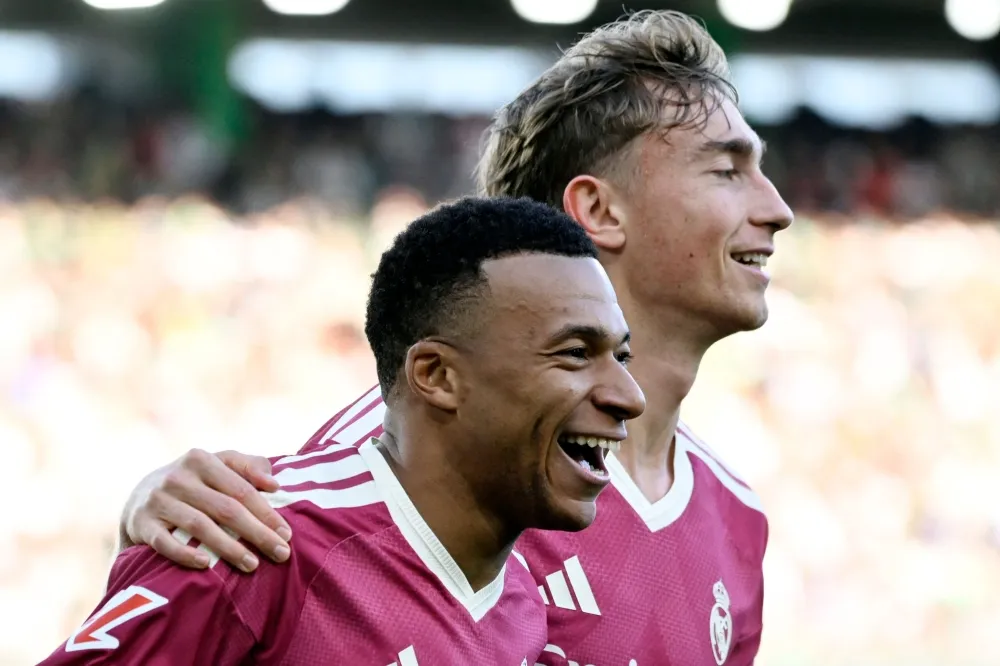
Kylian Mbappé’s week has been defined by two contrasting narratives: on the pitch, a decisive penalty to secure a 3-0 La Liga victory over Racing Santander; off it, a diplomatic firestorm that has left Real Madrid’s global image under siege. The French forward’s apology for jokingly comparing Mao Zedong to a ‘dictator’ in a private podcast conversation has triggered a coordinated backlash in China, where state broadcasters and corporate sponsors have severed ties with the club and player. The blackout of Madrid’s match against Santander on Chinese television—alongside the withdrawal of major dairy brands like Mengniu and Shanghai Milkground—marks a rare and deliberate exclusion of a La Liga fixture, signaling that the controversy remains unresolved.
The tactical execution in Santander was as precise as the off-field fallout was politically charged. Mbappé’s penalty in the 28th minute sealed the win, but it was Vinícius Jr.’s clinical finish from Diogo Jota’s cross in the first half that set the tone. The hosts’ second-half surge, led by a frustrated Mourinho, failed to dent Madrid’s control, with Agirrezabala’s save on Bellingham’s header the only real challenge. The result trimmed the gap to Barcelona to three points, reinforcing Madrid’s third-place security while keeping the pressure on the league leaders. Yet the victory’s significance was overshadowed by the broader narrative: a club now navigating a crisis that extends beyond football, with La Liga’s crisis unit convened and Chinese ambassador Yao Jing engaged in direct negotiations.
The controversy’s origins lie in a meme culture gone awry. In a now-deleted podcast clip, Mbappé participated in a lighthearted joke photoshopping his face onto a figure described as ‘some guy—a Chinese dictator.’ The remark, intended as satire, crossed a line in a country where Mao Zedong remains a taboo subject. Real Madrid’s immediate apology—backed by Mourinho’s public endorsement of Mbappé’s ‘class’—was met with further escalation. Chinese state broadcaster CCTV and streaming platform Migu Video omitted the match entirely, while corporate sponsors pulled support, exposing the vulnerabilities of athletes in the world’s second-largest sports market. The blackout wasn’t just a commercial decision; it was a calculated response to what Beijing perceives as an insult to national history.
For Mbappé, the duality of the week—scoring a winner while facing a diplomatic boycott—highlights the pressures of modern stardom. His Ballon d’Or near-miss to Harry Kane on Monday had already cast a shadow over his season, but the China controversy has elevated the fallout to a new level. The crisis unit’s formation under La Liga president Javier Tebas underscores the league’s determination to mitigate damage, yet the blackout suggests the issue is far from contained. As Madrid’s La Liga campaign enters its final stretch, the club’s ability to recover from this diplomatic setback will depend on more than just on-field results—it will hinge on whether the apology resonates beyond the pitch, in a market where words carry weight far beyond the game itself.
The broader implications stretch beyond Madrid. For La Liga, the incident serves as a reminder of the league’s growing global footprint—and the risks that come with it. Barcelona, too, must watch closely, as China’s stance could influence sponsorship and broadcasting deals across Spanish football. Meanwhile, Mbappé’s career trajectory now intersects with geopolitical sensitivities, a reality few players face. His next move—whether in negotiations with Barcelona or elsewhere—will be scrutinized not just for tactical fit, but for his ability to navigate such controversies without further damage to his brand. The penalty against Santander was a moment of redemption on one front; the weeks ahead will reveal whether it’s enough to erase the stain on another.