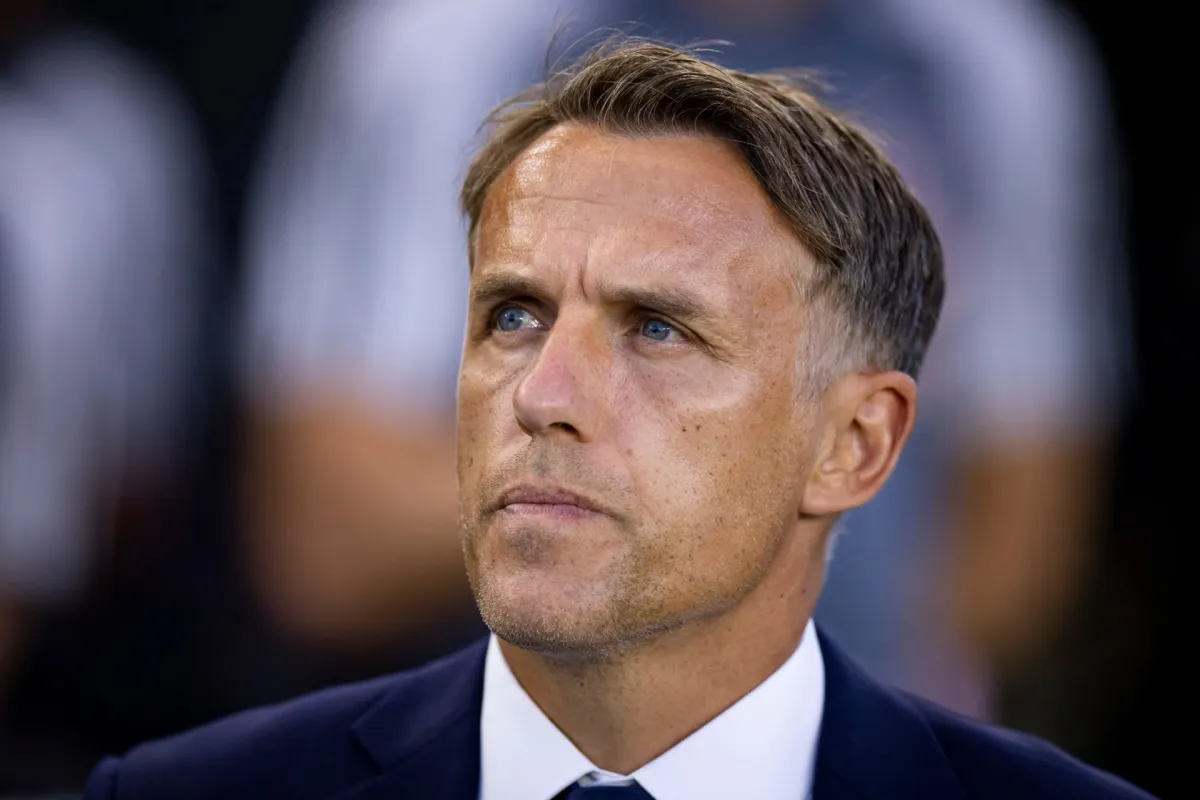
The moment Manchester United became a circus wasn’t marked by a single match or a dramatic fallout—it was the silent unravelling of a system, and Phil Neville has pinpointed its exact rupture. Speaking with uncharacteristic bluntness, the former England defender and United legend traced the club’s current malaise to a critical juncture: the simultaneous departure of two of its most influential figures. ‘New CEO, new manager, and it just became a circus where the manager lost control,’ Neville stated. His words carry the weight of someone who has navigated United’s highs and lows, and they underscore a truth United fans have long suspected: the club’s collapse wasn’t inevitable, but the result of a leadership vacuum that has since metastasised into every facet of the organisation.
Neville’s diagnosis is tactical and structural. The alignment that once defined United—where the board, manager, and squad moved in unison—shattered when those two pillars left at once. The fallout wasn’t just about personnel; it was about the erosion of trust. Carrick and Wilcox, now on the chopping block, are symptoms of a deeper rot. Their removal won’t fix the underlying issue: a scattergun approach to decision-making that leaves players like Bruno Fernandes operating in a tactical limbo. The midfielder’s public questioning of Carrick’s game plan against Como was less about the specific incident and more about the cumulative frustration of a system that seems to lack direction. Neville’s observation—that United’s performance against Leeds mirrored that of an underdog, with Bruno and Tielemans forced into an unnatural double false-9—reveals the tactical improvisation now defining the club’s identity.
The friction between Fernandes and Carrick is a microcosm of United’s broader struggles. The midfielder’s exclusion against Bournemouth followed by his expected return against Chelsea signals a club still groping for consistency. But Neville’s insight cuts deeper: the issue isn’t just tactical misalignment, but the absence of a cohesive narrative. United’s hierarchy has fractured at every level, from the boardroom to the dressing room. The club’s inability to align its top-down and bottom-up structures has left players like Fernandes caught in the crossfire, their roles shifting unpredictably. This isn’t just about individual egos; it’s about a club that has lost its way in the transition from one era to another.
The implications are stark. United’s current predicament isn’t just about on-field results; it’s about the erosion of the very principles that once made the club a force. Neville’s assessment—that ‘best-run clubs have an alignment from top to bottom’—is a stark contrast to the disjointed reality at Old Trafford today. The removal of Carrick and Wilcox may provide temporary relief, but it won’t address the core issue: the lack of a unified vision. Until United can rebuild that alignment, the club will remain adrift, its players and fans alike questioning whether the ‘circus’ can ever be tamed.
For now, the focus remains on survival. United’s next match against Chelsea will be a test of whether the club can stabilise its frontline, but the real battle is internal. The question isn’t whether the club can bounce back—it’s whether it can ever regain the cohesion that once defined it. Neville’s words serve as a warning: the fractures are visible, and unless they are addressed, the circus will only grow louder.
”
“tags”: [“Premier League”, “Manchester United”, “Phil Neville”, “Bruno Fernandes”, “Michael Carrick”],
“seo_keyword”: “Manchester United collapse