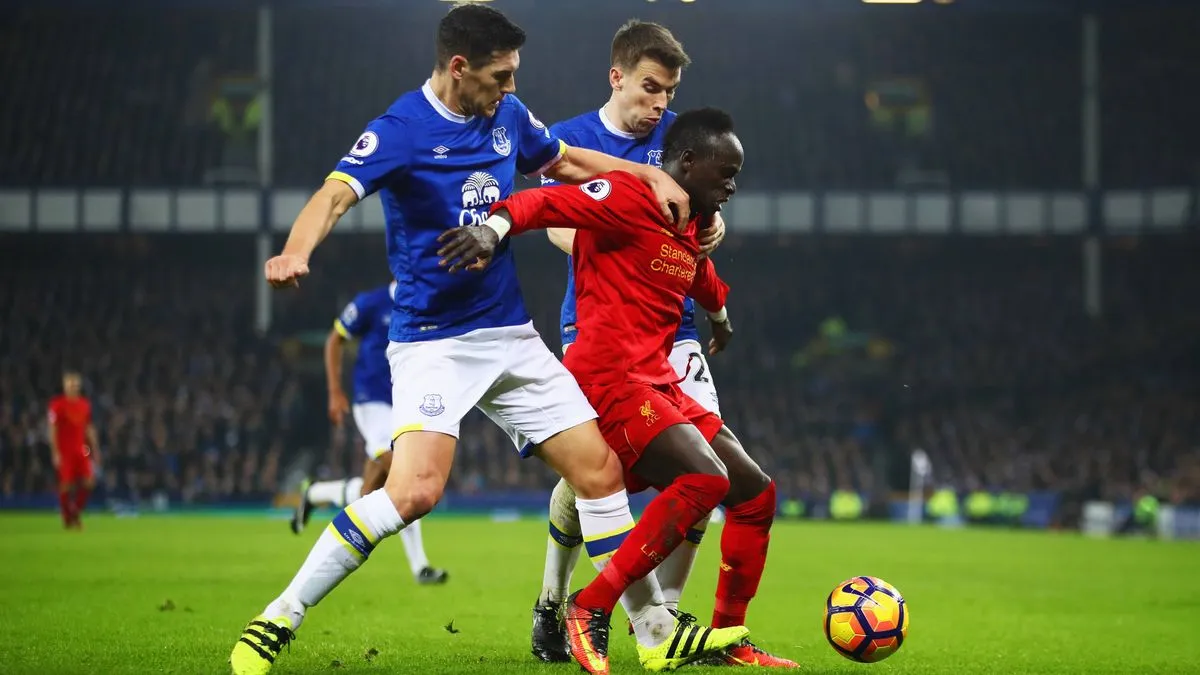
Gareth Barry’s 2008 summer remains one of the most bitterly remembered transfer sagas in Premier League history. The midfielder, then at Aston Villa, had publicly declared his ambition to play Champions League football—a statement that caught the attention of Liverpool, who pursued him with intensity. But what Barry has never spoken about in detail until now is the moment he believed the deal was sealed, only to be left stranded as Villa’s board pulled the plug. ‘I was 100% joining them,’ he said, reflecting on a period that left him disillusioned with the unpredictability of football transfers. The fallout wasn’t just personal; it reshaped his career trajectory, ultimately steering him toward Arsenal—a rival club that would become his next home.
The summer of 2008 was supposed to be Barry’s breakthrough. At 27, he was Villa’s most sought-after player, a creative midfielder whose vision and leadership had earned him a reputation as the club’s future leader. But his public criticism of manager Martin O’Neill—accusing the club of failing to secure his future—had already strained relations. When Liverpool’s interest intensified, Barry assumed the deal was imminent. ‘You’re getting told they’re 100% going to get the deal done,’ he recalled, the weight of that false certainty still sharp. The reality, however, was far more complicated. Villa’s board, despite initial enthusiasm, ultimately rejected Liverpool’s bids, leaving Barry without a club. The experience was demoralizing. ‘It leaves a sour taste,’ he admitted, a sentiment that would haunt him as he watched his career path diverge from expectations.
The fallout from this failed move would define Barry’s next chapter. With Liverpool’s pursuit collapsed, Arsenal emerged as the only viable option. The Gunners, under Arsène Wenger, were building a squad around midfield dominance, and Barry’s profile as a complete playmaker made him an ideal fit. His eventual move to Arsenal in January 2009—after a loan spell at Everton—became one of the most underrated transfers of the decade. But the memory of Liverpool’s snub never faded. ‘It was my first real experience of a transfer,’ Barry said, the frustration palpable. ‘You’re an experienced player, but transfers, you don’t really know how they work.’ The lesson would stay with him, shaping his approach to future deals and his understanding of the game’s power dynamics.
What makes Barry’s account particularly revealing is the context of the time. Liverpool’s pursuit of him in 2008 was part of a broader pattern of midfield investment under Rafael Benítez, who sought to bolster the squad ahead of the Champions League. Yet the club’s failure to secure him highlighted the limitations of even the most aggressive transfer strategies when boardroom politics intervened. For Barry, the experience was a harsh introduction to the realities of football’s business side—where ambition and execution rarely align. His eventual success at Arsenal, where he became a fan favorite and a key figure in the club’s midfield, would overshadow the bitterness of that summer. But the story of what might have been remains a defining footnote in his career, one that speaks to the fragile nature of football’s most coveted moments.
Today, Barry’s perspective offers a rare glimpse into the human side of transfer sagas—a reminder that behind every headline deal are players who feel the weight of missed opportunities. His words carry the weight of someone who has navigated both sides of the transfer market, from the euphoria of a perceived certainty to the disillusionment of a deal that never materialized. For Liverpool fans, the story is a poignant one, a ‘what if’ that lingers in the club’s history. For Barry, it was a lesson in resilience—a chapter that, while painful, ultimately led him to a club where he could thrive.