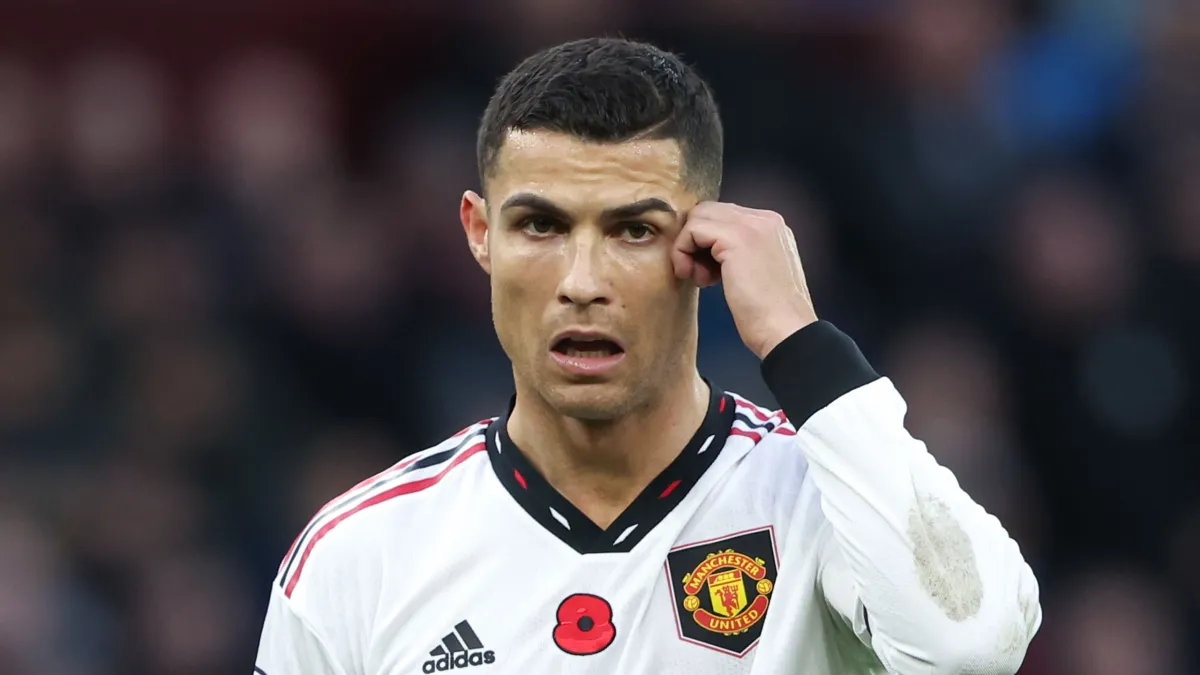
Erik ten Hag has delivered what may be the most definitive verdict yet on Cristiano Ronaldo’s career trajectory since his departure from Real Madrid, declaring without hesitation that the Portuguese forward’s decline began the moment he walked through Juventus’ doors. ‘From Juventus, it’s simply over,’ the Manchester United manager told ESPN, framing his assessment not as a personal attack but as an objective evaluation of a player whose once-unassailable dominance has eroded over time. The words carry weight not just because they come from a former manager, but because they reflect a tactical reality that has become undeniable: Ronaldo’s ability to dictate games as he once did has vanished, replaced by a reliance on finishing ability that is no longer enough in the modern Premier League.
Ten Hag’s critique is rooted in a simple, inescapable truth: fitness and positioning are the bedrock of success at the highest level, and Ronaldo has struggled to meet those demands. ‘He can still finish chances,’ Ten Hag acknowledged, but the qualifier—‘if you aren’t fit in the Premier League, you stand no chance’—is the crux of the matter. The manager’s remarks echo a narrative that has unfolded over the past decade, where Ronaldo’s physical decline has been matched by a tactical irrelevance that even his most ardent supporters now acknowledge. His time at Manchester United, where Ten Hag took charge in 2022, became a microcosm of this reality. The friction between the two men was not just personal; it was a clash of philosophies. Ronaldo, who had spent years as the undisputed focal point of the world’s greatest teams, found himself in a system where his traditional role no longer aligned with the demands of a modern, possession-based attack. His eventual departure in November 2022 was not just a professional split—it was the final acknowledgment that his time as a dominant force was over.
Ten Hag’s analysis extends beyond Ronaldo’s individual shortcomings to critique the broader narrative of how clubs handle aging superstars. ‘Real Madrid always know when to say goodbye to players at the right moment,’ he observed, a subtle dig at Juventus’ decision to sign Ronaldo in the first place. The Spanish giants, he implied, understood that a player’s perceived peak often masks a decline in delivery—a lesson that Juventus, and later Manchester United, failed to grasp. Ronaldo’s tenure at Old Trafford was marked by inconsistency, a stark contrast to the relentless productivity that defined his Real Madrid years. His inability to adapt to Ten Hag’s system, combined with his declining physicality, made him a liability rather than an asset. The manager’s words carry the weight of someone who has seen firsthand how a once-great player can become a distraction, even if that player remains a global icon.
The implications of Ten Hag’s remarks are profound, not just for Ronaldo’s legacy but for the broader conversation about aging in football. His assessment challenges the idea that greatness is eternal, that a player’s name alone can sustain relevance. Instead, Ten Hag’s perspective forces a reckoning: even the greats must evolve, and when they cannot, the game moves on. For Ronaldo, the question now is not whether he will ever regain his former form, but how he will be remembered in the context of this new reality. His career has always been defined by defiance, by refusing to accept that his time was over. But Ten Hag’s words suggest that, for the first time, the evidence is too overwhelming to ignore.