
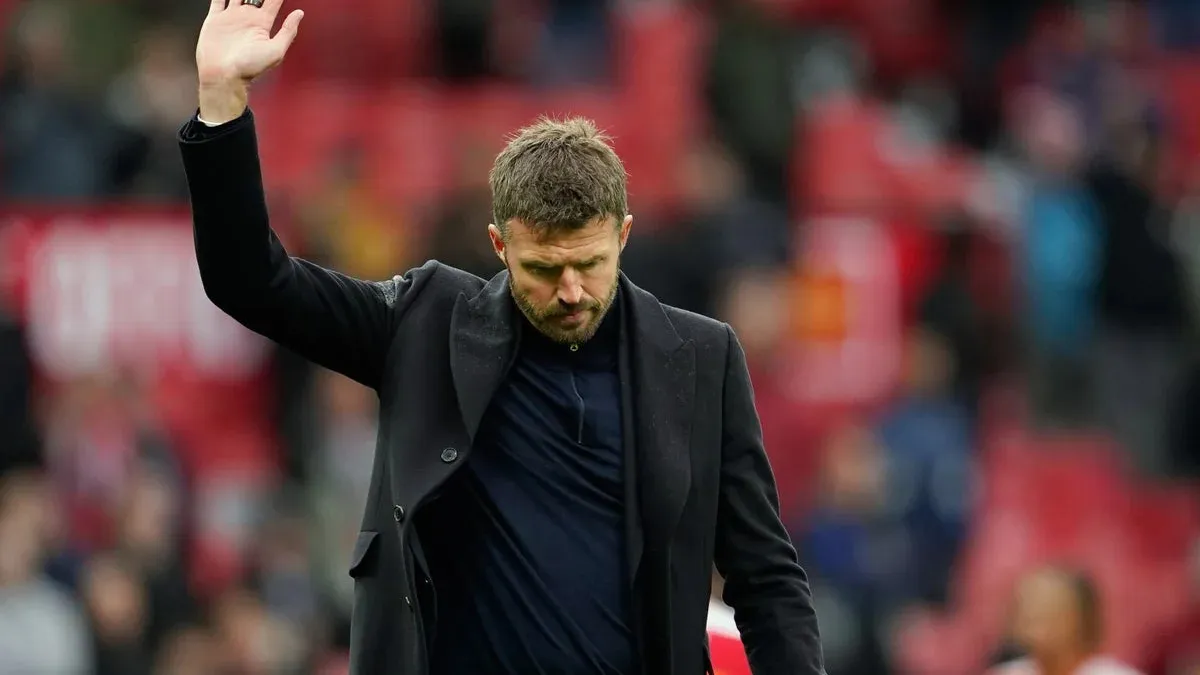
The Premier League’s winter doldrums have given way to a brutal reckoning, and the clash between Manchester United and Chelsea at Old Trafford this weekend is the latest chapter in a season where no team is safe. Both sides sit in the lower half of the table, their futures uncertain, and the stakes couldn’t be higher. For Manchester United, the pressure on Michael Carrick’s managerial tenure is palpable. The Red Devils have struggled to find consistency, their form a patchwork of fleeting flashes and prolonged stagnation. The board’s patience is wearing thin, and a series of disappointing results—particularly against mid-table opposition—has only deepened the doubts. United’s defensive frailties, once their greatest strength, now expose their vulnerability, while their inability to exploit transitions has left them vulnerable to counterattacks that once would have been neutralised.
Chelsea, meanwhile, are in a precarious position of their own. Their campaign has been defined by inconsistency, with moments of brilliance alongside periods of complacency that have cost them dearly. The Blues’ midfield, once their engine, now lacks the same dynamism, and their front line has failed to deliver when it matters most. The absence of key players has further complicated their cause, forcing manager [name redacted] to rely on a squad that has shown flashes of potential but little in the way of sustained dominance. The pressure on Chelsea is twofold: they must avoid the drop while also proving they are more than a team capable of occasional flair. United’s visit to Old Trafford is a reminder that neither side can afford to underestimate their opponent—both are fighting for their professional survival, and the margin for error is zero.
Tactically, this fixture will be a microcosm of the Premier League’s current state. Manchester United’s system, built on defensive solidity and direct play, will clash with Chelsea’s more fluid, possession-based approach. The question is whether United’s backline can hold firm against Chelsea’s pressing, or if their midfield will be overwhelmed by the Blues’ ability to dictate tempo. Chelsea, for their part, will need to exploit United’s tendency to overcommit forward, but their own defensive organisation—particularly in wide areas—has been a recurring weakness. The battle for possession will be fierce, but the real test will come in the final third, where neither side has consistently delivered when it counts.
The betting markets reflect the uncertainty. Odds suggest this is a fixture where neither side is favoured outright, a reflection of the precarious nature of both campaigns. For Manchester United, a draw would be the most palatable outcome, but the Red Devils’ history at Old Trafford—where they have often struggled to convert chances—suggests that a defeat is a real possibility. Chelsea, meanwhile, will be looking to break their recent run of poor results, but their inability to finish games decisively has been their undoing. This match is not just about points; it’s about pride, about proving that neither team is finished. The Premier League’s winter transfer window may have passed, but the battle for survival is far from over. At Old Trafford this weekend, the future of two clubs will be decided in 90 minutes—or less.