

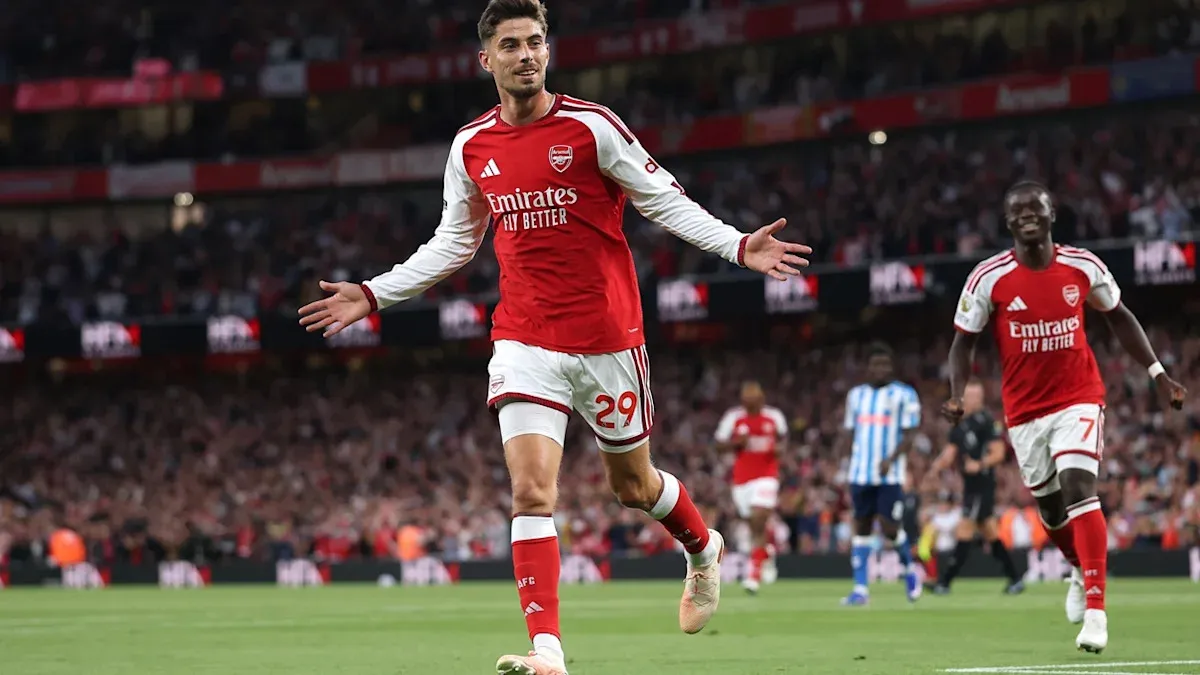
Mikel Arteta has delivered a rare, unequivocal endorsement of Kai Havertz’s potential, declaring the German striker has the quality to become a 30-goal threat for Arsenal. The statement, made amid Havertz’s recent injury setbacks and Viktor Gyökeres’ underwhelming start to the season, crystallizes the tactical and psychological stakes at the heart of Arsenal’s attack. For a club that has spent years searching for a homegrown or imported No.9 capable of carrying the burden of both domestic and European ambitions, Havertz’s consistency—and now his perceived ceiling—has become the linchpin of Arteta’s long-term vision.
The Premier League title triumph in 2025-26 was built on a foundation of Havertz’s dependability, his ability to convert chances in high-pressure moments, and his adaptability in both traditional and false-nine roles. Yet the German’s injury history—particularly his recurring issues last season—has forced Arsenal into a precarious position. Gyökeres, who arrived with the promise of a dynamic, goal-scoring presence, has yet to replicate the form that saw him net four times in four games for Sweden during the international break. His slow start has not only failed to address the void left by Havertz’s absences but has also reignited debates about his tactical fit. Arteta’s squad has long favored Havertz’s positional intelligence and link-up play, a preference that Gyökeres, despite his athleticism, has struggled to match.
The immediate fallout of Havertz’s latest injury—rumored to have occurred on international duty—could not have come at a worse moment. With Gyökeres still searching for his rhythm and Martin Ødegaard continuing to shoulder an unsustainable playmaking load, Arsenal’s front three is stretched thinner than at any point since the departure of Alexandre Lacazette. The Gunners’ next matchday, a home fixture against Leeds United, will serve as a litmus test. Arteta has hinted that Havertz’s return date is contingent on a late fitness assessment, a delay that leaves Gyökeres as the most likely substitute—though his lack of goals in domestic competition raises questions about his readiness to step into the starting XI permanently.
The implications extend beyond the immediate matchday. Havertz’s ability to remain fit is no longer a luxury; it is a necessity. His potential to challenge for the Premier League Golden Boot—already a topic of serious discussion—hinges on sustained consistency. Arteta’s confidence in Havertz’s scoring prowess is not merely a personal endorsement but a tactical imperative. The manager’s preference for Havertz’s system alignment over Gyökeres’ physical attributes suggests a long-term commitment to the German, even as the Swede’s international success looms as a counterpoint. For Arsenal, the choice is no longer about finding a replacement but ensuring the right striker is in the right place at the right time—a challenge that will define their pursuit of another title and a deeper Champions League run.
What remains unclear is whether Gyökeres can break through. His international form is a compelling narrative, but domestic football demands a different kind of adaptability. If he fails to deliver, Arsenal may be forced to confront the unpalatable reality that their striker dilemma is far from resolved. Havertz’s injury history, combined with Gyökeres’ inconsistent start, has created a window for other markets to intervene—but for now, the Gunners must navigate this crisis with the players they have. The stakes could not be higher: a single misstep in this debate risks derailing Arsenal’s season before it has truly begun.



