

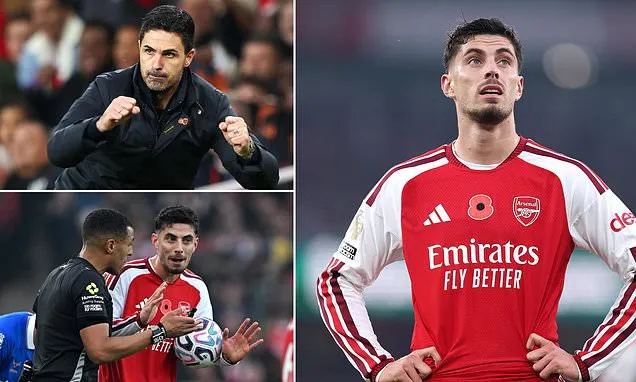
Arsenal’s Premier League title hopes have never looked more assured. Nine wins from ten games—tied for their best-ever start—have left the Gunners six points clear at the top, a margin that would have been unthinkable just a season ago. Yet beneath the statistical brilliance lies a persistent tactical conundrum: Kai Havertz, the man who could unlock Arsenal’s attacking potential, has an offside problem—and not just in the VAR sense.
The issue was laid bare in the 1-0 win over Hull City, where Arsenal’s clinical efficiency masked deeper structural weaknesses. Havertz, who finished as Arsenal’s top scorer last term despite missing months to injury, has been sidelined since November with a thigh issue. His return is now imminent—Mikel Arteta has described it as a ‘matter of days,’ not weeks—yet the manager’s post-match press conference revealed a man exasperated by the game’s inconsistencies. ‘We need to be much more chaotic than that,’ Arteta said, referencing Arsenal’s clinical but methodical approach. The comment was a direct critique of the team’s tendency to chase ‘the perfect goal’ rather than exploit space with ruthless efficiency. Hull, a side often dismissed as an underdog, played with a tactical cunning that exposed Arsenal’s defensive vulnerabilities. Without Havertz’s creative threat, the Gunners’ midfield—already stretched thin—struggled to dictate tempo, leaving gaps for Hull’s counterattacks.
Arteta’s frustration extended beyond tactics to the most contentious issue of all: VAR. The manager was baffled by the offside call against Havertz in the first half, a decision that left him questioning the integrity of the game’s most scrutinized decisions. ‘I heard now that they decided not to because of the starting position of Kai—that he was offside,’ Arteta admitted, his tone betraying a mix of disbelief and resignation. The comment underscores a broader tension: Arsenal’s attacking firepower is undeniable, but their defensive solidity—particularly in transition—remains a work in progress. Gabriel Magalhaes’ return to centre-back is a long-term project, while Ben White and Cristhian Mosquera’s absences leave Arteta navigating a precarious defensive balance. Even with Havertz back, the question isn’t whether Arsenal can score—it’s whether they can defend the lead when it matters most.
The Champions League draw at Bayer Leverkusen, where Havertz’s spot-kick sealed a 1-1 draw, offered a glimpse of the Arsenal that could dominate Europe. Arteta called it a ‘special moment,’ not just for Havertz’s return to the Emirates but for the narrative of a player who once left the Premier League for Barcelona in search of respect. Now, that respect is undeniable—his goal against Chelsea last season was a statement of intent, and his leadership in attack could be the missing piece in Arsenal’s title push. Yet the defensive concerns remain. Brighton’s new manager, Fabian Hurzeler, has already exposed Arsenal’s vulnerabilities, and the return of Havertz—while crucial—won’t solve the deeper structural issues. Arteta’s words after the Hull game were clear: Arsenal must be ‘chaotic,’ not clinical. The challenge is translating that philosophy into results when the pressure mounts.
For now, the focus is on the immediate: Havertz’s return, the Brighton clash on December 27, and the looming Champions League return against Leverkusen. The Gunners are six points clear, but in football, margins are never permanent. The offside debate, the defensive fragility, and the need for attacking unpredictability are all part of the same puzzle. Havertz’s return is a necessary step—but whether it’s enough to silence the critics remains to be seen.



