

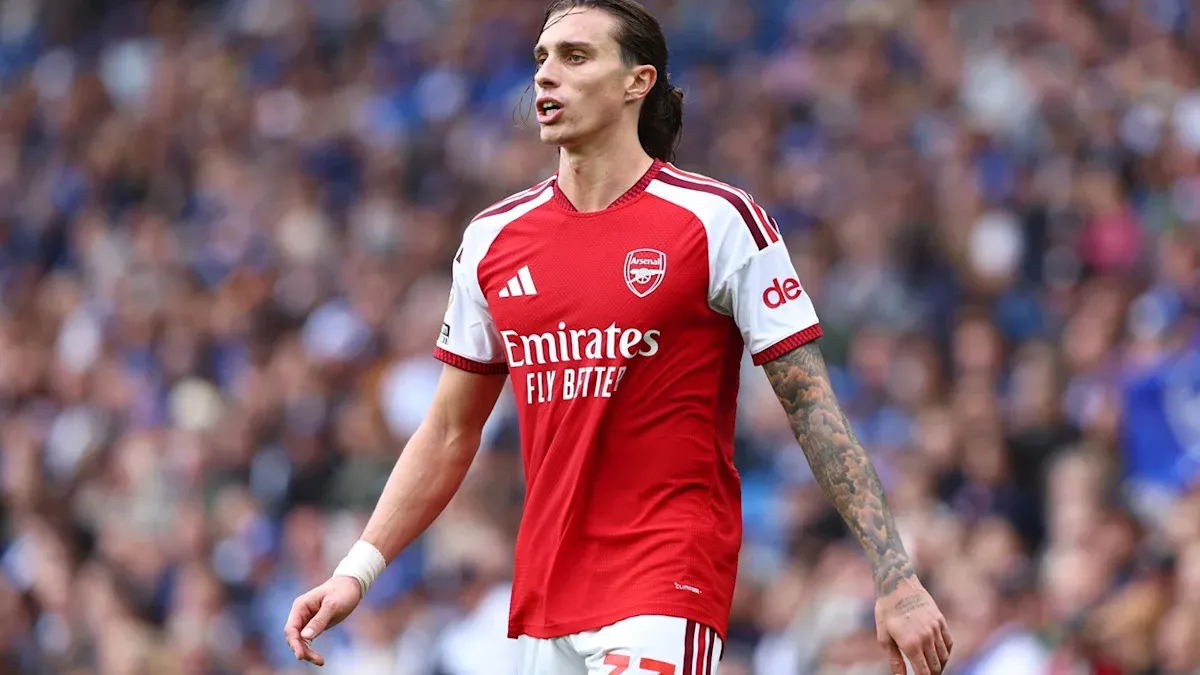
Arsenal’s 2-0 Premier League victory over Everton was a clinical affair—until the final whistle. Riccardo Calafiori, the club’s first-choice left-back, exited the match early after what Mikel Arteta described as a ‘slight issue,’ a development that forced Noni Madueke into an unplanned defensive role. The substitution, made with just minutes remaining, underscored the precarious state of Arsenal’s backline, where injuries to Bukayo Saka and Christos Ethiadis have already disrupted the attack. Arteta’s decision to bench Calafiori from the start—replacing him with Myles Lewis-Skelly—only to bring him on late, suggests the manager was already bracing for a potential setback. The timing of Calafiori’s departure, as Madueke took over at left-back, raised immediate questions about the severity of the injury and its implications for Arsenal’s upcoming fixtures.
The tactical adjustments were swift and necessary. Madueke, who had started on the right wing, slid into the left-back position as Everton’s late pressure mounted. His adaptability was on full display, but the shift also highlighted the strain on Arsenal’s depth. Lewis-Skelly, who had been given the nod over Calafiori, was clearly not the long-term solution—a fact Arteta acknowledged in his post-match press conference. ‘He had a light issue,’ the manager said, ‘something very small, but he was cautious about it.’ The phrasing was deliberate: while the injury was not deemed serious, its timing was problematic. Calafiori had been Arsenal’s most consistent left-back this season, starting every Premier League match until now, and his absence—even temporarily—exposes the vulnerabilities in a defense already stretched thin by Saka’s quad injury and Ethiadis’ lingering fitness concerns.
Arteta’s praise for Madueke’s performance was tempered by the reality of Arsenal’s squad management. The young winger’s versatility is a double-edged sword: his ability to play across multiple positions is an asset, but it also reflects the lack of specialist options at left-back. Madueke’s return from a knee injury sustained during England’s recent match against Uruguay had already raised hopes, but the Everton game proved his fitness was still a work in progress. Arteta’s comments about Madueke’s ‘capacity to be more consistent’ suggest the player is still finding his rhythm, a concern given the Gunners’ reliance on his attacking contributions. Meanwhile, Gabriel Magalhães’ late winner—scored through pain after a physical challenge—demonstrated the resilience of Arsenal’s squad, but it also underscored the physical toll of the Premier League’s relentless schedule.
The bigger picture is clear: Arsenal’s injury woes are not just a blip but a structural issue. With Calafiori’s status now uncertain, Lewis-Skelly’s limited experience at left-back, and Madueke’s fitness still evolving, Arteta faces a delicate balancing act. The next test comes against Southampton on Saturday, where Saka’s return is expected, but the defensive questions remain unresolved. If Calafiori’s ‘slight issue’ persists, Arsenal may be forced to rely on untested combinations, a gamble that could have consequences in both the Premier League and Champions League. For now, the focus is on damage control—ensuring Madueke’s versatility doesn’t become a liability when the pressure intensifies.



