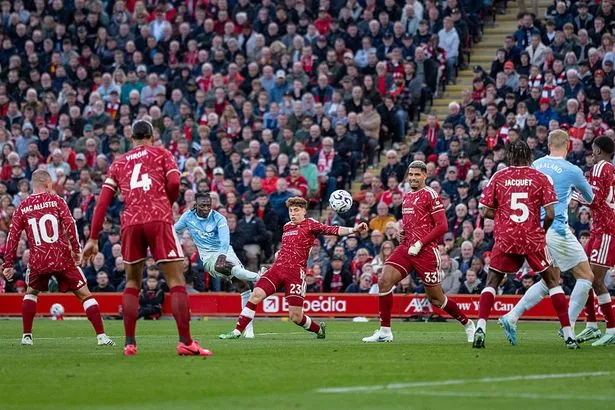
The Premier League’s most contentious rivalry delivered its verdict on Sunday at Anfield, and the result was never in doubt. Manchester City’s 3-0 victory over Liverpool wasn’t just a tactical demolition; it was a statement of intent in the wake of their financial penalties, a reminder that even with the weight of 114 charges hanging over them, their dominance remains unshaken. The Reds, who had staked their season on a defiant response to their rivals’ perceived unfair advantage, were undone by a red card for Ryan Gravenberch, a defensive collapse, and the relentless efficiency of Erling Haaland and Jeremy Doku. But beyond the scoreboard, the real story was the atmosphere—Anfield’s chants of ‘cheat’ ringing through the stadium like a protest against the very system that has allowed City’s rise.
Liverpool’s frustration was palpable, but their inability to break down a City side that moved with the precision of a well-oiled machine exposed the depth of their struggles. The Reds’ defensive shape, already under scrutiny since Andoni Iraola’s arrival, was further exposed when Semenyo’s pressing disrupted Ronald Araujo’s early challenge, a moment that set the tone for a first half where Liverpool’s aggression was met with City’s clinical counterattacks. The interval arrived with Liverpool already in disarray, their midfield unable to disrupt City’s possession, and their backline stretched thin by Haaland’s movement. When the second half began, it was a formality—Haaland’s second goal, Doku’s clinical finish, and Cherki’s late strike were the final nails in a coffin that had been sealed long before kickoff.
The irony of this result is not lost on those who argue the Premier League’s financial imbalances have distorted its fair play. Liverpool’s supporters, who have long contended that City’s Abu Dhabi-backed resources give them an insurmountable edge, used the night to amplify their grievances. Chants of ‘cheat’ echoed through Anfield not just as a reaction to the loss, but as a broader indictment of a league where financial disparity has become as much a part of the game as the 11v11 on the pitch. Yet, for all the noise, the reality is that City’s next title is already written in stone—no amount of protest will change that. Their ability to absorb pressure, adapt to hostile environments (they entered Anfield via the staff entrance to avoid fans), and deliver results with surgical precision is a testament to their resilience, not their wrongdoing.
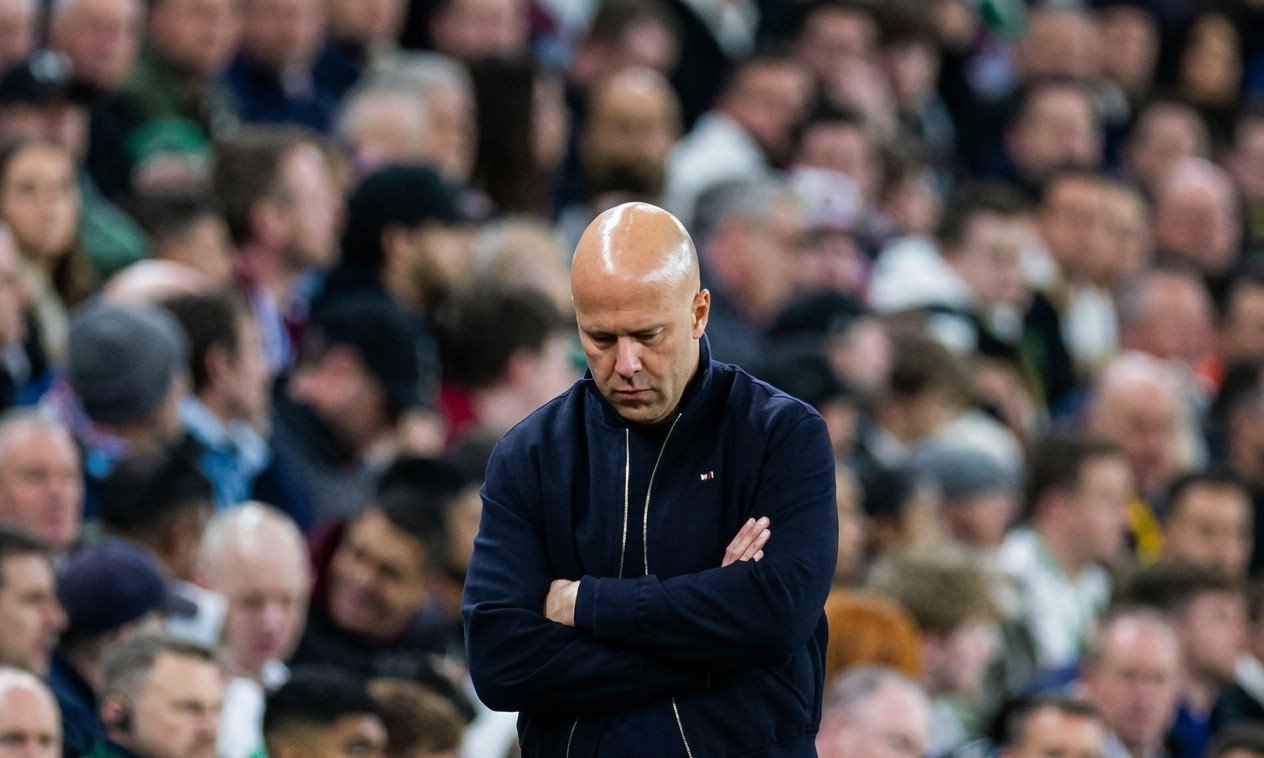
For Liverpool, the defeat was more than a setback; it was a wake-up call. The red card for Gravenberch, a player already under scrutiny for his defensive errors, highlighted the fragility of their defense, while the midfield’s inability to disrupt City’s rhythm exposed a persistent weakness. Andoni Iraola’s first loss as manager was not just a personal blow but a reminder that rebuilding a team capable of challenging City requires more than tactical adjustments—it demands a structural overhaul that the transfer market alone cannot deliver. The next nine days will be critical, not just for Liverpool’s next fixture, but for the broader narrative of the Premier League’s future. Can the Reds turn this defeat into momentum? Or will they be forced to confront the uncomfortable truth that their rivals’ financial firepower remains the ultimate wildcard in this season’s race?
The Premier League’s moral dilemma is no closer to resolution. Every City win, no matter how dominant, will be met with the same skepticism, the same accusations of unfairness. And yet, the league’s commercial allure ensures that such debates will continue to be overshadowed by the spectacle of the game itself. For now, Manchester City’s next move is clear: to keep playing, keep winning, and let the rest of the football world catch up. Liverpool, meanwhile, must decide whether to double down on their protest or accept that the battle for parity is one they cannot win on the pitch alone.