

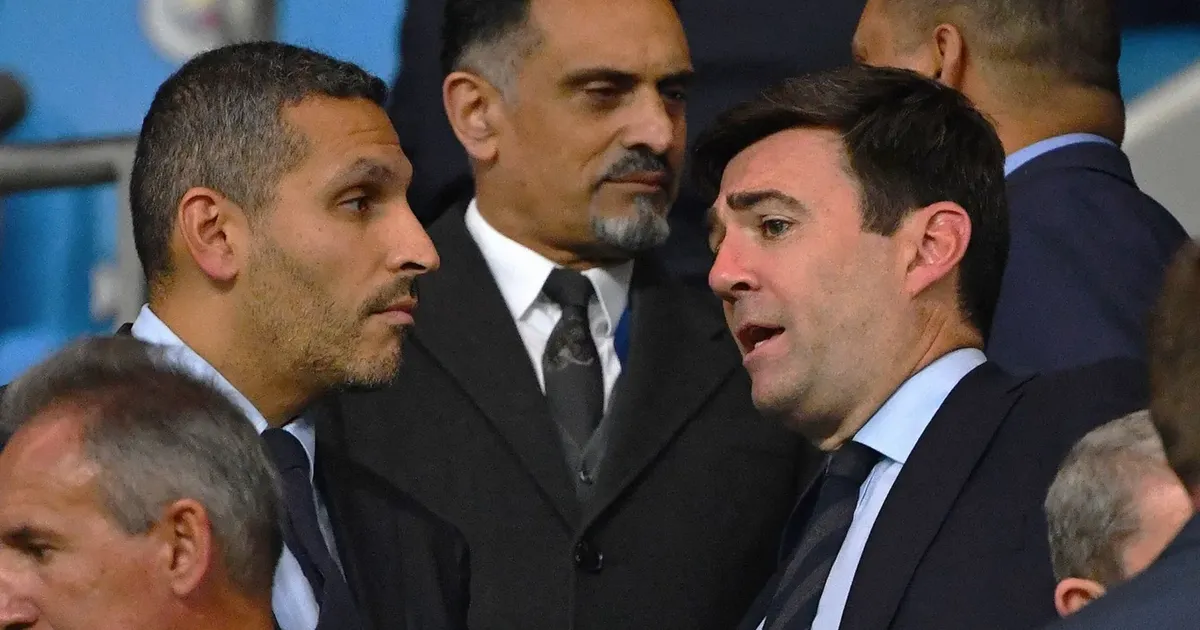
The political fallout over Andy Burnham’s relationship with Manchester City has intensified after newly surfaced records confirmed he attended two undeclared hospitality dinners with chairman Khaldoon Al Mubarak while serving as Greater Manchester mayor. The revelations, uncovered in archived documents, expose a gap in Burnham’s public disclosures of his interactions with the club’s leadership—dinners valued at £338 in August 2017 and £699 in April 2018—both tied to high-profile matches at the Etihad Stadium.
The first dinner, held during a Manchester City vs. Everton fixture in 2017, was officially recorded in Burnham’s register of interests as ‘hospitality’ provided by the club, alongside a £150 pair of tickets to an Ed Sheeran concert at the stadium. Yet the second, at the 2018 Manchester derby, was later omitted from the Greater Manchester Combined Authority’s (GMCA) public register, despite having been declared in a signed PDF submitted in December 2020. The deletions—now confirmed through archived versions of the GMCA’s website—raise questions about the authority’s transparency, particularly given the register’s continued updates post-2024 mayoral term.
Downing Street has defended Burnham’s conduct, insisting the dinners were standard hospitality arrangements at home games and were properly declared at the time. However, the omission of these entries from the GMCA’s current public records—despite the authority’s claims of maintaining a ‘living’ register—undermines that defense. Political observers note the timing of the revelations coincides with renewed scrutiny over Burnham’s alleged proximity to City during his mayoralty, a period when he was widely perceived as a United supporter’s adversary until Sir Jim Ratcliffe’s return to Manchester.
The implications stretch beyond Burnham’s personal reputation. The deleted records highlight systemic lapses in the GMCA’s transparency protocols, particularly its failure to retain historical declarations that could clarify past interactions. While Burnham’s office has not yet responded to the revelations, the pressure to address these gaps grows as public trust in his leadership remains fragile. The case underscores a broader tension: how public officials balance institutional hospitality with the appearance of undue influence, especially in a city where football’s economic and cultural weight is unmatched.



