Hong Kong’s opening match of the Fifa Asean Cup at Kai Tak Stadium on Sunday will test more than just their defensive resilience. It will measure the fragile progress of Laos, a team that has spent the past two years in freefall, their once-fragile football culture now drowning in scandal. The Football Federation of Laos has launched an investigation into allegations of match-fixing, bribery, and illegal gambling within their squad, revelations that followed a series of defeats so crushing they bordered on the absurd: 5-0 to Thailand, 4-0 to Malaysia, 4-1 to the Philippines, and 7-2 to Myanmar. For context, in the same Asean Championship two years prior, Laos had managed only two draws, a 3-2 loss to Myanmar, and a 4-1 defeat to eventual champions Vietnam. The contrast is not just in results but in the very fabric of the team’s identity.
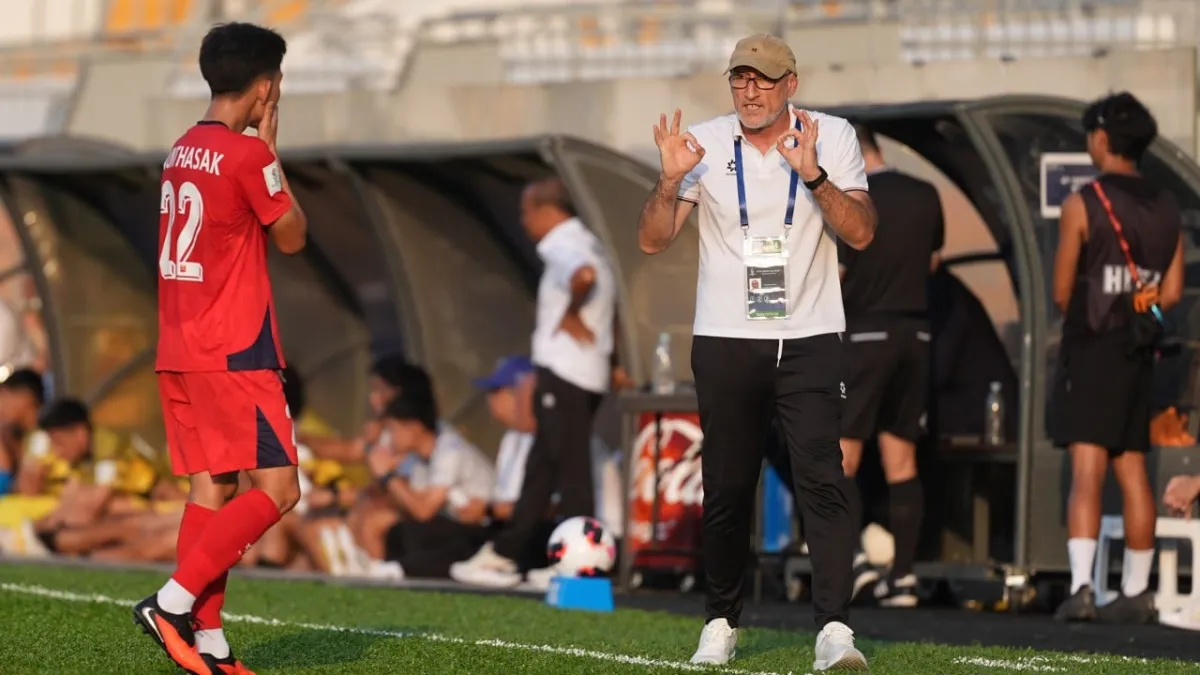
The fallout has been swift. The federation’s inquiry, while still ongoing, has already forced a wholesale reshuffle of the squad. Gone are the players tied to the old regime, replaced by a wave of youthful talent, including 16-year-old defender Bounthasak Chandala, who has already drawn attention for his composure under pressure. At the helm is Vladica Grujic, a coach whose calm demeanor belies the urgency of his mission. When pressed on why he remains in charge despite the turmoil, Grujic has avoided direct answers, but his presence signals a deliberate attempt to stabilize the team before the Asean Cup begins. His approach is one of controlled optimism, a rare trait in a football culture that has struggled to reconcile tradition with progress.
The stakes could not be higher. Laos enters this tournament as underdogs in every sense—financially, tactically, and morally. Their opponents, Hong Kong, may lack the same level of star power, but they arrive with a squad that has shown resilience in recent years, including a 2-1 victory over Singapore in the 2023 Asean Championship. For Laos, the challenge is not just to avoid another rout but to prove that their reinvention is more than a temporary fix. The youthful core, led by players like Chandala, must step up immediately, while Grujic’s tactical adjustments—whether in defensive organization or midfield dominance—will be scrutinized under the bright lights of Kai Tak.
What happens in this match will send ripples through Southeast Asian football. A Laos victory would be a statement of intent, a sign that the federation’s reforms are working. A defeat, however, could deepen the crisis, raising questions about whether the country’s footballing future is being gambled away. The Asean Cup is not just a tournament for Laos; it is a referendum on their ability to rebuild trust, both on and off the pitch. For Hong Kong, the opportunity to add another name to their growing list of Asean Championship wins is real—but the real story may lie in how Laos, against all odds, tries to rewrite their own narrative.