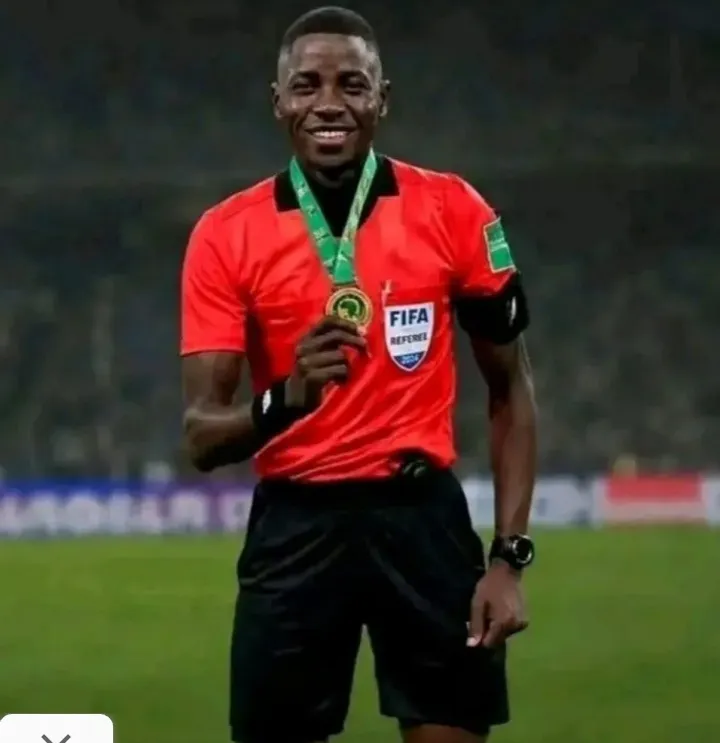
Abiola Kasimu Abdulsalam has become the first Nigerian centre referee to be selected for the FIFA U-17 World Cup in 25 years, ending a prolonged absence that had left African officials largely sidelined from the tournament’s elite officiating ranks. The 34-year-old’s appointment as one of 81 officials for the Qatar-hosted competition—where Nigeria’s U17 women’s team, the Flamingos, will also compete—represents a pivotal moment for African refereeing development. Abdulsalam’s selection follows a rigorous evaluation process, during which FIFA’s Referees Committee, led by Pierluigi Collina, identified a cohort of the most promising officials worldwide to prepare the next generation for the highest stages of the game.
Abdulsalam’s journey to this milestone is a testament to his rapid ascent in the international refereeing community. He earned his FIFA licence in 2022 and has since maintained his credentials through annual evaluations, a rarity for officials still in their prime. His recent duties include officiating at the 2025 CHAN tournament and managing matches in the CAF Under-17 AFCON and regional WAFU competitions, where his consistency and tactical acumen have been noted. The Zamfara-born referee’s inclusion also underscores a broader shift: for the first time in decades, Nigeria will have representation at the U17 World Cup’s highest level, a development that could inspire a new generation of aspiring officials across the continent.
The selection process reflects FIFA’s strategic focus on regional diversity, with Abdulsalam joining three other African centre referees—Yacine Samassa (Mauritania), Bouchra Karboubi (Morocco), and Maria River (Mauritius)—alongside eight assistant referees from the continent. This represents a significant uptick in African representation, particularly for women’s football, where officials like Yara Atef (Egypt) and Tabara Mbodji (Senegal) will also take charge at the upcoming FIFA U-17 Women’s World Cup in Morocco. The tournament, set to run from October 17 to November 8, will feature Nigeria’s U17 women’s team—drawn in Group B alongside North Korea, Puerto Rico, and Poland—using the competition as critical preparation for their World Cup campaign.
Abdulsalam’s appointment comes at a crucial juncture for African refereeing, as the continent continues to close the gap in elite officiating. His presence at the U17 World Cup in Qatar, alongside his upcoming role in the AFCON 2027 qualifier between Cameroon and Comoros, signals a renewed commitment to developing officials who can compete at the global level. For Nigeria, this is not just a personal achievement for Abdulsalam but a collective victory for the nation’s refereeing fraternity, which has long been underrepresented in FIFA’s highest-profile tournaments. As the tournament approaches, his selection will be closely watched as a barometer for the continent’s progress in producing officials capable of meeting the demands of modern football.