The Football Association of Ireland has announced it will conduct an independent review into allegations that Adam Idah, the Republic of Ireland’s Black defender, was subjected to racist chanting during Sunday’s UEFA Nations League match against Israel. The claim, raised by teammate Jayson Molumby during the 3-0 victory, centers on reports of monkey noises directed at Idah by sections of the Israeli fanbase. UEFA’s disciplinary committee has ruled it cannot proceed with an investigation, citing that the required reporting protocol was not followed—a decision that has further inflamed an already volatile situation.
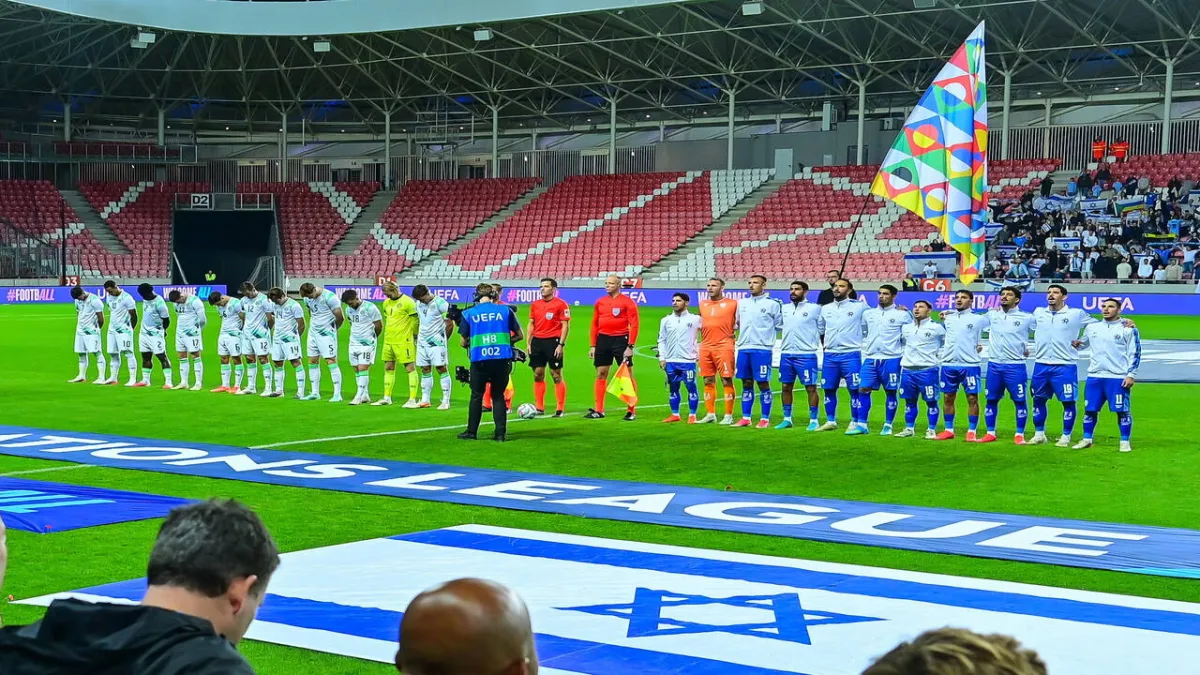
The match itself was a microcosm of the broader political storm surrounding Ireland’s participation in the fixture. Ireland’s squad arrived in Hungary with black armbands in tribute to Palestinians killed in Gaza, bowed their heads during Israel’s national anthem, and refused to offer pre-match handshakes—a gesture the FAI had communicated in advance to both UEFA and the Israeli Football Association. The FAI’s chief executive, David Courell, had framed the armbands as a ‘recognition of all lives lost in the conflict,’ but the refusal to shake hands was a deliberate act of protest, one that Israel’s leadership had condemned as ‘extreme anti-Israel policies.’ The game was played on neutral territory, yet the atmosphere was far from neutral. Reports of monkey noises—an age-old racist trope—have now forced the FAI to intervene, signaling that the incident cannot be dismissed as isolated fan behavior.
The controversy extends beyond the pitch. Over 160 Irish sports figures, including players and coaches, had previously signed an open letter urging the FAI to boycott the matches entirely, arguing that participation legitimized Israel’s actions in Gaza. The letter’s authors framed the decision to play as a moral failure, stating: ‘We’re playing against Israel, we’re not playing with Israel.’ Yet despite this pressure, the FAI’s board voted overwhelmingly to proceed with the fixture after submitting a separate request to UEFA to suspend the Israel Football Association over allegations of violating European football’s anti-racism statutes. UEFA had previously considered such a suspension but ultimately declined, leaving the FAI with no alternative but to proceed—while simultaneously demanding an internal review of the Idah allegations.
UEFA’s refusal to investigate the monkey chants incident has been met with criticism from human rights groups and football observers alike. The governing body’s stance—that the complaint lacked the proper procedural safeguards—has been interpreted by some as a failure to prioritize player welfare in politically charged environments. The FAI’s review, which will examine whether the incident warrants further action, comes as Ireland prepares for its second Nations League match against Israel on October 4. The double-header, already overshadowed by diplomatic tensions, now carries the added weight of a potential racial abuse scandal that UEFA has chosen not to address through its usual channels.
For Idah, a player who has spoken openly about the pressures of representing Ireland in such a climate, the allegations serve as a stark reminder of the risks of playing in high-profile international fixtures during periods of geopolitical unrest. The FAI’s decision to review the matter—without immediate recourse through UEFA—suggests a recognition that the issue demands internal accountability. Whether that review will lead to disciplinary action against Israeli fans or further diplomatic fallout remains unclear. One thing is certain: the Ireland-Israel saga has already redefined the boundaries of what is acceptable in modern football, and the fallout from Sunday’s match is far from over.