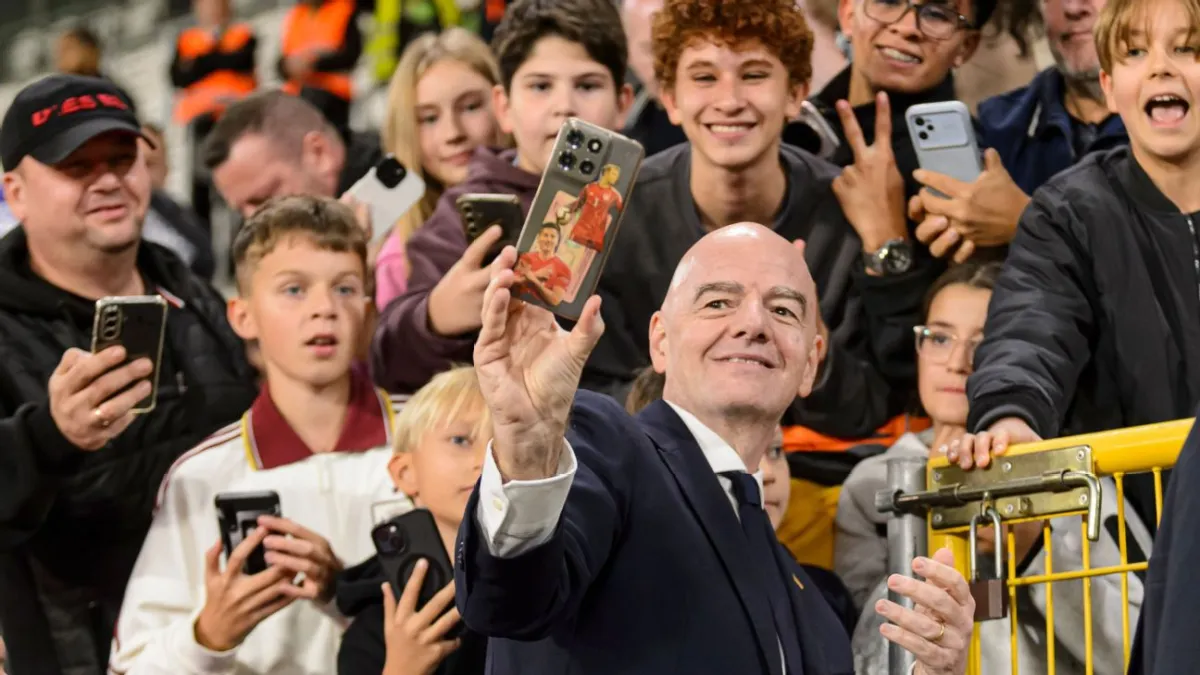
Gianni Infantino’s visit to the Caribbean this week was more than a routine diplomatic tour.
It was a calculated move to reinforce his political base ahead of what could be the most contentious FIFA presidential election in years.
In meetings with the presidents of St Kitts and Nevis, Trinidad & Tobago, and Jamaica, Infantino received unwavering endorsements—Atiba Harris of St Kitts and Nevis declared his federation’s ‘full support’ for Infantino’s ‘vision,’ while Kieron Edwards of Trinidad & Tobago framed FIFA as the ‘largest supporter’ of their infrastructure development.
These statements weren’t empty gestures; they were strategic reinforcements in a region where Infantino’s influence has historically been strong.
The timing of these endorsements is critical.
With the European Football Clubs (EFC) General Assembly in Copenhagen looming, Infantino’s office is reportedly preparing for potential developments that could challenge his reelection bid.
Sources indicate that UEFA’s sustained opposition—fueled by concerns over governance and financial transparency—has intensified, while the hiring of Martin Sorrell, a marketing titan with deep industry connections, signals Infantino’s determination to consolidate support beyond traditional football strongholds.
Sorrell’s involvement isn’t just symbolic; it’s a tactical play to reframe FIFA’s narrative around global appeal rather than internal controversies.
Yet the Caribbean tour also underscores a broader dilemma for Infantino: his ability to balance regional loyalty with the demands of European football.
While presidents like Michael Ricketts of Jamaica openly pledged support—‘I am a fan of Infantino,’ he stated—other confederations, particularly Concacaf, remain divided.
The region’s mixed signals reflect a football world increasingly fractured between those who prioritize FIFA’s developmental role and those who demand structural reform.
Infantino’s challenge isn’t just to secure votes; it’s to convince skeptics that his leadership can bridge these divides.
The Copenhagen assembly will be the next battleground.
If a challenger emerges—rumored to be in the works—Infantino’s Caribbean tour may have been a preemptive strike to lock in key alliances.
But with UEFA’s influence growing and financial accountability under scrutiny, the president’s U20 World Cup cameo in Qatar this week was more than a symbolic gesture.
It was a reminder that Infantino’s reelection hinges on his ability to deliver tangible results, not just political loyalty.
The question now isn’t whether he’ll face opposition; it’s whether his supporters will be enough to overcome it.