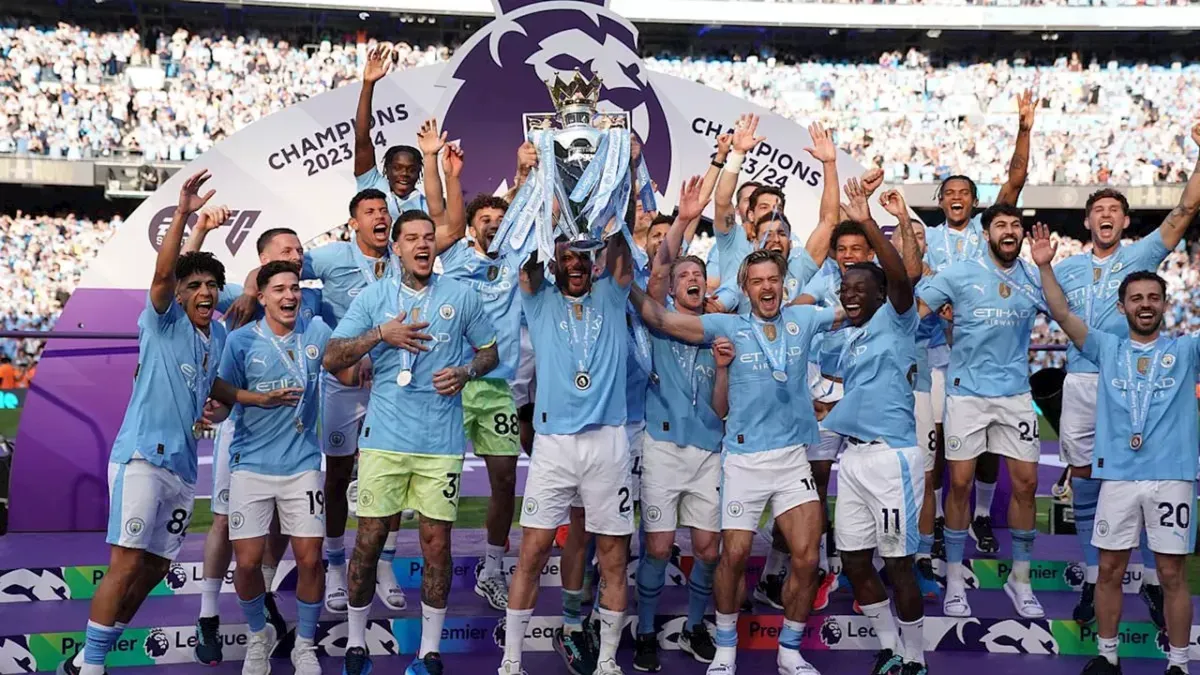
The Premier League’s historic verdict against Manchester City has not only delivered a crushing tactical and financial blow to the club but has also ignited a legal firestorm that could cost the Abu Dhabi United Group hundreds of millions—and last for years. The ruling, which found City guilty on all substantive charges of financial doping over an era of sustained dominance, has emboldened four rival clubs to file their own claims, with damages estimates already reaching as high as £800 million. Legal experts warn the case may now enter a prolonged battle, with City’s owners signaling they will exhaust every avenue to overturn the decision.
The scale of the Premier League’s accusation—spanning years of alleged financial manipulation—has sent shockwaves through English football. The ruling does not merely target individual infractions but paints a picture of systemic irregularities that underpinned City’s rise to global supremacy. While the full financial implications remain to be calculated, the potential payouts are unprecedented in the sport’s history. For the clubs preparing their own cases, this is not just about recouping losses but about setting a precedent that could redefine how financial governance is policed in the Premier League.
Manchester City’s response has been swift and defiant. Chairman Khaldoon Al Mubarak issued a statement reaffirming the club’s ‘confidence in proving its innocence,’ a line that underscores the ownership’s determination to challenge the verdict. Legal heavyweights like Paul Harris KC and Lord David Pannick KC—both specialists in high-stakes appeals—have already been deployed to lead City’s defense. The appeal process is expected to be protracted, with industry insiders suggesting that even if the initial challenge fails, the case could escalate to the High Court. The financial stakes are too high for City to accept defeat without a fight, and the Abu Dhabi Group’s resources ensure no stone will be left unturned.
The fallout extends beyond City’s immediate legal battle. The Premier League’s decision has emboldened rival clubs to pursue their own claims, with at least four teams understood to be in advanced stages of preparing legal action. While the specifics of those cases remain undisclosed, the collective financial exposure could force a reckoning over how financial irregularities are policed in the league. For clubs that have long questioned City’s dominance, this ruling offers a rare opportunity to challenge not just the results on the pitch but the very foundations of how success is measured.
What remains uncertain is how long this legal saga will unfold. With appeals, counterclaims, and potential High Court battles looming, the process could drag on for another two years or more. For Manchester City, the immediate focus is damage control—both on and off the field. But for the Premier League and its rival clubs, this is a defining moment. The financial penalties, if upheld, could reshape the league’s economic balance, while the legal precedents set here will influence how financial governance is enforced in the future. One thing is clear: this is not the end of the story. It is merely the beginning of a battle that will define the next chapter of English football’s financial revolution.