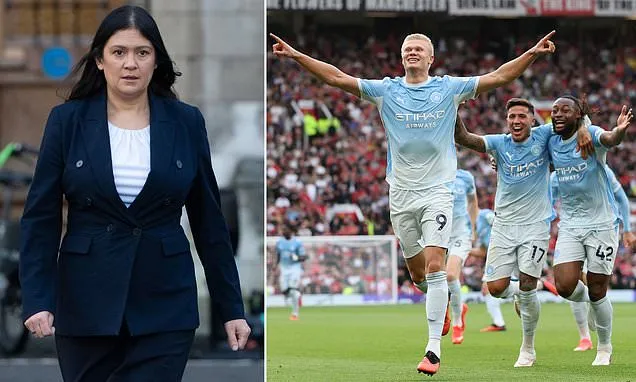
The Premier League’s integrity is under unprecedented scrutiny, and the clock is ticking. Culture Secretary Lisa Nandy has made it unequivocally clear that the Manchester City financial-breaches case—already dragging on for years—must be concluded without further delay.
Her intervention comes as rival clubs prepare to file compensation claims estimated in the hundreds of millions, a financial burden that could redefine the league’s financial landscape.
The stakes are not merely tactical; they are existential for the sport’s reputation, and the political pressure to act is now irrepressible.
Nandy’s urgency reflects the growing frustration among Premier League clubs, who have long suspected City’s dominance is underpinned by systematic irregularities.
While the league has maintained a veneer of impartiality, the delay in reaching a verdict has emboldened critics—including those within Labour’s shadow cabinet—to demand transparency.
The case, which centers on allegations of failing to provide accurate financial information and breaching profitability and sustainability rules between 2009 and 2018, has already sparked internal investigations and legal threats.
Yet, without a definitive ruling, the specter of prolonged litigation looms, threatening to destabilize the league’s commercial partnerships and broadcasting deals.
The compensation claims alone could dwarf previous disciplinary fines. Sources indicate that affected clubs—particularly those with direct financial ties to City’s alleged misconduct—are preparing to demand restitution for lost revenue, reputational damage, and operational costs incurred during the investigation.
The figures, though not yet confirmed, are projected to exceed £100 million, with some reports suggesting claims could top £200 million.
For a league that prides itself on its commercial dominance, such a financial hit would be catastrophic, potentially triggering a cascade of legal challenges and investor skepticism.
Nandy’s intervention signals a shift in tone from the usual bureaucratic caution. Her direct address to the Premier League’s governing bodies—couched in terms of “speed” and “accountability”—suggests that political pressure is now being leveraged to expedite the process.
The message is clear: the longer the case drags on, the greater the risk of a full-blown crisis, one that could fracture the league’s unity and undermine its global appeal.
With the 2026/27 season already underway, the window for resolution is narrowing, and the consequences of inaction could reshape football’s governance for years to come.
For Manchester City, the fallout is equally dire. Beyond the financial penalties, the club faces the prospect of a prolonged reputational war, with rival fans and media outlets amplifying the narrative of unfair advantage.
The political dimension—Nandy’s involvement—adds another layer of complexity, as the case becomes entangled in broader debates about fairness in sport and the role of government in overseeing elite competitions.
The Premier League’s ability to navigate this crisis will define its resilience in an era where transparency and accountability are no longer optional but mandatory.
The question now is whether the league can act decisively before the damage becomes irreversible.