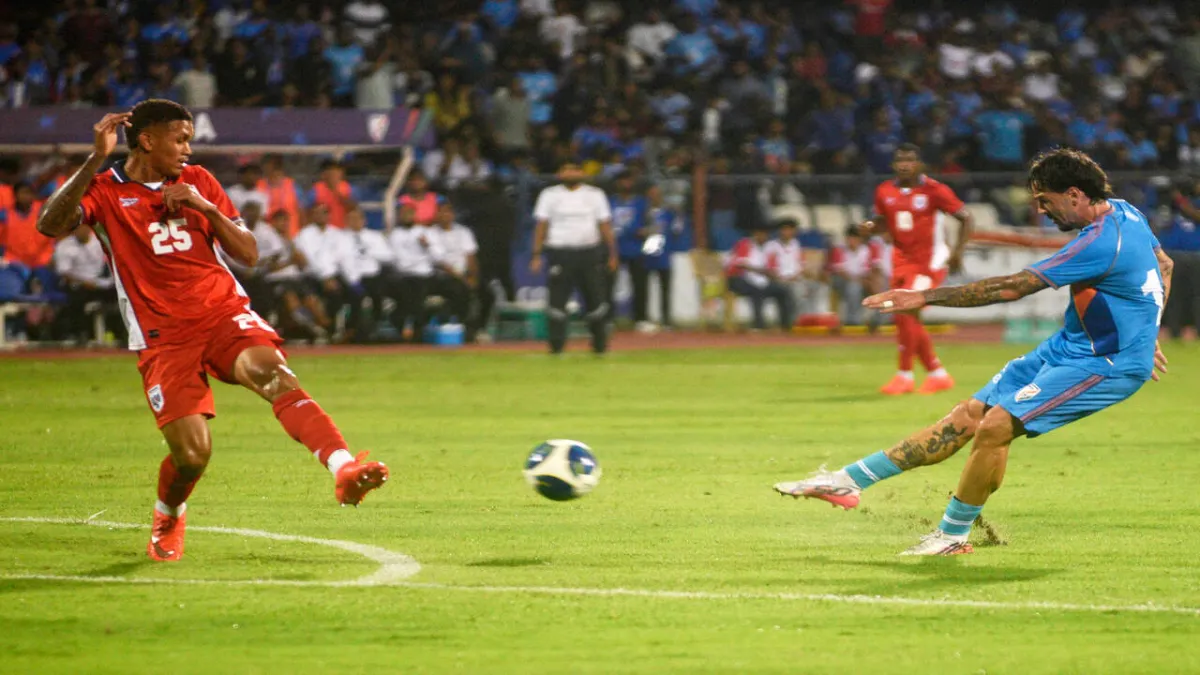
India’s football team delivered one of their most impressive performances in years when they held World Cup participants Panama to a 1-1 draw at Bengaluru’s Sree Kanteerava Stadium. The match, a FIFA international friendly, exposed a side that refused to be intimidated by the 44th-ranked Central American nation. Ryan Williams’ clinical finish in the 41st minute gave India the lead, but Panama’s late equaliser from Omar Valencia—after a tactical substitution wave in the second half—forced a draw that will resonate far beyond the scoreboard.
The game’s narrative shifted dramatically after the 67th minute. With Panama’s World Cup experience (they faced Ghana, Croatia, and England in Qatar) seemingly overwhelming, India’s backline—led by captain Gurpreet Singh Sandhu—held firm. Khalid Jamil’s tactical adjustments, particularly the introduction of Ashique Kuruniyan down the left flank, kept Panama guessing. Even after conceding, India manufactured two late chances through Edmund Laridinka and Manvir Singh, refusing to collapse defensively. This refusal to retreat in the final 20 minutes may be the most telling aspect of the performance, signaling a shift from reactive football to one built on structure and counter-attacking intent.
The result wasn’t just a point—it was a tactical masterclass. Despite Panama dominating possession, India’s midfield dictation and defensive organization neutralized their opponent’s superior quality. The Blue Tigers, ranked 138th in the world, played as if Panama were an average opponent, a testament to Jamil’s ability to extract performance from his squad. The absence of pre-season matches for many players only added to the achievement, as fans and pundits alike praised the team’s composure under pressure.
Beyond the immediate result, the draw carries deeper implications for India’s upcoming fixtures against Brazil and Uruguay in Kolkata. While the 1-1 with Panama doesn’t erase the gap between the Blue Tigers and the world’s elite, it alters the conversation around this team. India didn’t spend 90 minutes in a defensive shell—they competed, scored through repeatable patterns, and survived the final phase without losing shape. That resilience is the foundation of Jamil’s evolving blueprint, one that could prove crucial when facing South American giants in the coming weeks.
For now, the focus remains on the details: the clinical finish by Williams, the late equalizer from Valencia, and the tactical flexibility that kept India in the game. This wasn’t just a draw—it was a statement of intent, one that suggests Khalid Jamil’s vision is gaining traction. The challenge now is whether that same mentality can translate against the likes of Brazil and Uruguay, where the stakes will be far higher.