Mikel Merino is the kind of player who doesn’t need to start to matter. At Arsenal, he operates as a silent architect—his presence reshaping the midfield’s rhythm, his intelligence dictating the tempo of Arsenal’s possession. Mikel Arteta, the manager who has transformed Arsenal from a club adrift to a title‑winning force, has called Merino one of the most astute players he’s ever worked with. “He thinks about everything,” Arteta said. “He thinks about everybody.” That’s not hyperbole; it’s a tactical reality. Merino’s ability to occupy space, arrive at the ball and link play across multiple positions makes him indispensable, even when he’s not the focal point.
What sets Merino apart is his adaptability. He doesn’t fit neatly into a single role—whether it’s as a deep‑lying playmaker, a pressing midfielder or a creative force in transition. His versatility is a product of his deep understanding of the game, honed over years of development in Spain’s lower leagues before his arrival at Arsenal. That same adaptability has made him a cornerstone for Spain, where he’s been selected for their Nations League opener against England. His role with the national team mirrors his club career: a player who doesn’t always start but whose influence is undeniable. Consider how he helped Kieran Tierney settle into Spanish football in 2023, using his fluency in English to ease the Scot’s transition. The same mentorship extended to Martín Zubimendi, now his teammate at Arsenal, underscoring Merino’s role as a bridge between cultures and systems.
The subtlety of Merino’s leadership is often overlooked because it’s not performative. Unlike players who dominate headlines with goals or assists, Merino’s impact is measured in the small, decisive moments—redirecting a pass to break a defensive line, reading a defender’s movement to create space or simply elevating the performance of those around him. His daily conversations in the sauna with teammates like Eberechi Eze go beyond football, reflecting a camaraderie that strengthens the team’s cohesion. Arteta’s praise isn’t just about his technical ability; it’s about his capacity to elevate those around him, a quality that defines great midfielders. Merino’s stats—while solid—don’t tell the full story. His value lies in the intangibles: the way he anticipates the game’s flow, the way he makes others better.
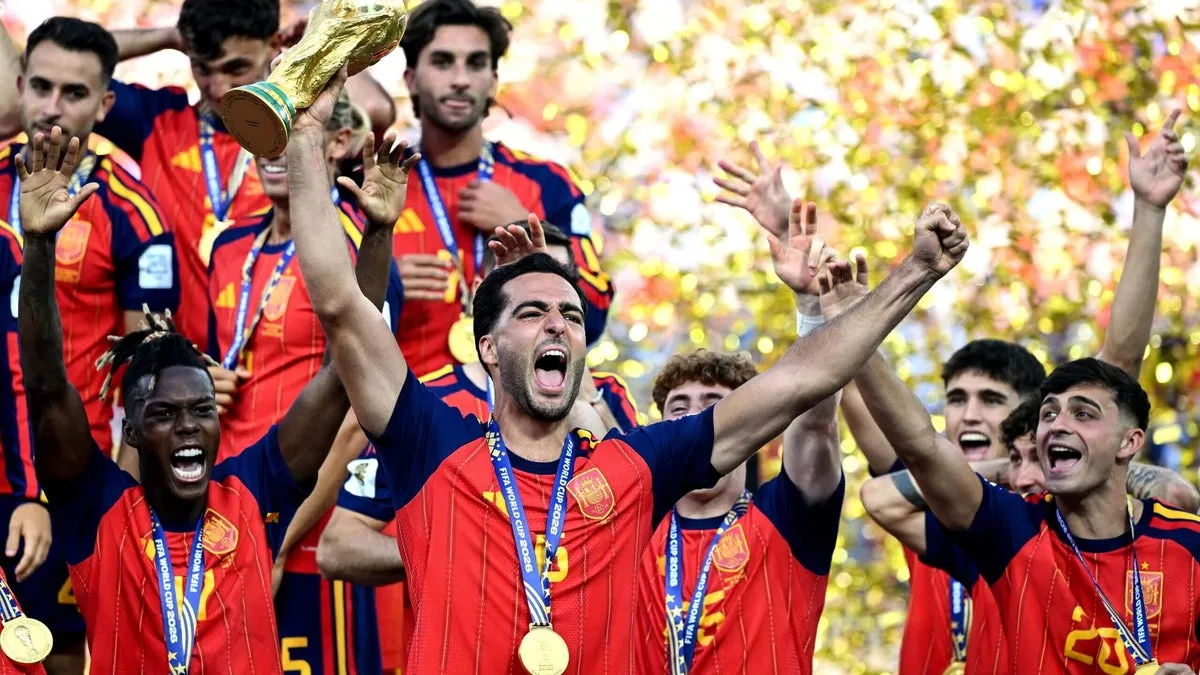
For Spain, Merino represents the future of their midfield. His experience at Arsenal, where he’s thrived under Arteta’s system, positions him as a potential leader for the national team. The Nations League opener against England will be his first major test since joining the squad, and his role won’t be as a starter but as a player who can dictate the game’s direction when called upon. His ability to operate in different systems—whether as a deep‑lying playmaker or a more advanced midfielder—makes him a versatile asset for a team that often struggles with midfield consistency. The challenge for Spain will be to harness that intelligence at the highest level, where pressure and expectation amplify every decision.
Merino’s story is a testament to the idea that football’s most valuable players aren’t always the ones who score the most goals or make the most headlines. They’re the ones who make the game run smoother, who turn chaos into order and who leave their teammates better than they found them. At Arsenal, he’s the glue holding the midfield together. For Spain, he’s a player who could define the next generation of their squad. His leadership isn’t flashy, but it’s undeniable—and that’s why he’s one of the game’s most underrated assets.