The Premier League has thrown its weight behind a coordinated European challenge to FIFA’s governance, joining La Liga, the Bundesliga and Serie A in a joint statement that brands the current system “not fit for purpose.” The leagues’ intervention marks a rare but decisive moment in the ongoing power struggle between domestic football and FIFA’s centralised authority, with demands for reform focused on curbing unilateral decisions—most notably the controversial expansion of the International Match Calendar—without consultation.
The statement is a direct rebuttal to FIFA’s recent pattern of top‑down decision‑making, which has increasingly alienated European leagues. The Premier League, as the commercial powerhouse of global football, has positioned itself at the forefront of this push, alongside traditional footballing heavyweights like La Liga and the Bundesliga. Their unified stance signals a growing frustration with FIFA’s reluctance to engage in meaningful dialogue, particularly on structural issues that directly impact domestic leagues’ ability to govern their own calendars and financial priorities.
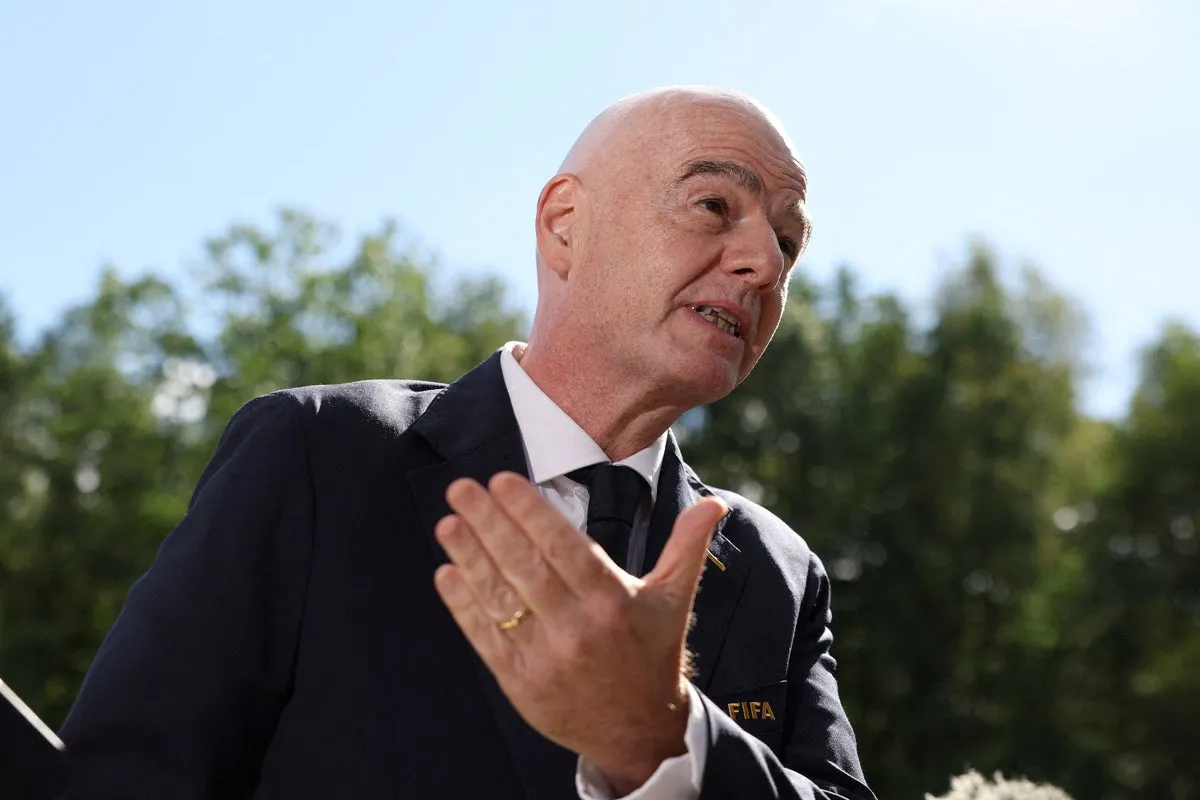
Gianni Infantino, whose re‑election as FIFA president is scheduled for 2027, now faces heightened scrutiny over his leadership. Despite the mounting criticism, there are no signs he will abandon his bid for a second term. However, the European leagues’ demands—ranging from earlier institutional involvement in major decisions to greater transparency in FIFA’s decision‑making processes—have forced Infantino to respond. His proposed “structured consultation” with confederations and member associations, while a step toward engagement, has been met with skepticism. The leagues are not merely seeking dialogue; they are demanding concrete changes to prevent FIFA from continuing to act as an unaccountable entity.
The financial dimension of this crisis cannot be ignored. European leagues have also pressed for FIFA to release funds from its cash reserves, with UEFA president Aleksander Čeferin and CONCACAF’s Victor Montagliani formally requesting at least $10 million per national association. This demand underscores the broader frustration over FIFA’s hoarding of resources while domestic leagues struggle with financial sustainability. The Premier League’s involvement in this financial push adds another layer of urgency, as the league’s commercial dominance makes its stance particularly influential in shaping the narrative around FIFA’s accountability.
What remains unclear is whether Infantino will be forced to concede to these demands—or if the European leagues will escalate their campaign beyond rhetoric. One thing is certain: the next few months will determine whether FIFA’s governance can adapt to the demands of its most powerful stakeholders, or if the current system will face irreversible fragmentation. The stakes could not be higher for the future of global football.