The Premier League is a machine of relentless intensity, but its physical demands don’t just shape individual careers—they dictate the fate of national teams. Anthony Gordon, a player who has thrived in the league’s most grueling conditions, has laid bare the truth: English football’s elite are entering summer tournaments more fatigued than any other league’s players. His words come at a critical juncture, as England’s World Cup campaign unravels under the weight of a style that prioritizes possession over resilience, and a body that simply cannot sustain the pace.
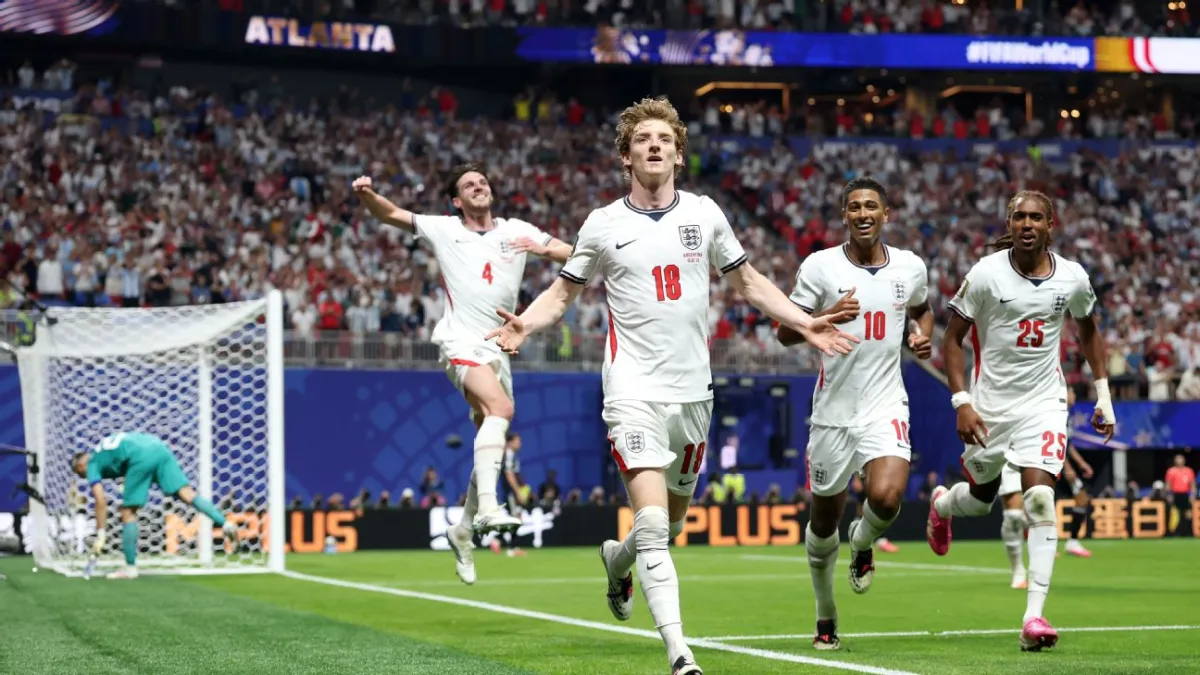
Gordon’s assessment isn’t just about England’s recent defeat to Argentina. It’s a broader indictment of a system where players like Jude Bellingham and Harry Kane—both Golden Boot contenders—were benched in Miami, their energy reserves depleted by the league’s relentless schedule. The Premier League’s summer tournament calendar, already brutal, is compounded by the emotional toll of extra-time victories (like England’s quarterfinal win over Norway) and the physical drain of back-to-back high-intensity matches. Tuchel’s own admission that fatigue played a role in England’s collapse against Argentina underscores the problem: the league’s players aren’t just tired; they’re operating at a deficit from the moment they step onto the field.
The contrast with Spain’s midfield dominance is stark. While England’s system struggles to maintain possession under pressure, Spain’s players—conditioned by a league that demands a different kind of endurance—can dictate tempo without breaking stride. Gordon’s point isn’t that England should mimic Spain’s style, but that the Premier League’s physical demands create a structural disadvantage in tournaments where stamina and tactical flexibility are paramount. The substitution of Anthony Gordon himself in the World Cup semifinal—pulled off after just 16 minutes of a lead—wasn’t just a tactical call; it was a symptom of a deeper issue: players are being pushed to their limits before the real test begins.
Barcelona’s current dominance in La Liga offers a counterpoint. The Catalan club’s undefeated start to the season (7-0-0, +24 goal difference) isn’t just about talent—it’s about managing fatigue in a league that, while intense, doesn’t operate at the same relentless pace as the Premier League. Barcelona’s players can afford to rotate, recover, and maintain possession without the same metabolic cost. For England, the challenge is clear: how to bridge the gap between the Premier League’s physical toll and the demands of international football, where possession alone won’t win games when the body has already surrendered.
The conversation now shifts to solutions. Is there a way to structure the Premier League’s calendar to mitigate fatigue? Can England’s players adapt their conditioning to match the demands of tournaments, or is the league’s nature inherently incompatible with the style of play that has defined their recent struggles? One thing is certain: the Premier League’s players aren’t just the best in the world—they’re the most exhausted. And that’s a problem that won’t disappear with a few tactical tweaks.