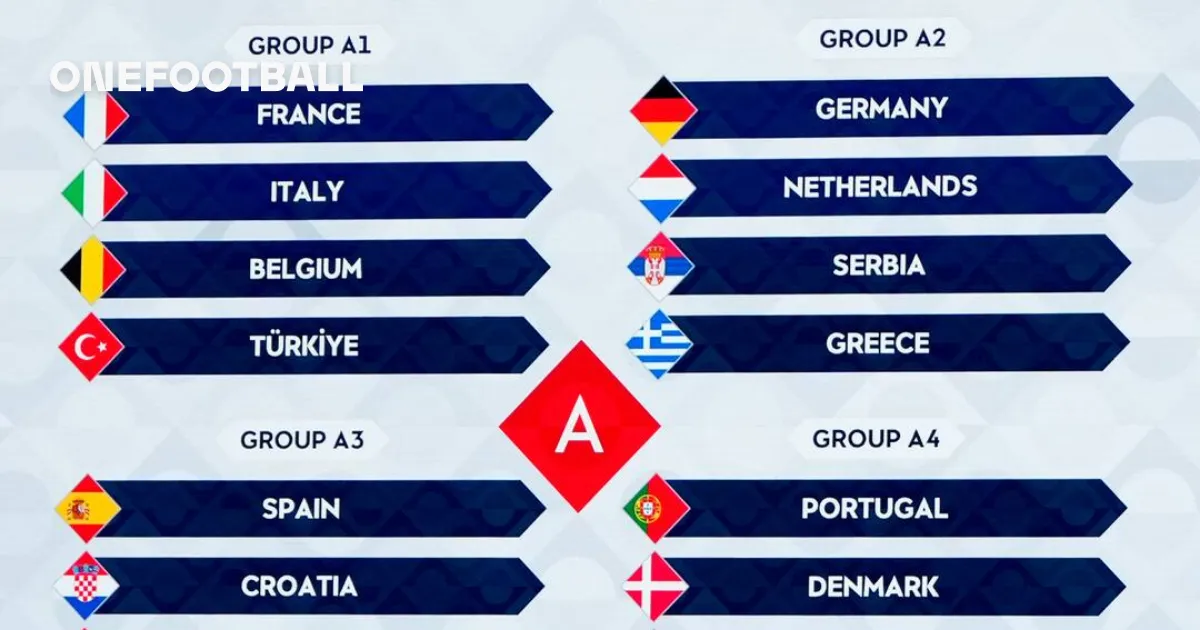
The Nations League is on the brink of a radical transformation, with UEFA unveiling a restructured format that will slash relegations and streamline qualification for the 2030 World Cup. From 2028/29, the competition will collapse from four leagues into three divisions—League A, League B and League C—eliminating the current League D entirely. The new system ensures only the top 36 nations, ranked by the 2028 Nations League standings, will compete in a single, high-stakes League A, while the remaining 18–19 teams will play in League B and League C. This isn’t just administrative tidying; it’s a calculated move to separate the elite from the emerging nations, with the World Cup qualification stakes now tied directly to performance in these divisions.
The most immediate impact will be on World Cup qualification. Under the new rules, the top-ranked teams in each of the three League A groups will secure automatic qualification, while the remaining spots will be decided via play-offs—no longer will minor nations like San Marino, Gibraltar or Andorra face the top-tier teams in direct competition. This mirrors the 2030 World Cup’s two-tier qualification process, where League A’s play-off winners will earn their place alongside the group winners. The restructuring also addresses long-standing criticism of the Nations League’s complexity, particularly the convoluted promotion/relegation system. In the current format, League A’s bottom four face relegation to League B, while League B’s winners advance—creating a labyrinth of movement. The new system replaces this with a far more straightforward ladder: League A’s quarter-finalists, the two best third-placed teams, and the four League B group winners will form the 2028/29 League A, with League B and C populated by the next tiers of performance.
Scotland’s recent reliance on the Nations League as a lifeline for major tournaments underscores why these changes matter. The 2020 Euro play-off victory over Serbia, which ended their 20-year World Cup drought, was directly tied to their Nations League campaign. Yet even with four nations hosting the 2028 Euros, Scotland—alongside England, Wales and the Republic of Ireland—must still navigate qualification through the Nations League’s play-offs. The new structure could either solidify their standing or force them to adapt to a more rigid, performance-based system where consistency in League A becomes non-negotiable. For nations like Scotland, the Nations League isn’t just a warm-up; it’s a crucible for survival in international football.
The elimination of League D is the most significant structural change, as it removes the lowest tier entirely. Teams currently in League D will instead be absorbed into League C, where the top four will earn promotion to League B. Meanwhile, League B’s bottom two fourth-placed teams will drop into League C, while the four League C group winners will ascend. This creates a more vertical progression, with fewer teams at risk of sudden relegation. The move follows similar reforms in English rugby, where traditional promotion/relegation between the Premiership and Championship was scrapped in favor of an application-based system. UEFA’s decision reflects a broader trend in European football to prioritise stability over fluidity, ensuring that only the most competitive nations sustain the Nations League’s prestige.
Beyond the tactical adjustments, the reforms signal UEFA’s intent to make the Nations League a true test of national teams—one that directly influences World Cup qualification without the distractions of irrelevant fixtures. The 2028 draw in Belgium will mark the first step in this new era, with Scotland and other mid-tier nations facing the challenge of securing their place in League A. For the first time, the Nations League will function as a clear pathway to the World Cup, not just a side project. The question now isn’t whether the competition will matter, but how quickly teams can adapt to a system where every match counts—and every relegation is permanent.