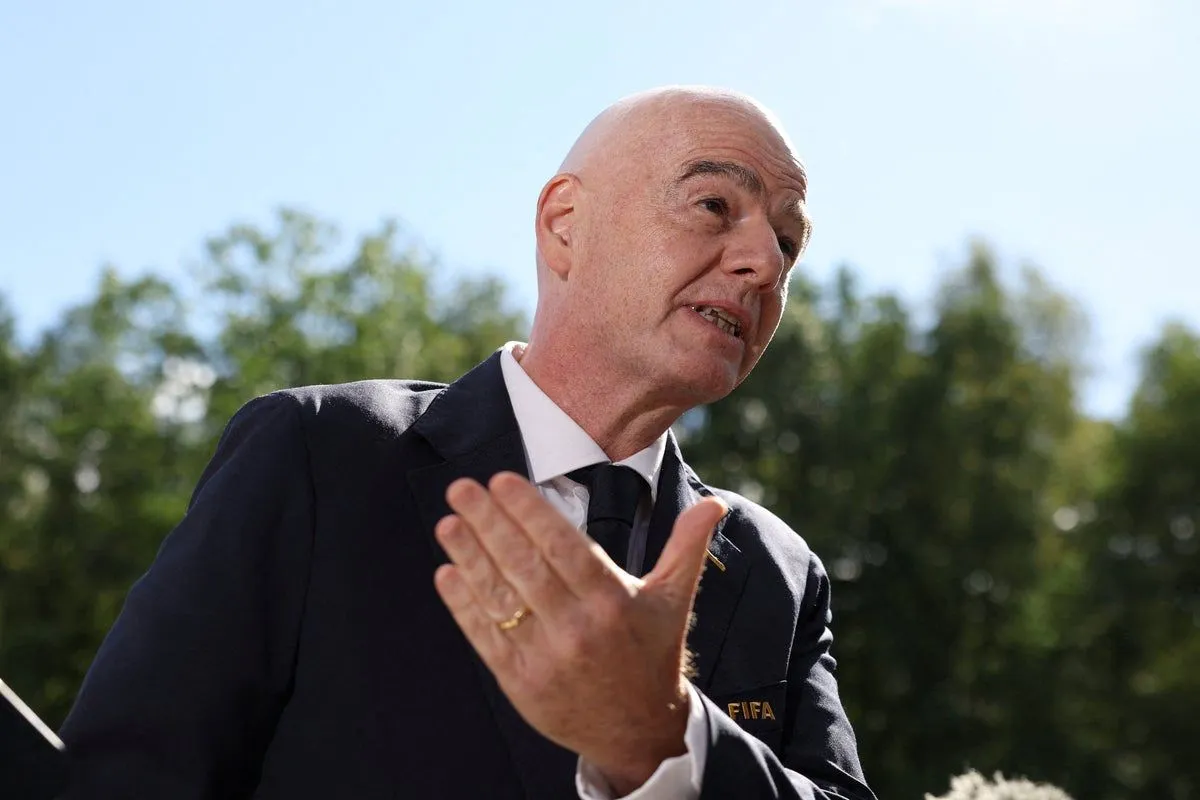
The crisis at FIFA has reached a turning point. Gianni Infantino, the man who once positioned himself as the architect of modern football’s commercial future, now finds himself on the defensive after his bold—some would say reckless—proposal to sell a 20% stake in FIFA’s commercial rights, including the World Cup, was abruptly abandoned in July. The backlash was immediate and severe. UEFA, CONCACAF, and the Asian Football Confederation (AFC) united in condemnation, demanding not just an explanation but structural change. Now, in a letter sent to all member associations and the FIFA Council, Infantino has offered what amounts to a olive branch—an independent review of FIFA’s governance framework, with a focus on transparency, accountability, and the division of power between the President, Bureau, and Council.
The letter, reported to have been seen by multiple outlets, marks a rare moment of self-reflection from Infantino, who has long positioned himself as the steadfast guardian of FIFA’s vision. Yet the language is carefully calibrated: he does not apologize for the failed sell-off plan, nor does he waver in his commitment to leading FIFA. Instead, he frames the proposal as a necessary step to ‘strengthen transparency, participation, and accountability in major strategic initiatives.’ The consultation would invite ‘specific proposals on earlier institutional involvement,’ effectively acknowledging that past decisions—particularly those made without sufficient consultation—have eroded trust. His insistence that ‘FIFA’s democratic processes, independence, and sporting authority were never for sale’ is a direct rebuttal to critics who argue his leadership has prioritized financial ambition over football’s core values.
What remains unclear is whether this gesture will be enough. The independent review, if commissioned, would likely examine the very structures that enabled the World Cup sell-off to be proposed in the first place. The Council’s response will be critical: will they treat this as a genuine effort at reform, or another attempt to contain the fallout? UEFA’s recent statements suggest they are not satisfied with half-measures. The European governing body, which has historically wielded significant influence over FIFA’s direction, has made it clear that reform must extend beyond symbolic gestures. The AFC and CONCACAF, too, have signaled their willingness to push for leadership changes if the culture of secrecy and top-down decision-making persists.
Infantino’s letter also reveals a tactical shift. By proposing consultations with confederations, member associations, and stakeholders, he is attempting to redefine the narrative from one of isolation to one of collaboration. Yet the timing is delicate. The FIFA Council meets next month, and the pressure on Infantino to step aside—or at least cede some authority—has never been greater. His claim to be ‘never more determined and committed’ to doing ‘what is right for the game’ rings hollow if the governance review is seen as a last-ditch effort to salvage his legacy rather than a sincere effort to rebuild trust. The coming weeks will determine whether this is the beginning of a genuine overhaul or another chapter in a leadership crisis that has plagued FIFA for years.