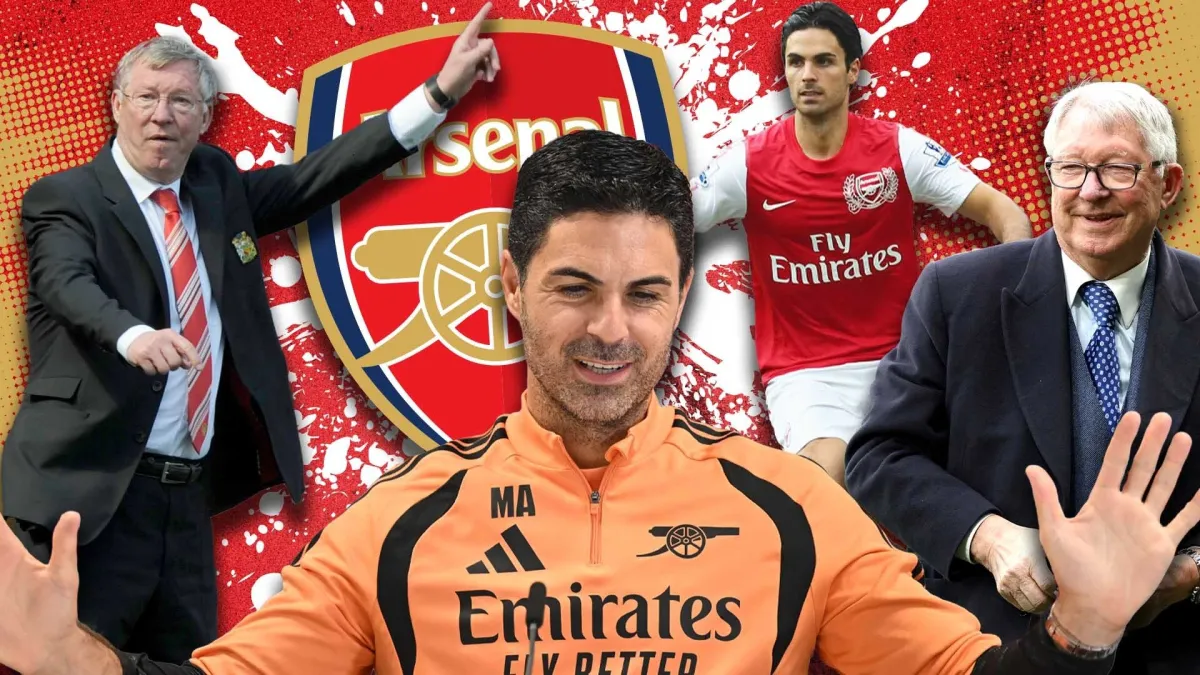
Mikel Arteta is no longer just Arsenal’s manager. He is the Premier League’s ‘don’—a title earned through tactical mastery, resilience, and a managerial philosophy that has redefined North London’s legacy. With a ten-year contract now agreed, Arteta’s reign at the Emirates has been officially stamped with permanence, placing him alongside the rarest breed of Premier League managers: those who could retain the title in an era where consistency is the ultimate currency.
The path to this moment was not linear. It was forged in the crucible of failure and redemption. Arteta arrived at Arsenal in 2011, a 28-year-old Spaniard plucked from Everton’s ranks in a deadline-day swoop—just days after the Gunners’ humiliating 8-2 defeat to Manchester United. The signing was part of a frenetic transfer window under Arsène Wenger, but it was under Pep Guardiola’s tutelage at City that Arteta’s managerial DNA truly crystallized. Three seasons as Guardiola’s right-hand man taught him the art of positional play, the psychology of high-pressure football, and the relentless pursuit of perfection. When he took over at Arsenal in December 2019, he did so with the blueprint of a winner.
Yet the road to dominance was never guaranteed. The Premier League’s history is littered with managers who won once but struggled to replicate success. Before Pep Guardiola’s back-to-back titles in 2022 and 2023, only Sir Alex Ferguson (2008-09) and José Mourinho (2005-06) had achieved the feat. Arteta’s challenge is to join that exclusive club—and not just once, but twice. The 2025/26 season, though ultimately inconclusive in its outcome, underscored the unpredictability of the league. Predictions were wrong, strategies faltered, and even the most astute analysts were left questioning how such a dominant side could stumble. Yet Arteta’s ability to navigate these storms—whether against Liverpool’s relentless pressure or Tottenham’s tactical cunning—has been the hallmark of his tenure.
What sets Arteta apart is his refusal to be defined by a single moment. Where others might have been derailed by the 2025/26 campaign’s inconsistencies, he has doubled down. His contract extension is not just a personal milestone; it is a statement. It is the acknowledgment that Arsenal’s future is built on his vision, one that blends the defensive solidity of Ferguson’s Manchester United with the attacking fluidity of Guardiola’s City. The Kroenke family’s backing, the club’s financial stability, and Arteta’s unshakable belief in his project create a rare alignment of ambition and opportunity. The question now is not whether he can win again, but whether he can do what no Arsenal manager has done before: retain the Premier League title in a league where history suggests it is nearly impossible.
For Arteta, this is more than a career. It is a legacy. The same Ferguson who once dominated the Premier League with an iron fist now watches from the sidelines as his former protégé carves out his own empire. The lessons were never about tactics alone—they were about narrative. Ferguson understood that in football, control of the story is as important as control of the pitch. Arteta has mastered both. His contract is not just a contract; it is the first chapter of a new era at Arsenal, one where the Gunners are no longer chasing greatness but defining it.