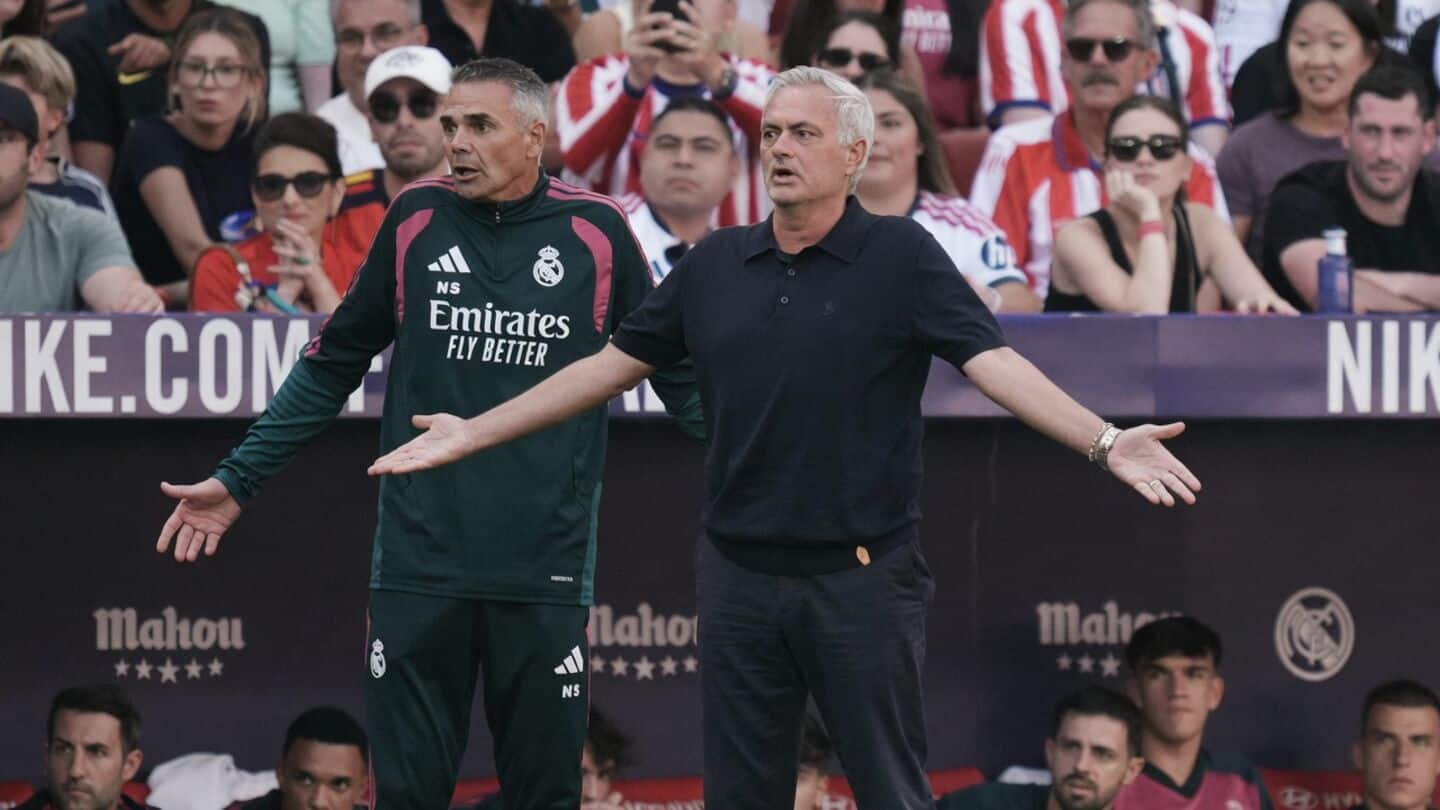
The Madrid derby has never been just a football match—it’s a battleground of egos, tactics, and now, a full-blown dispute over officiating that has escalated into a public war of words. José Mourinho’s post-match rant against referee Miguel Ángel Ortiz Arias and the La Liga Technical Committee was so damning that Atletico Madrid’s response was swift, deliberate, and unapologetic. The manager’s claim that two Atletico players—Cristian Romero and Lee Kang-in—should have been sent off for ‘clear red cards’ was met with a counterattack that framed the entire controversy as a broader issue of referee harassment in Spain’s top flight.
Mourinho’s evidence was undeniable in his own eyes: a printed image of Romero’s challenge on Jude Bellingham, which looked brutal on replay, and Kang-in’s tackle on Federico Valverde, which left the Real Madrid midfielder limping. Yet neither earned a second yellow card, let alone a dismissal. The only red card of the night came for Dean Huijsen, who was sent off for a high challenge on Giuliano Simeone inside the box—a decision that, while contentious, was at least enforced. Mourinho’s frustration wasn’t just about the missed sanctions; it was about the perceived incompetence of Ortiz Arias, a 41-year-old referee he described as ‘not top level’ and ill-equipped for such a high-stakes fixture. The manager even criticized the La Liga Refereeing Appointments Committee for selecting an official with no international experience, a move he called ‘very strange,’ given the committee’s usual last-minute decisions.
Atletico Madrid’s response was a masterclass in tactical messaging. While Mourinho’s team issued a statement calling the officiating ‘dreadful,’ Atletico didn’t just defend their players—they weaponized the controversy. Their social media post, featuring a printed sheet with the hashtag **#StopAcosoArbitalYA** (‘Stop referee harassment now’), turned Mourinho’s complaints into a rallying cry. The message was clear: this wasn’t just about one match or one referee. It was about a pattern of perceived bias, a narrative that has simmered in La Liga for years. Diego Simeone, who has long been a vocal advocate for fairer officiating, refused to engage directly with Mourinho’s criticisms, instead framing the issue as one of respect. ‘Not everything goes, even for Mourinho,’ he said, a subtle but pointed reminder that even the most influential managers must adhere to the rules—even when they believe they’ve been wronged.
The fallout extends beyond the immediate aftermath of the match. La Liga’s Technical Committee of Referees has reportedly validated one of Mourinho’s key points: Kang-in’s challenge on Valverde was indeed a dangerous foul that warranted a red card. Yet the committee’s silence on Romero’s challenge leaves the door open for further debate. What’s undeniable is the psychological toll of such disputes. Mourinho’s players, already playing a man down for 50 minutes, had to contend with the knowledge that two of their teammates might have been sent off. ‘You could imagine what it would have been like for us for 50 minutes with 11 versus nine,’ he said, underscoring the absurdity of the situation. The irony? Atletico’s victory was sealed by Huijsen’s red card, a decision that, while controversial, became the only one enforced. The rest were left to fester in the manager’s mind—and now, in the public eye.
This isn’t just about a single match. It’s about the erosion of trust in La Liga’s officiating. Mourinho’s rant, while explosive, wasn’t without merit: the league’s refereeing has faced scrutiny before, from VAR inconsistencies to perceived favoritism in high-profile clashes. Atletico’s response, meanwhile, has framed the issue as systemic, using the derby as a catalyst for a broader conversation. Whether the backlash changes anything remains to be seen. But one thing is certain: the next time these two clubs face off, the referee’s whistle won’t be the only thing under scrutiny.