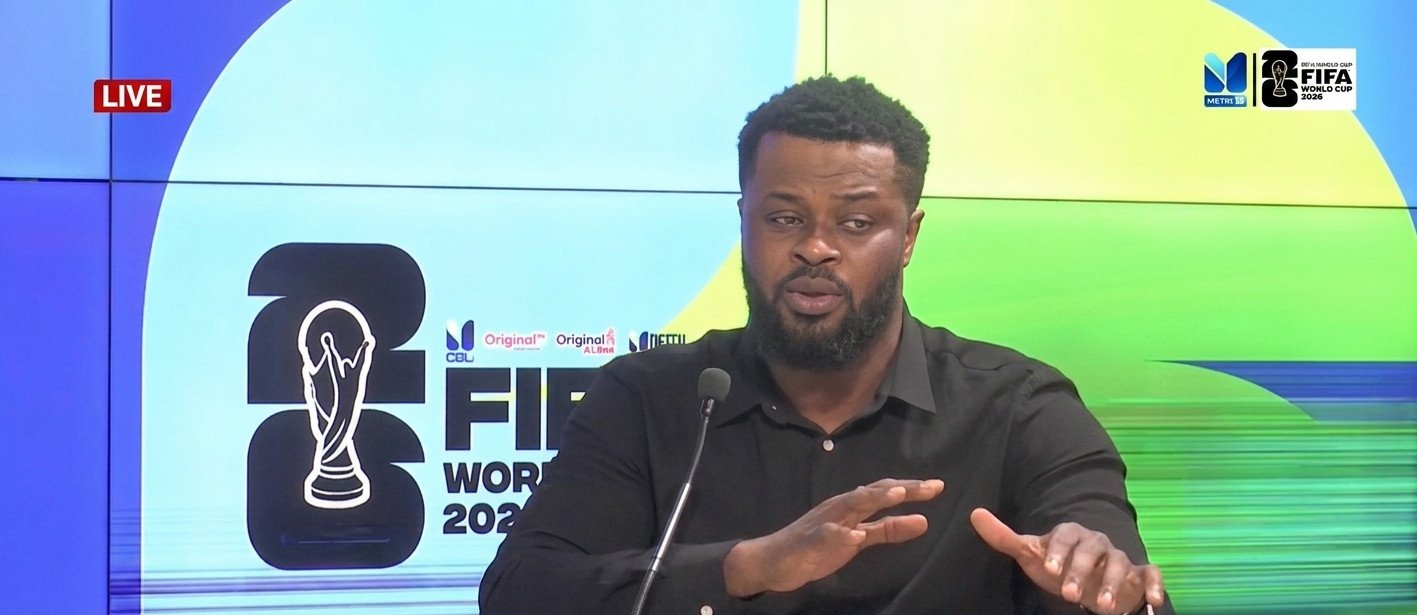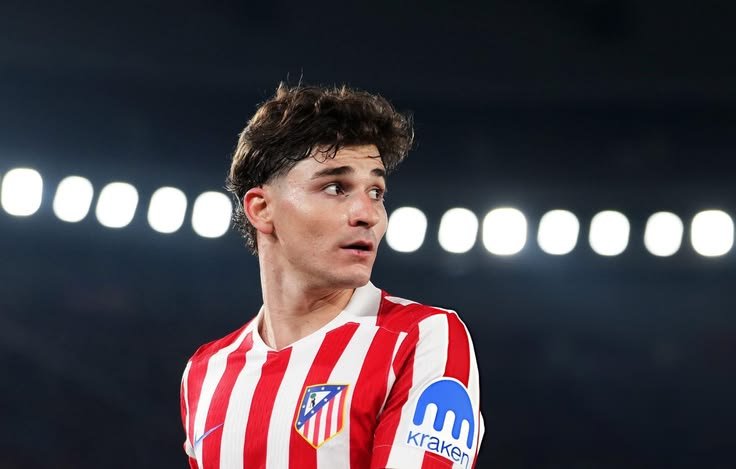
Barcelona’s transfer strategy has taken a decisive turn, with sporting director Deco delivering a blunt assessment of the club’s failed pursuit of Atlético Madrid’s Julian Alvarez—only to pivot toward an even more audacious solution. In a statement that closes the door on any mid-season revival of the Argentine’s transfer, Deco confirmed what had long been rumoured: the Catalan club’s patience has run out. ‘Julian is in the past,’ Deco declared at the Portugal Football Summit, framing the decision as a necessary evolution. The message was clear—after months of speculation, Barcelona’s focus has shifted entirely to the future, and that future now includes Raphinha as a centre-forward.
The revelation comes as Raphinha’s transformation into a primary striker has become one of LaLiga’s most compelling narratives. Since his conversion from a hybrid attacking midfielder-right winger, the Brazilian has scored 14 goals in eight matches—12 of them in seven LaLiga games—a figure that has left even his most vocal critics conceding the shift’s brilliance. Deco acknowledged the surprise, though not the success: ‘We expected he could do well, but not at this level.’ The tactical rationale is straightforward: Raphinha’s directness, physicality, and ability to hold up play in the final third align with Hansi Flick’s system, where positional play and verticality are paramount. His emergence has not only filled the void left by Robert Lewandowski’s departure but has also forced Barcelona’s opponents to rethink their defensive structures. Atletico Madrid, once a formidable barrier, now faces a striker who operates with the same ruthlessness as the players they’ve spent seasons containing.
The Alvarez saga, meanwhile, underscores the complexities of modern football transfers. Despite Barcelona’s public interest—amplified by president Joan Laporta’s comments—Atlético’s refusal to sell the Argentine led to a dead end. Deco’s dismissal of any mid-season pursuit was unequivocal: ‘The club has always said they wouldn’t sell him.’ The fallout between the clubs, including Atlético’s president Miguel Angel Gil Marin’s accusation of ‘dishonesty’ against Barcelona, adds another layer to the story. Yet the real lesson lies in how quickly Barcelona adapted. While other clubs scrambled for a replacement for Lewandowski—namely Inter Milan’s Lautaro Martinez, who was also considered but ruled out due to availability—the Catalans opted for a homegrown solution. Gabriel Jesus remains a rotational option, but Raphinha’s dominance has made the debate over Barcelona’s forward line obsolete. The question now isn’t whether the club can find a number nine, but how long Raphinha can sustain this form before the next chapter begins.
What makes this development even more intriguing is the tactical flexibility it exposes. Raphinha’s success as a centre-forward doesn’t just solve Barcelona’s immediate problem; it challenges the conventional wisdom about modern attacking roles. In an era where hybrid players are prized for their versatility, his ability to thrive in a traditional striker’s position—while retaining his dribbling and playmaking traits—suggests a new model for front-line construction. Deco’s comments hint at the broader implications: ‘He needs to be prepared to attack behind the defenders.’ This isn’t just about goals; it’s about Raphinha’s willingness to drop deep, create space, and dictate tempo in ways that align with Flick’s positional play. For a club that has long emphasised technical individuality, his adaptability could redefine how Barcelona approach their front line for years to come.
The fallout from this strategy will be watched closely across Europe. While other top clubs continue to chase free agents or high-profile signings, Barcelona’s bet on internal reinvention—coupled with Raphinha’s meteoric rise—has sent a message: sometimes, the best solutions aren’t found in the transfer market, but in the players already on the roster. The Alvarez pursuit may have ended in frustration, but the Raphinha experiment has already exceeded expectations. The next step? Ensuring his success isn’t a fluke, but the start of something far bigger.