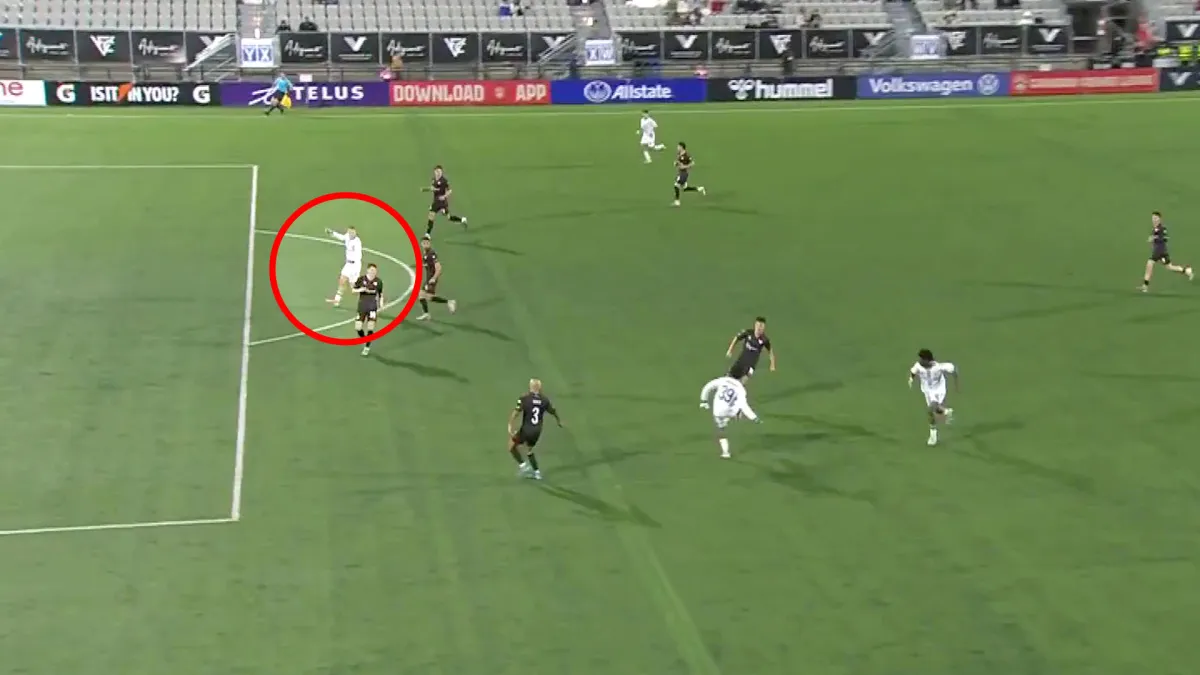
A dramatic late winner in the Canadian Premier League has thrust Arsene Wenger’s proposed offside overhaul directly into the global football spotlight. Inter Toronto striker Tomasz Skublak found the back of the net in the 97th minute, securing a decisive victory under the ongoing trial of the former Arsenal manager’s controversial ‘daylight offside’ concept. While the goal counted under the local trial regulations, the decision has reignited a fierce worldwide debate over the future of offside interpretation.
The Polish forward’s stoppage-time effort stood precisely because the match was operated under the newly trialled directive. In virtually every other domestic league across the globe, Skublak’s positioning at the exact moment of the pass would have seen the assistant referee’s flag raised immediately for offside. However, Wenger’s framework requires clear daylight between the attacking player and the last defender for an offense to be called. That crucial distinction allowed the Inter Toronto man’s 97th-minute strike to be validated, delivering a pivotal late triumph for his side.
Wenger, who earned legendary status during his iconic managerial tenure in north London with Arsenal, has championed the daylight offside rule as a means to encourage attacking football and reduce microscopic offside decisions. The trial in the Canadian Premier League represents one of the most prominent live testing grounds for the concept. Proponents argue that shifting the advantage toward forward players creates more scoring opportunities and eliminates drawn-out reviews over hairline margins. Yet, seeing the rule applied in real time during a high-stakes moment has provided stark visual evidence of how radically the sport’s officiating baseline could shift.
The fallout from Skublak’s late winner has been swift, with supporters raising vocal opposition to the potential wider adoption of the rule. Football fans across the globe are expressing deep concerns, fearing that introducing the daylight parameter to elite competitions could fundamentally alter match dynamics and ruin leagues such as the English Premier League. Critics contend that giving attackers such a significant spatial buffer leaves defensive lines dangerously exposed and destabilizes tactical structures that have governed the sport for decades.
As the trial continues to generate polarizing results on the pitch, decision-makers are closely scrutinizing every match governed by the experiment. Skublak’s dramatic 97th-minute winner for Inter Toronto stands as a defining example of how Wenger’s proposed change functions in competitive conditions. Whether football’s governing bodies choose to expand the experiment or heed the widespread anxieties of supporters remains a central talking point as the trial’s impact continues to unfold.